Paris-Saclay team builds sublattice polarimeter to reconstruct Bloch wavefunctions in photonic lattices
The instrument extracts amplitude and phase of crystal orbitals across the Brillouin zone, giving access to the Bloch Hamiltonian, quantum geometric tensor and Chern numbers.

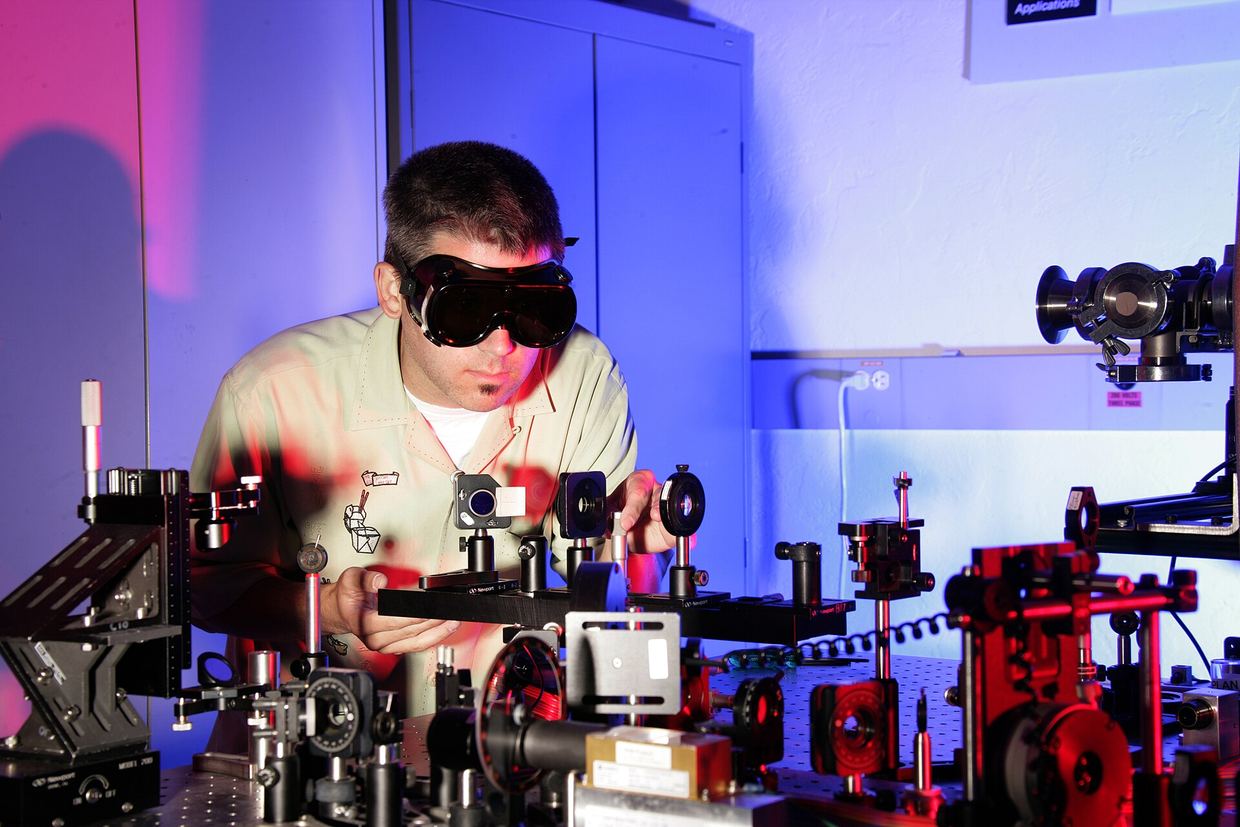
Researchers at the Center for Nanoscience and Nanotechnology (Paris-Saclay University, CNRS, Palaiseau, France) have introduced a sublattice polarimeter for photonic lattices. The work, by M. Guillot, J. Bloch, S. Ravets and colleagues, was published in Nature Communications on 4 November 2026. The device enables full reconstruction of the Bloch wavefunctions in bipartite photonic lattices, according to the authors doi.org
Nature Communicationsdoi.orgOpen source ↗.
The measurement gap
Measuring the electronic structure of crystalline materials is key to understanding their physical properties. Techniques such as angle-resolved photoemission spectroscopy have given detailed insight into the electronic orbitals of natural crystals. The authors note that an equivalent tool for characterizing photonic lattices has been lacking doi.org
Nature Communicationsdoi.orgOpen source ↗.
How the polarimeter works
The method uses a spatial light modulator to apply controlled phase shifts and attenuations to each sublattice separately. From the resulting measurements the team extracts the amplitude and phase of the crystal orbitals across the Brillouin zone. This includes regions close to band degeneracies doi.org
Nature Communicationsdoi.orgOpen source ↗.
With the wavefunctions reconstructed, the Bloch Hamiltonian becomes experimentally accessible. From it the authors determine the quantum geometric tensor and the band Chern numbers doi.org
Nature Communicationsdoi.orgOpen source ↗.
Beyond two sublattices
The authors state that the approach is not limited to bipartite lattices. It can be generalized to address multiple internal degrees of freedom. According to the paper, this opens routes to probing complex topological structures experimentally, including trigonal warping, Chern insulators and Euler curvature in multiband settings doi.org
Nature Communicationsdoi.orgOpen source ↗.
The paper reports the method and its demonstration on synthetic photonic lattices. It describes the extension to multiband systems as a possible direction, not a completed measurement doi.org
Nature Communicationsdoi.orgOpen source ↗.