Max Perutz Labs: Wt1 splice isoforms bias lineage programmes in pluripotent cells before gastrulation
Authors report that KTS splice status of Wt1 separates anterior/neuroectodermal from posterior/mesodermal programmes in cultured cells, with matching signs in the E5.5 epiblast.
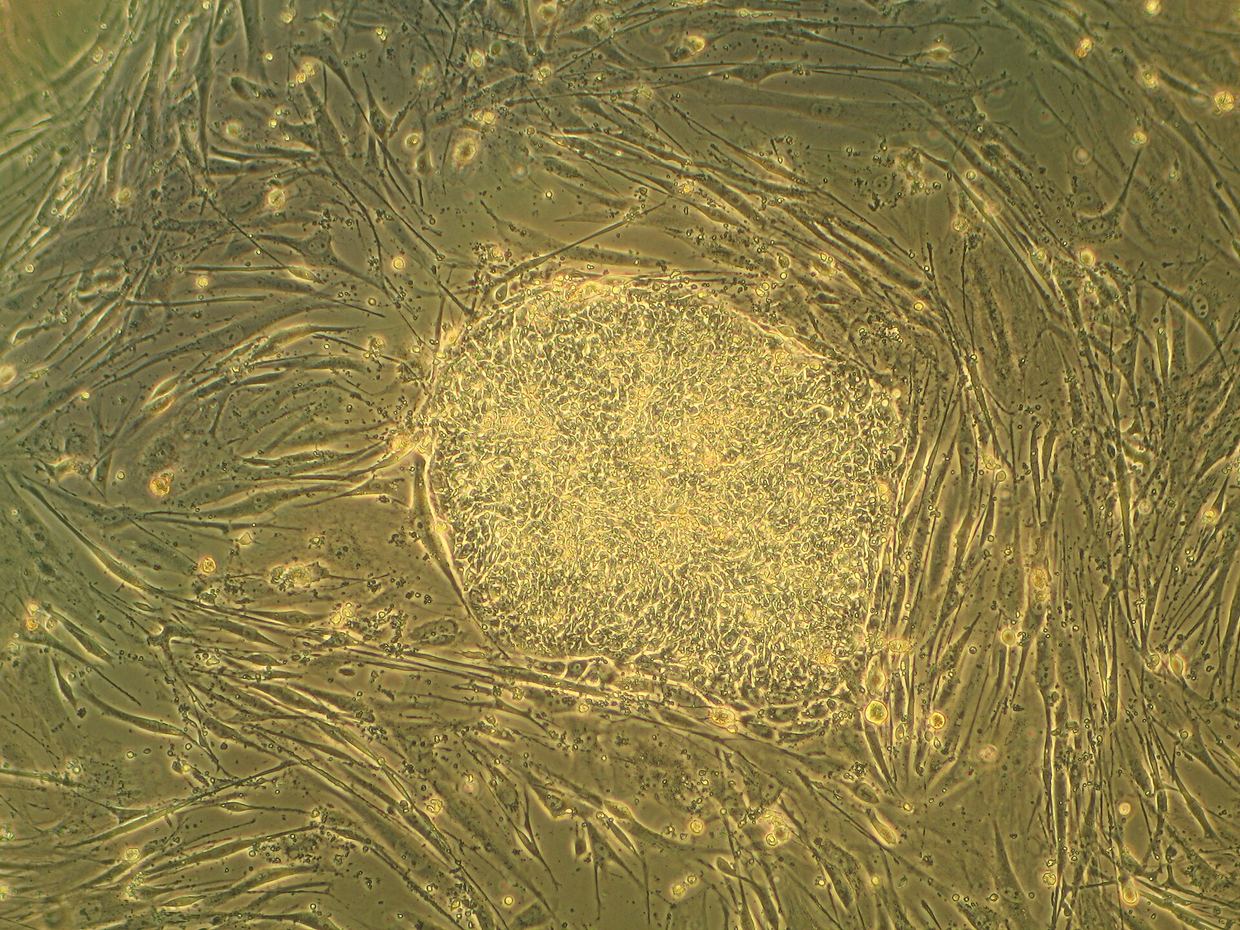
A team from the Max Perutz Labs at the Vienna BioCenter (Austria) has described how the gene Wt1 influences lineage-associated transcriptional programmes during formative pluripotency, the stage before gastrulation. The paper, with Martin Leeb as corresponding author, was published on 4 November 2026 in Nature Communications. doi.org
Nature Communicationsdoi.orgOpen source ↗ Using a targeted CRISPRa screen, the authors identified Wt1 as a regulator of these programmes.
doi.org
Nature Communicationsdoi.orgOpen source ↗
The authors frame the work around an open question in mammalian development: how transcriptional asymmetry arises in the epiblast before gastrulation. doi.org
Nature Communicationsdoi.orgOpen source ↗
Wt1 in formative pluripotency
According to the study, Wt1 is transiently induced during formative pluripotency both in vitro and in vivo, coinciding with emerging lineage biases. doi.org
Nature Communicationsdoi.orgOpen source ↗ Precocious induction of Wt1 advanced cells toward post-implantation identity.
doi.org
Nature Communicationsdoi.orgOpen source ↗
Cells deficient in Wt1 still executed naïve exit, but they showed impaired acquisition of formative and lineage-associated programmes. doi.org
Nature Communicationsdoi.orgOpen source ↗ The authors also report that WT1 binds active regulatory elements together with OTX2, OCT4 and FOXO1.
doi.org
Nature Communicationsdoi.orgOpen source ↗
Splice isoforms and anterior bias
The team compared Wt1 splice isoforms. KTS splice status emerged as the major determinant of divergent anterior/neuroectodermal and posterior/mesodermal transcriptional programmes in vitro. doi.org
Nature Communicationsdoi.orgOpen source ↗
In the E5.5 epiblast, Wt1 expression and splice composition aligned with lineage-biased states. The authors link this isoform usage to anterior bias in vivo. doi.org
Nature Communicationsdoi.orgOpen source ↗ Isoform-dependent programmes were conserved in human pluripotent cells.
doi.org
Nature Communicationsdoi.orgOpen source ↗
From these results the authors conclude that alternative splicing is a mechanism tuning lineage-associated transcriptional bias before gastrulation. doi.org
Nature Communicationsdoi.orgOpen source ↗
The data come from cell-culture experiments, an analysis of the E5.5 epiblast and human pluripotent cells. This is a fundamental study of early development, not a clinical one.