Varifocal AR display from Shibaura Institute of Technology improved 3D pointing in a 24-person study
A prototype varifocal AR display that matches focus to virtual-object depth reduced movement time and raised throughput in a pointing task. The benefit differed between participants.
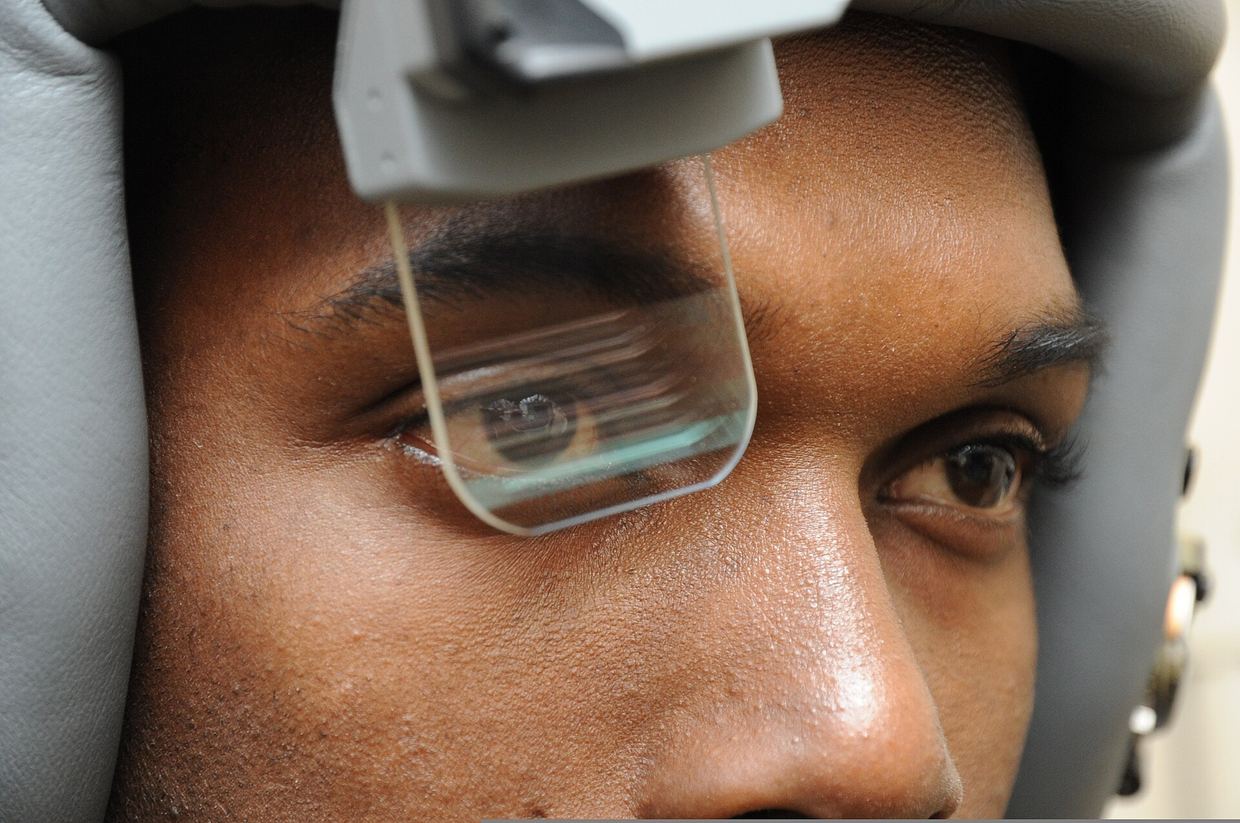
A research team led by Assistant Professor Xiaodan Hu of the Shibaura Institute of Technology (Japan) tested whether a custom varifocal display improves 3D pointing in augmented reality. The results were published online on August 28, 2026, in the journal Virtual Reality doi.org
Virtual Realitydoi.orgOpen source ↗. The team included researchers from Japan, China and Canada.
Vergence-accommodation conflict in AR
Most AR and VR headsets show images at a fixed focal distance, even when virtual objects appear at different depths. This creates a mismatch between where the eyes converge and where they focus, known as the vergence-accommodation conflict (VAC). It may affect comfort and interaction. A varifocal display adjusts the focal plane to match the depth of the virtual object doi.org
Virtual Realitydoi.orgOpen source ↗.
The prototype combines light from the real scene with virtual images reflected by a spherical mirror and a beamsplitter. It is a stereoscopic AR system doi.org
Virtual Realitydoi.orgOpen source ↗.
Pointing task and results
In the first study, 24 participants performed an ISO 9241-411 pointing task in a within-subject design. They used a tracked wand to select virtual targets of different sizes and distances, with lateral movements and movements in depth. Fixed-focal and varifocal viewing were compared by movement time, error rate and throughput, a measure of task efficiency. A second study with 12 additional participants was run to verify the hardware's performance doi.org
Virtual Realitydoi.orgOpen source ↗.
Varifocal viewing significantly reduced movement time and increased throughput. Error rates did not change significantly. The benefit appeared greater for movements in depth, although the difference by direction was only borderline significant for throughput doi.org
Virtual Realitydoi.orgOpen source ↗.
The magnitude and even the direction of the effect varied between individuals. Participants with better baseline performance showed smaller improvements or occasional degradation doi.org
Virtual Realitydoi.orgOpen source ↗.
Limitations
The study did not test long-term eye health and did not establish that the technology prevents eyestrain. Participants' ratings showed no clear preference between display modes, and discomfort was mild. Differences in binocular vision or depth perception may contribute to the variation, but these factors were not measured. The prototype had a limited field of view and did not use eye tracking to adjust focus, so it differs from everyday AR use doi.org
Virtual Realitydoi.orgOpen source ↗.
"Users do not all benefit equally, making individual differences an important question for future research," said Dr. Hu doi.org
Virtual Realitydoi.orgOpen source ↗.