VIMS: nylon microfibers doubled trout deaths from IHN virus in an eight-week lab study
In a lab study at VIMS, rainbow trout continuously exposed to nylon microfibers died of a viral infection twice as often as fish given the virus alone.
Researchers at the Virginia Institute of Marine Science (VIMS), William & Mary, have shown that the shape of nylon microplastics affects how deadly a viral infection is for rainbow trout. In the study published in Environmental Toxicology and Chemistry, fish exposed continuously to nylon microfibers were twice as likely to die from the infection as fish exposed to the virus alone doi.org
Environmental Toxicology and Chemistrydoi.orgOpen source ↗. The work compared nylon microfibers with spheroid nylon particles, using infectious hematopoietic necrosis virus (IHNV), a commercially important trout pathogen
doi.org
Environmental Toxicology and Chemistrydoi.orgOpen source ↗.
Experiment design and results
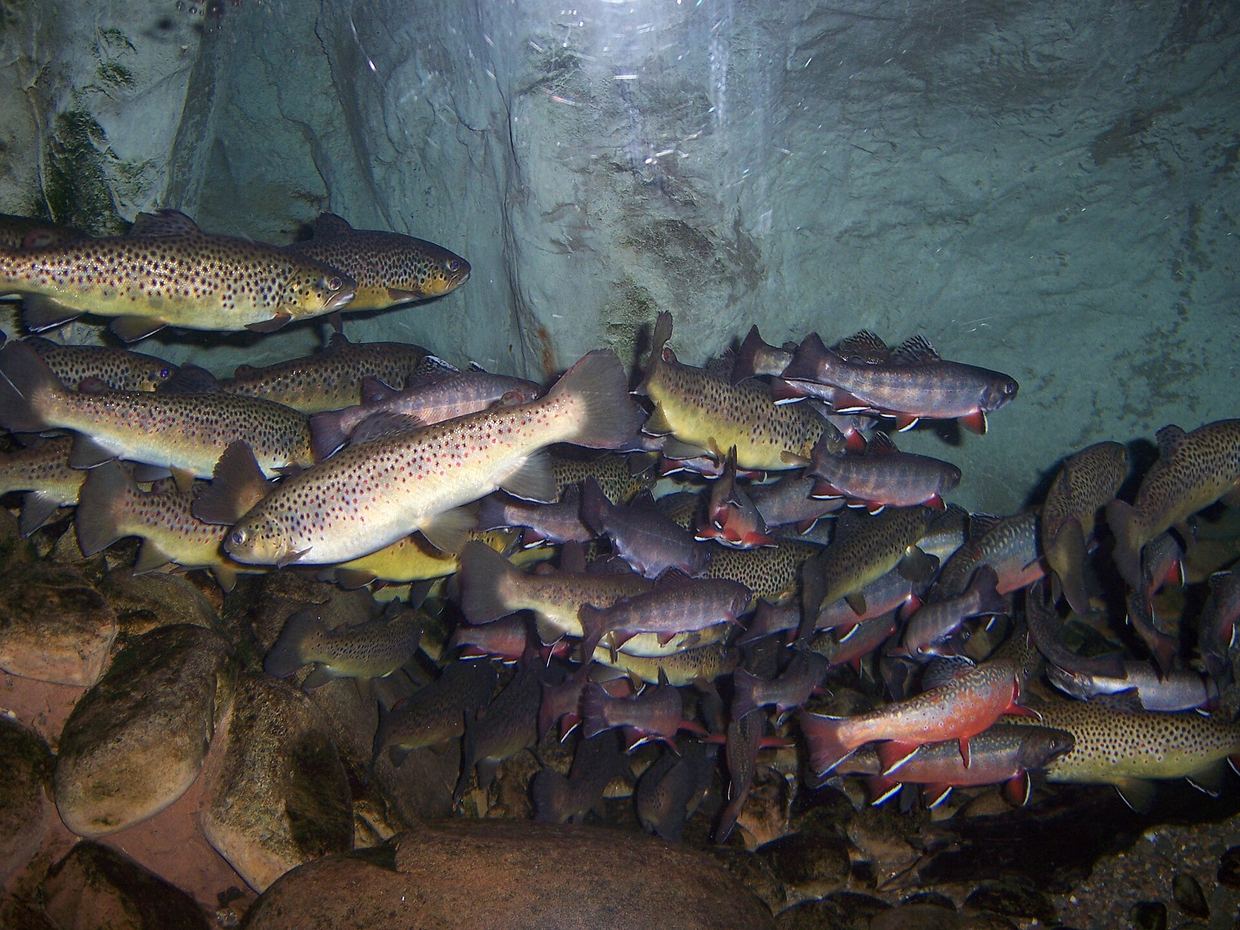
Over eight weeks, the team monitored 800 juvenile rainbow trout housed in 40 laboratory tanks. Different groups were exposed to long, thin nylon microfibers or to small, rounded nylon particles, and designated groups were then exposed to IHNV doi.org
Environmental Toxicology and Chemistrydoi.orgOpen source ↗.
Mortality was significantly higher in fish exposed to virus plus microfibers than in fish exposed to virus plus spheroid microplastics or to virus alone doi.org
Environmental Toxicology and Chemistrydoi.orgOpen source ↗. The spherical particles did not significantly increase virus-related mortality
doi.org
Environmental Toxicology and Chemistrydoi.orgOpen source ↗.
Exposure timing also mattered. The effect was significant only when fish were exposed to microplastics chronically, from 30 days before to 30 days after virus introduction. Exposure only before or only after the virus did not produce it doi.org
Environmental Toxicology and Chemistrydoi.orgOpen source ↗.
Proposed mechanism and limits
Based on this and earlier work, the authors hypothesize that the pattern relates to damage to epithelial tissue integrity doi.org
Environmental Toxicology and Chemistrydoi.orgOpen source ↗. They suspect that the elongated shape and rigidity of fibers may damage protective tissues such as the gills, potentially allowing viruses to enter the body more easily. Lead author Meredith Evans Seeley said: "It's likely creating an easier path for that virus to infect that host." The mechanism has not been demonstrated in this experiment.
The authors note that the findings have implications for several systems, including aquaculture and indoor environments. They also caution that the effect was shown under controlled laboratory conditions and that more work is needed to see how it translates to other environments. Future studies may examine different concentrations, particle sizes and exposure durations doi.org
Environmental Toxicology and Chemistrydoi.orgOpen source ↗.