Hawaiian akiapōlāʻau drills wood with its whole body, from ankles up, a skeletal study of museum specimens finds
A study in Ornithology describes the skeleton of the critically endangered akiapōlāʻau. The bird's drilling starts at the ankles, unlike woodpeckers, which rely mainly on neck muscles.
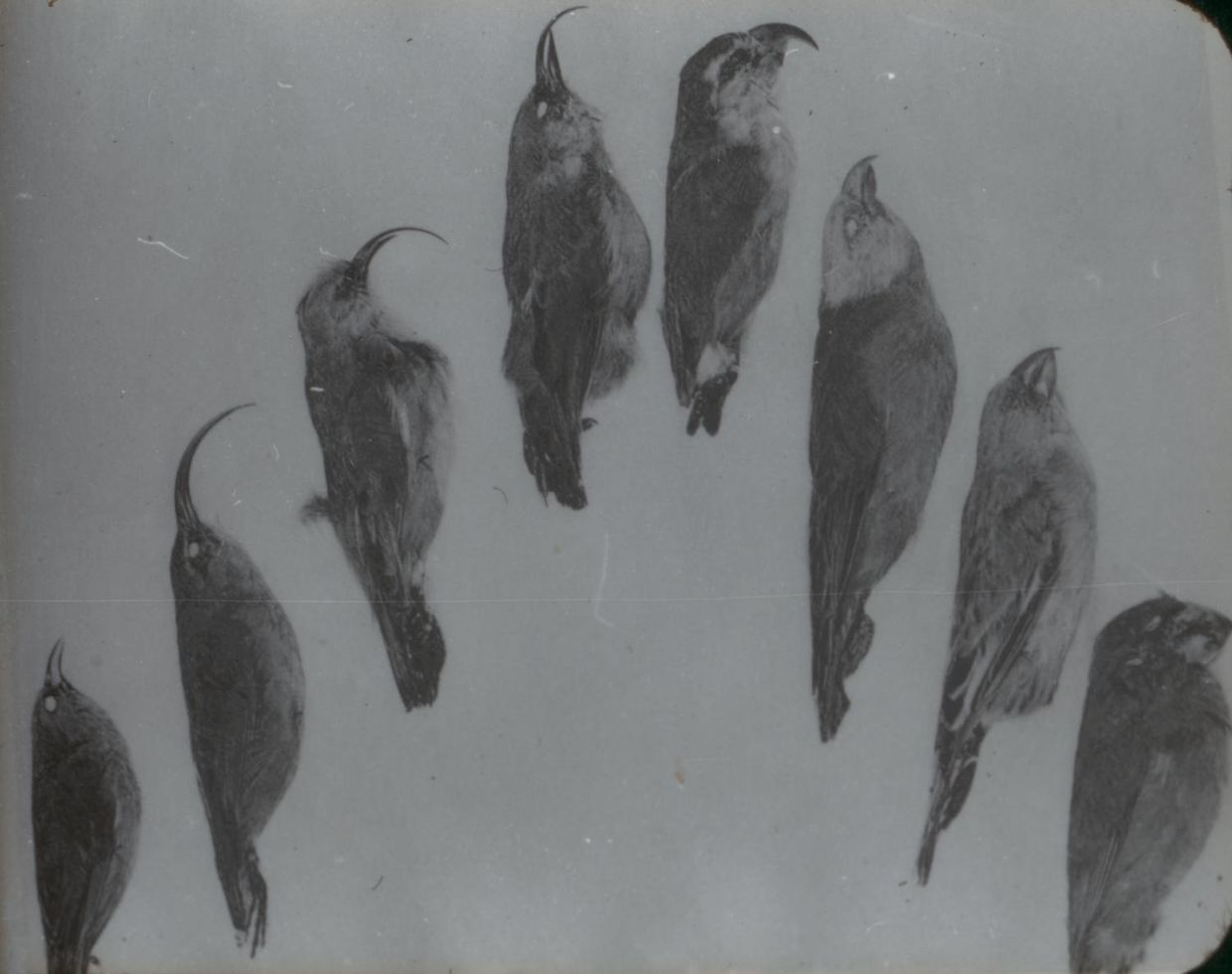
Researchers led by Alexander Clark, a PhD candidate at the University of Chicago and affiliate of the Field Museum, have published the most detailed anatomical description to date of the ‘akiapōlāʻau (Hemignathus wilsoni), a Hawaiian honeycreeper. The paper appeared in the journal Ornithology on 5 November 2026, according to a Field Museum release distributed via EurekAlert eurekalert.org
EurekAlerteurekalert.orgOpen source ↗.
Two beaks in one
The upper and lower parts of the bird's bill differ sharply. The upper bill is long, slender and flexible and is used to probe grubs and caterpillars out of small holes in branches. The lower mandible is short and stout and is used to gouge holes in wood eurekalert.org
EurekAlerteurekalert.orgOpen source ↗. Together they let the bird occupy a niche similar to that of woodpeckers, which never reached the Hawaiian islands
eurekalert.org
EurekAlerteurekalert.orgOpen source ↗.
The authors also describe the bony rostrum of the upper bill and report that it is substantially shorter than the external structure. The bird has proportionally shorter wings than its mainland relatives and a proportionally shorter femur, which parallels the evolution of unrelated woodpeckers eurekalert.org
EurekAlerteurekalert.orgOpen source ↗.
Drilling starts at the ankles
The main finding concerns the foot and ankle. The akiapōlāʻau has a proportionally large tendon of a muscle that flexes the ankle, which lets it bring its body downward quickly and powerfully eurekalert.org
EurekAlerteurekalert.orgOpen source ↗. Woodpeckers drill mainly with neck muscles, whereas this species, according to the authors, uses the momentum of its whole body, starting with dorsiflexion of the ankles
eurekalert.org
EurekAlerteurekalert.orgOpen source ↗.
Clark said researchers knew what the birds do but not how their anatomy makes those movements possible eurekalert.org
EurekAlerteurekalert.orgOpen source ↗. The data came from measurements of historical museum specimens at three institutions: the UC Berkeley Museum of Vertebrate Zoology, the Burke Museum at the University of Washington, and the Field Museum
eurekalert.org
EurekAlerteurekalert.orgOpen source ↗.
Status of the species
Experts estimate the wild population at fewer than 2,000 individuals, all living on the northeastern slope of one mountain on the island of Hawaii eurekalert.org
EurekAlerteurekalert.orgOpen source ↗. Terrestrial native species of the archipelago have been declining for centuries, and extinction rates have risen in recent decades
eurekalert.org
EurekAlerteurekalert.orgOpen source ↗.
Clark spent 15 months in Hawaii studying endemic birds. He noted that studying a living species allows researchers to observe the behavior directly, rather than inferring function from fossils eurekalert.org
EurekAlerteurekalert.orgOpen source ↗. Paul Banko, a co-author and former USGS researcher, linked the bird's extreme features to intense competition for resources such as caterpillars
eurekalert.org
EurekAlerteurekalert.orgOpen source ↗.
Sources · 1
Found a mistake?Read also