Göttingen team sequences 43 new transcriptomes of Zygnematophyceae, closest algal relatives of land plants
A team led by the University of Göttingen built a phylogenomic tree from 104 Zygnematophyceae transcriptomes and 2,243 loci and found a deep genetic structure in the group.
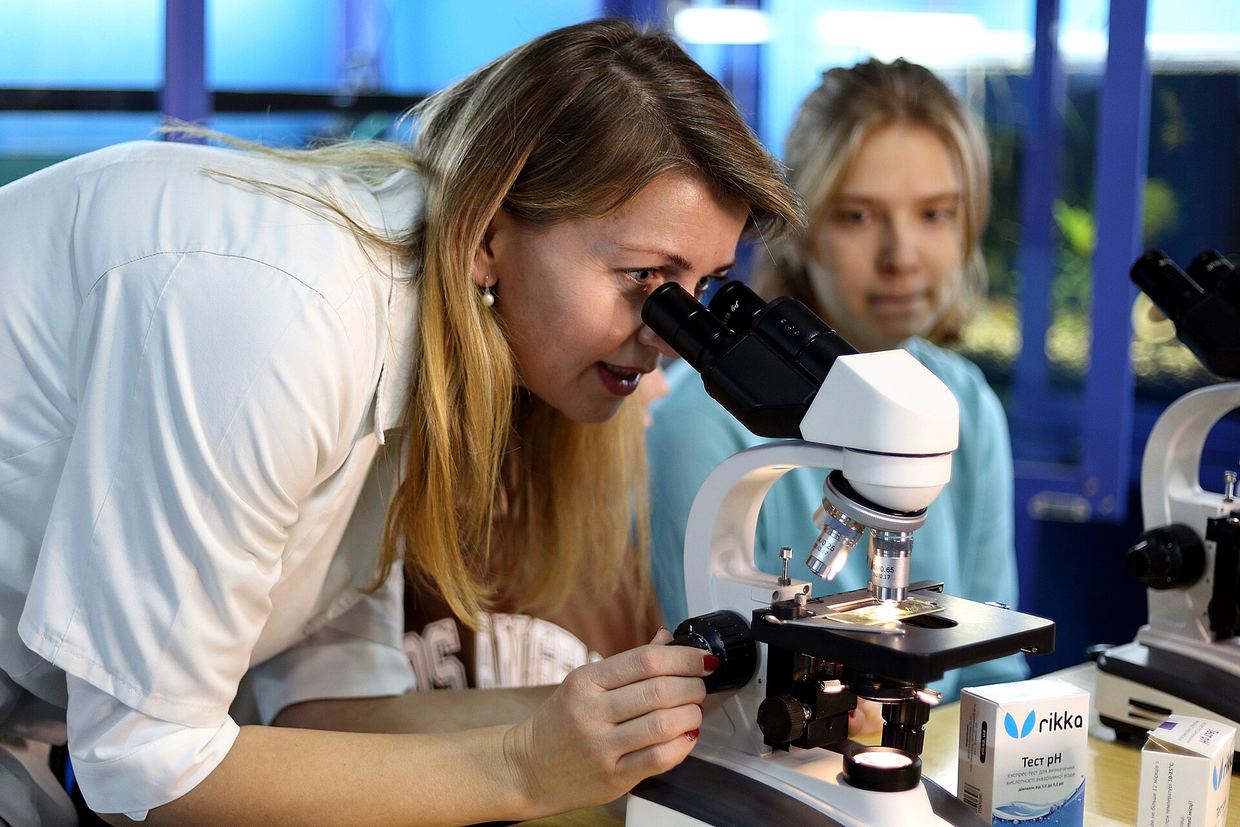
A research team led by the University of Göttingen, with the universities of Maastricht and Innsbruck and the Museo Nacional de Ciencias Naturales, sequenced 43 new transcriptomes of Zygnematophyceae. This algal class is the closest living algal relative of land plants. The work was published in PLoS Biology on 3 November 2026. Together with existing data, the new sequences gave a phylogenomic tree based on 104 zygnematophyte transcriptomes and 2,243 loci doi.org
PLoS Biologydoi.orgOpen source ↗.
Why Zygnematophyceae matter for plant evolution
All major phylogenomic studies have placed Zygnematophyceae as the algal sister group of land plants, even though their body plans are plain. It is the streptophyte algal class with the greatest species richness: according to the authors' release, more than 4,000 species have been described. Genome data exist for only a few members, so the divergence within the group and its genetic potential for key traits were poorly resolved doi.org
PLoS Biologydoi.orgOpen source ↗.
The authors say the missing piece was sampling across the full diversity of the class. The 43 new transcriptomes, collections of genes active in cells, came from strains covering a broad range of zygnematophyte lineages. The study still represents only a fraction of the described species.
Deep divergence and repeated multicellularity
The tree shows a deep genetic structure. Spirogyrales split deeply from their unicellular sister group Desmidiales, yet most Spirogyrales emerged only after pronounced genetic divergence. This divergence accompanied the origin of multicellularity and of distinct traits, including unique cell and plastid division doi.org
PLoS Biologydoi.orgOpen source ↗. The authors report signatures of massive ancient radiations that became visible only with phylodiverse sampling.
According to the analysis, the common ancestor of all Zygnematophyceae was probably a single-celled alga, and filamentous growth evolved several times independently. This suggests that multicellularity in these algae did not arise in one transition but repeatedly from simpler forms.
Cäcilia Kunz of the University of Göttingen said these algae carry genes belonging to what the team calls the "land plant heritage". Some molecular components linked to important plant functions have a longer history than land plants, she said, and their uneven distribution across algal lineages shows a dynamic toolkit. Professor Jan de Vries said that including more diversity shows evolution was not a simple progression from single cells to complex plants.