McGill putty-like dry electrode records neck muscle signals in three volunteers, proof of concept
McGill University researchers made a silver-nanowire putty electrode that moulds to skin. In a proof-of-concept test on three volunteers it recorded fatiguing neck muscles.
Researchers at McGill University have developed a putty-like dry electrode that moulds to the skin and records the activity of small neck muscles. The work was published in Science Advances on 16 October 2026 doi.org
Science Advancesdoi.orgOpen source ↗. In a proof-of-concept test, three volunteers performed vocal tasks designed to induce fatigue while the electrode recorded surface electromyography (sEMG)
doi.org
Science Advancesdoi.orgOpen source ↗. According to the authors, the sensor matched a standard clinical electrode for noise and stability.
The human study is not a clinical trial, said co-author Nicole Li-Jessen. Larger studies and regulatory approval are required before the device can be used clinically, the researchers said.
Material and electrical behaviour
The material is a composite of silver nanowires and a dynamically crosslinked, short-chain polyborosiloxane matrix doi.org
Science Advancesdoi.orgOpen source ↗. The viscoplastic matrix allows the nanowires to reorganise under deformation, so conductivity increases with strain, the authors report
doi.org
Science Advancesdoi.orgOpen source ↗. Senior author Jianyu Li said that as the putty stretches the wires rearrange and the current keeps flowing. The matrix also provides fast stress relaxation, controllable yielding and plastic conformability, which allows contact with tissue without accumulated stress
doi.org
Science Advancesdoi.orgOpen source ↗.
The composite is self-healing and reconfigurable, and it can be processed with solvents for recycling doi.org
Science Advancesdoi.orgOpen source ↗. It formed stable adhesion on porcine, rat and human skin, accommodated hair regrowth, and showed cytocompatibility and antibacterial function
doi.org
Science Advancesdoi.orgOpen source ↗. As a dry electrode it had low impedance and resolved perilaryngeal muscle fatigue in humans
doi.org
Science Advancesdoi.orgOpen source ↗.
Why the neck is difficult
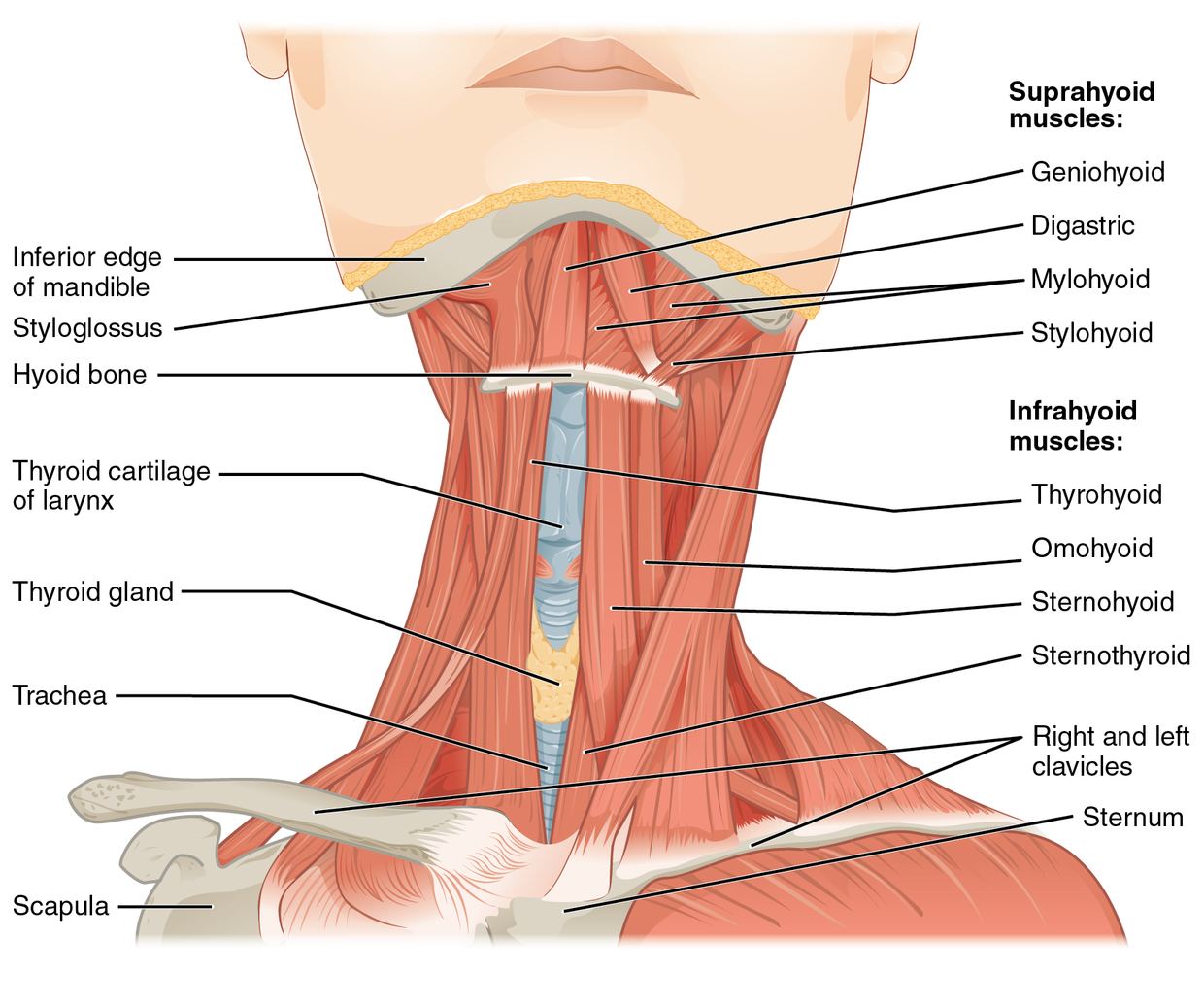
Current EMG sensors work well on large areas such as the legs and arms. For the neck, the muscles are small and the surface is highly curved, the researchers said. Most commercial sensors also need a gel to adhere to the skin and conduct signals, and a wet sensor can dry out and add noise. A dry putty can be applied closely to the skin, leaving little air between skin and sensor.
Li-Jessen, a speech pathologist, said patients are seen for 30 minutes a week or even monthly. A muscle sensor used as biofeedback during home practice could show whether a muscle is being used correctly. The researchers said the sensor could help track breathing, swallowing and speaking during rehabilitation after a stroke or in neurodegenerative diseases such as Parkinson's.