Tianjin University reviews methods for building repetitive DNA, from short repeats to 100 Mb duplications
A review covers in vitro and in vivo ways to construct repetitive DNA, about 54% of the human genome, whose engineering is limited by repeat instability.
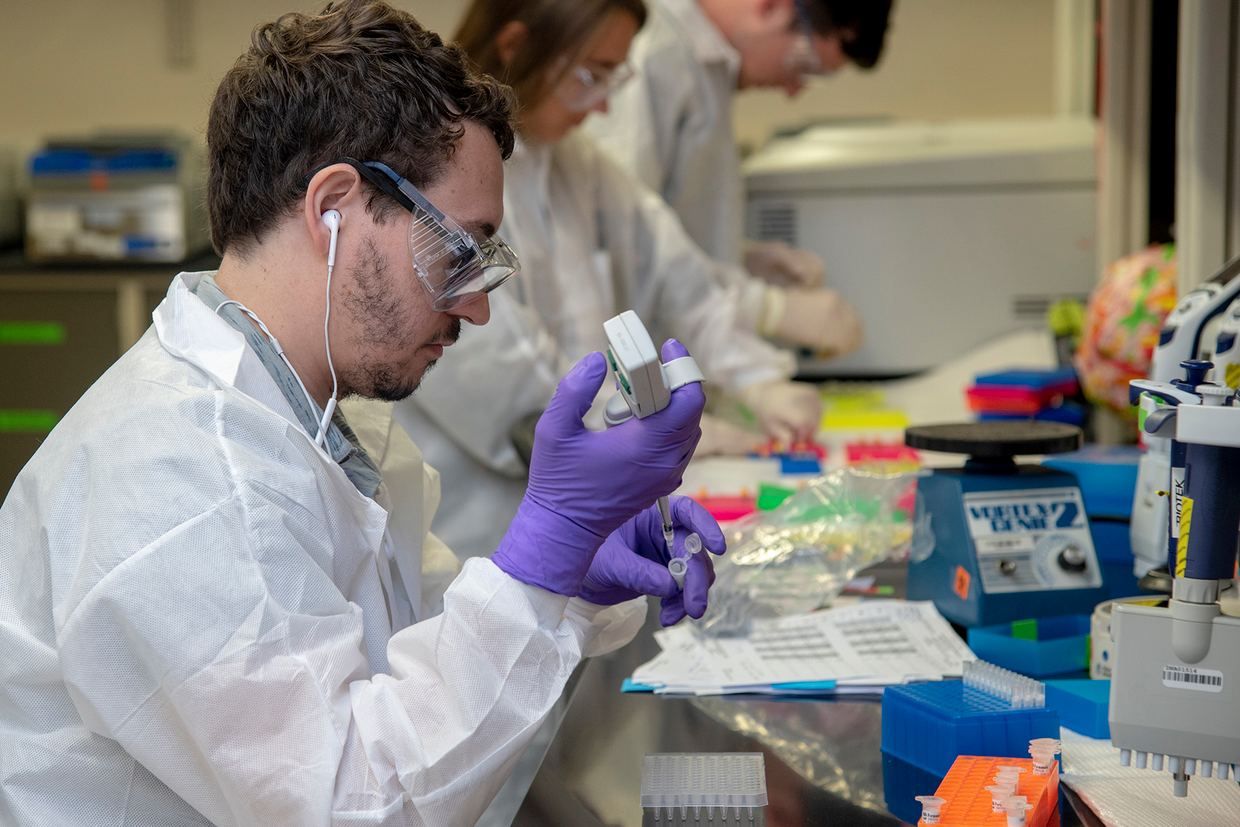
A group led by Prof. Yi Wu at Tianjin University has published the review "Technologies for engineering repetitive DNA" in Quantitative Biology; the publisher announced it on 5 November 2026. Repetitive DNA, sequence motifs that recur throughout the genome, makes up about 54% of the human genome doi.org
Quantitative Biologydoi.orgOpen source ↗. Long-read sequencing and bioinformatics now allow these regions to be characterized in depth, but engineering them is still mainly limited by repeat instability
doi.org
Quantitative Biologydoi.orgOpen source ↗.
The authors note that repeats in coding and noncoding regions play roles in evolution, gene regulation and genetic variation. They also state that more than 60 diseases, most of them neurological, are caused by repeat expansion.
In vitro and in vivo construction
The review groups construction strategies into two sets. In vitro approaches include isothermal amplification, mispairing-guided polymerase extension, restriction endonuclease-mediated ligation, in vitro homologous recombination and redundancy-minimizing design. According to the review, they can generate repeat tracts of kilobases to tens of kilobases doi.org
Quantitative Biologydoi.orgOpen source ↗.
In vivo methods use Escherichia coli, Saccharomyces cerevisiae and mammalian cells. The authors report that they assemble longer and more complex arrays, and that amplification editing achieves precise duplications from 20 bp to 100 Mb doi.org
Quantitative Biologydoi.orgOpen source ↗.
Applications and the stability question
The review discusses how these methods are used in four areas: multiplex CRISPR-Cas systems, artificial chromosome engineering, models of repeat expansion diseases, and the synthesis of protein-based and nucleic acid biomaterials doi.org
Quantitative Biologydoi.orgOpen source ↗.
The authors call for a shift from circumventing repeat instability toward actively regulating it. They name host strain engineering and epigenetic control of repeat accessibility as directions for this work. In their words, a move from "difficult to synthesize" toward "precisely controllable" could improve the manufacturability and predictability of complex repeat constructs.
The publication is a review of existing work, not a report of a new experiment. The material gives no data from a new study, and the authors' statements about future directions are their own assessment.