Mechanical force exposes aggregation-prone region in talin, letting its molecules bind each other
Stretching the R11 domain of talin exposes a region that drives talin oligomerisation, and vinculin can resolve these assemblies, the authors report.
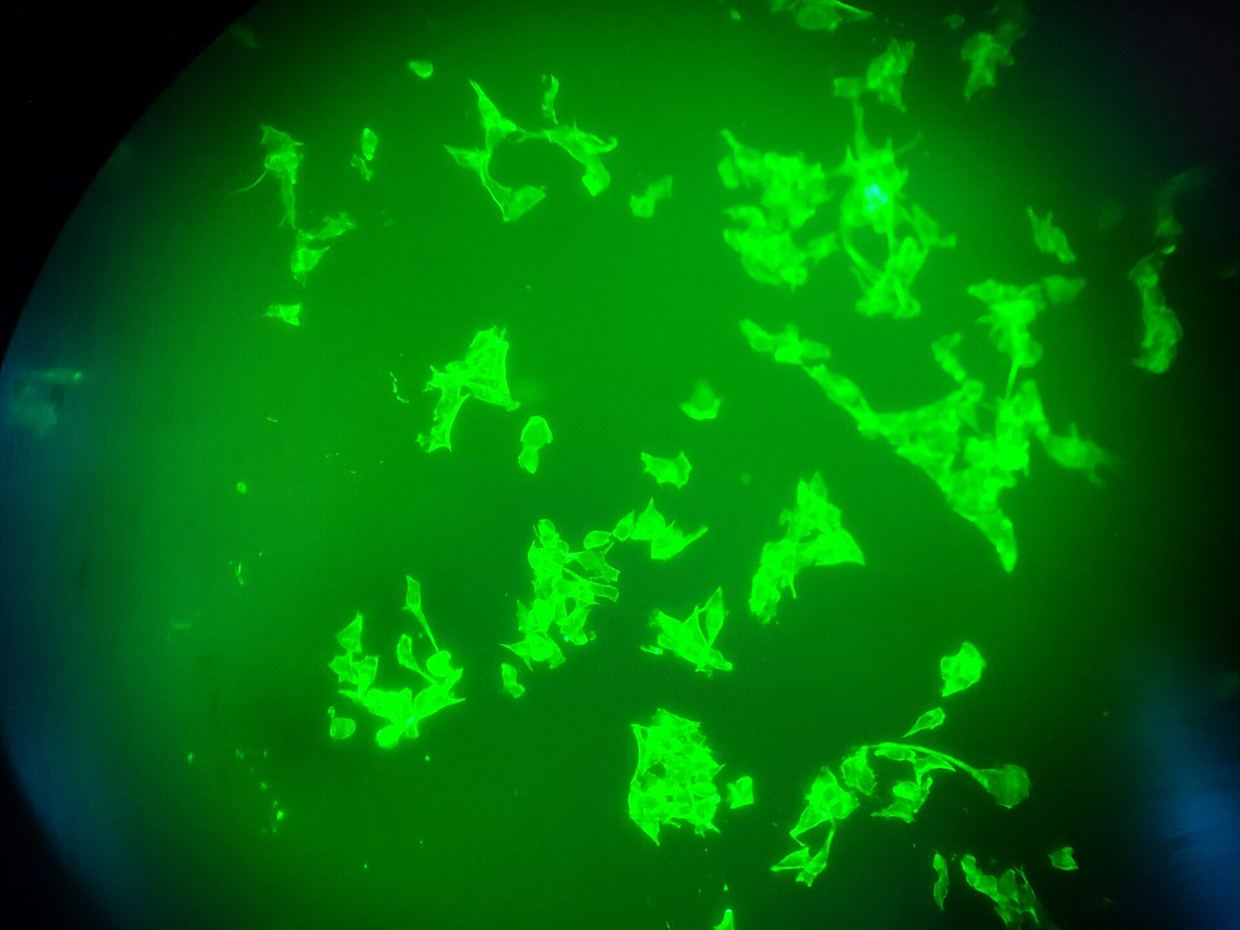
A team led by Ben Goult's laboratory at the University of Liverpool, with colleagues from Tampere University, the University of Cambridge, the University of Kent and the National University of Singapore, reports that the R11 domain of the protein talin contains a cryptic high-affinity talin-binding site. The work was published on 4 November 2026 in the Proceedings of the National Academy of Sciences. According to the authors, the site is exposed when R11 is mechanically unfolded doi.org
Proceedings of the National Academy of Sciencesdoi.orgOpen source ↗.
The region had been described earlier as a second integrin-binding site, IBS2, mapped to the R11-R12 domains in the C-terminal rod of talin doi.org
Proceedings of the National Academy of Sciencesdoi.orgOpen source ↗.
Force exposes the aggregation-prone region
Talin regulates integrins by binding the cytoplasmic tail of the integrin beta subunit. Two integrin-binding sites had been reported: IBS1 in the head domain and IBS2 in the rod. The structural details of integrin binding to IBS1 are well understood, while the mode of binding at IBS2 has remained unclear doi.org
Proceedings of the National Academy of Sciencesdoi.orgOpen source ↗.
The authors show that mechanical unfolding of R11 exposes an Aggregation Prone Region (APR) in Helix50, which oligomerises with other talin R11 domains. In their model, unfolding of one R11 exposes the APR and keeps it in a high-affinity conformation, which drives unfolding of other R11 domains and further oligomerisation doi.org
Proceedings of the National Academy of Sciencesdoi.orgOpen source ↗.
Atomic force microscopy showed that the APR region alone forms amyloid-like fibres that are micron long, with a beta-sheet amyloid arrangement. The point mutation V2078K, a canonical "gatekeeper" substitution, prevents APR interactions and abolishes the fibres. Introduced into talin, it eliminates recruitment of talin IBS2 to integrin adhesion sites doi.org
Proceedings of the National Academy of Sciencesdoi.orgOpen source ↗.
Vinculin as a mechano-chaperone
The APR overlaps a vinculin-binding site in Helix50. The authors describe a new role for vinculin as a mechano-chaperone of talin: by binding this site, it resolves the large talin species doi.org
Proceedings of the National Academy of Sciencesdoi.orgOpen source ↗.
On this basis, the authors propose that the ability of R11-R12 to target integrin adhesion complexes and enhance integrin activation is better explained by functional aggregation of talin, which recruits and activates more talin molecules at the adhesion site doi.org
Proceedings of the National Academy of Sciencesdoi.orgOpen source ↗. They note that further work is needed to fully exclude integrin binding to R11. They suggest that the name IBS2 may be a misnomer and propose Aggregation Prone Region 1 (APR1) for this talin oligomerisation motif
doi.org
Proceedings of the National Academy of Sciencesdoi.orgOpen source ↗.
Doctoral researcher Mahmudul Tanvir of Tampere University said the mechanism may help recruit additional talin to adhesion sites and contribute to reinforcement of adhesive structures. He added that the findings may open research into diseases in which cell adhesion, migration or mechanical signalling are disrupted. From Tampere, Paula Turkki, Mahmudul Hasn Tanvir and Professor Vesa Hytönen contributed to the study.
Sources · 2
Found a mistake?Read also