Oued Beht, Morocco: charcoal dates wall under Ruhlmann's 1936 rampart to 2010–1747 BC
A 2023 trench across Wall B1 exposed an older structure beneath the standing wall. Radiocarbon dates show activity at Oued Beht in the second millennium BC for the first time.
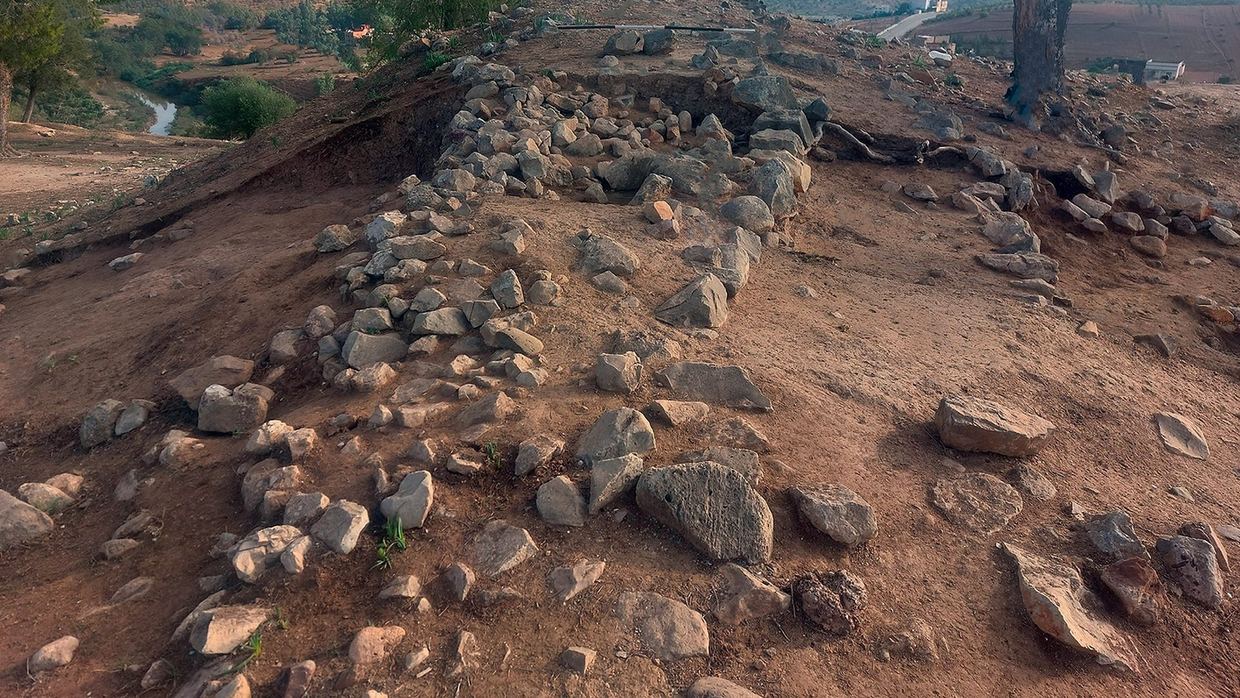
The Oued Beht Archaeological Project reports results of its third field season, which ran from 30 October to 17 November 2023 at Oued Beht, Khémisset Province, Morocco. A hand-dug trench across the largest wall, Wall B1, found an older wall buried beneath it. Charcoal from its cobble foundation gave a radiocarbon range of 2010 to 1747 BC, according to the paper in Libyan Studies doi.org
Libyan Studiesdoi.orgOpen source ↗.
In 1936 the French archaeologist Armand Ruhlmann published photographs and a sketch of the walls and took them for a prehistoric enclosure. The authors call his plan a "neat but unproven reconstruction" doi.org
Libyan Studiesdoi.orgOpen source ↗.
Wall B1 and its layers
The visible wall, F.300.2, is about 2.3 meters wide and 1.35 meters high, built of limestone blocks and cobbles in compacted earth. Beneath it lay F.300.1, an older structure of burnt and unburnt daub with ashy lenses full of charcoal, set on rounded cobbles less than 10 centimeters across. All 17 sherds from it were prehistoric. A second charcoal date, 1896 to 1623 BC, comes from burnt material that the authors link to the destruction of the first wall doi.org
Libyan Studiesdoi.orgOpen source ↗.
North of the wall the team found a parallel ditch about 1.84 meters wide and at least 65 centimeters deep. It held a polished stone axe and 18 prehistoric sherds. Three charred seeds of domesticated crops from the ditch were dated to about 1500 to 1300 BC. The lowest phase of the earth bank gave 1532 to 1424 BC and 1497 to 1300 BC doi.org
Libyan Studiesdoi.orgOpen source ↗.
The two trenches produced 17 dates, eight on seeds and nine on charcoal. Two charcoal samples with modern results were set aside.
Later use and open questions
Medieval builders returned to the same line. Charcoal from the middle phase of the bank gave two dates in the 11th to 12th centuries AD, and a stone wall just north of Wall B1 gave the 11th to 13th. According to the paper, the standing stone wall belongs to this later phase. A burial exposed in Trench 7 was dated by a molar to the 13th century AD doi.org
Libyan Studiesdoi.orgOpen source ↗.
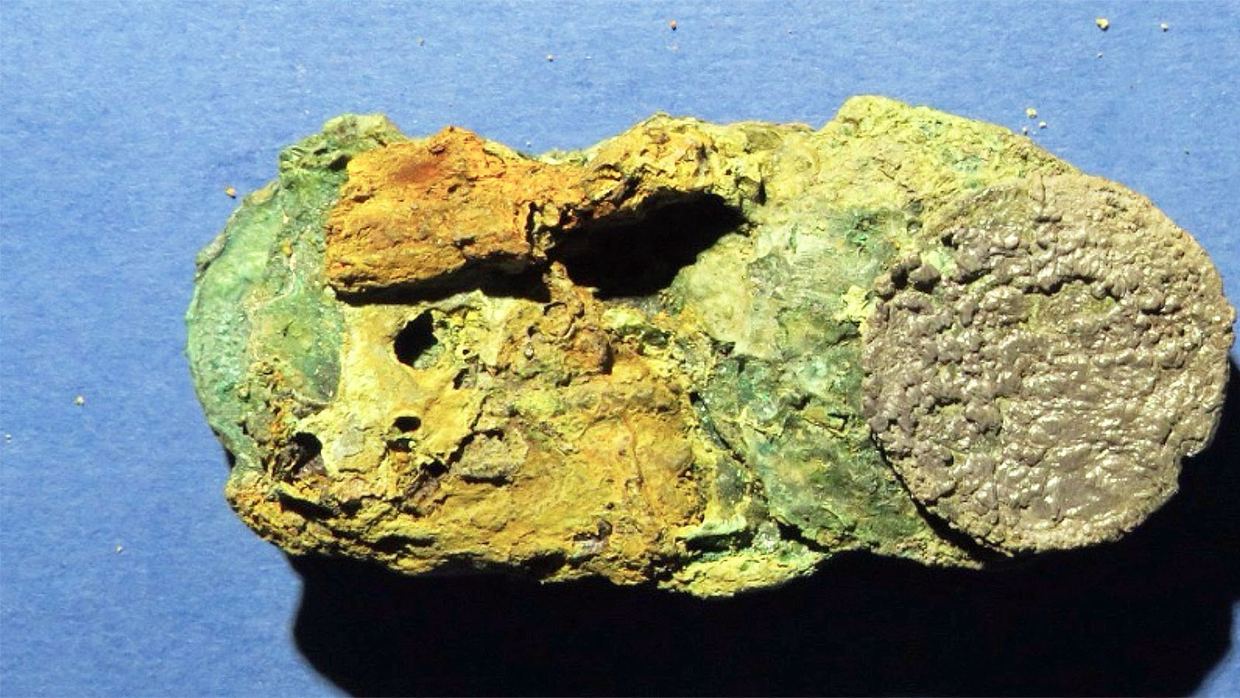
The authors describe the Wall B1 sequence as the earliest such constructions confirmed in the region. They leave the purpose open: defense is one reading, but other motives for enclosure "cannot be excluded at this stage." Wall C, the southern part of Ruhlmann's plan, has no dates, so it is unknown whether the three walls ever formed one enclosure. A copper-based rod 5.5 centimeters long came from an undated layer of the bank, and no Bronze Age metal has been confirmed at the site. Each radiocarbon date gives only the earliest possible age of its layer doi.org
Libyan Studiesdoi.orgOpen source ↗.
An earlier paper in Antiquity dated a farming community on the northern ridge to about 3400 to 2900 BC.