KIMS develops 17.5 µm carbon nanotube–MXene film that hides objects from thermal cameras
Korean researchers combined nanotubes and MXene into a thin, strong lab film. It masks infrared emission and shields over 99.99% of electromagnetic radiation.
Researchers led by Minseouk Choi at the Korea Institute of Materials Science (KIMS) in Seoul have made a thin composite film of carbon nanotubes and MXene. According to lomazoma.com, the film masks infrared emission and shields electromagnetic radiation. It is 17.5 micrometers thick and was tested in the laboratory; the work was published in Advanced Composites and Hybrid Materials in 2026. lomazoma.com
lomazoma.comlomazoma.comOpen source ↗
Structure of the nanotube–MXene composite
Each component has drawbacks on its own. Carbon nanotubes are conductive, strong and flexible, but they absorb infrared radiation and heat up quickly, and weaving them into a uniform surface takes time. MXenes, discovered in 2011, are two-dimensional materials made of metals with carbon or nitrogen. They shield electromagnetic radiation and emit little infrared, but ultrathin MXene layers are fragile and tear easily. lomazoma.com
lomazoma.comlomazoma.comOpen source ↗
The team first attached amine groups (-NH2) to the carbon framework of the nanotubes. According to the researchers, this promotes strong hydrogen bonds with the hydroxyl groups of the MXene. The nanotubes were then drawn through a liquid solution of titanium carbide MXene (Ti3C2Tx) and woven into a flat thin film. The authors describe the MXene as a conductive, adhesive "mortar" joining ordered "bricks" of nanotubes. lomazoma.com
lomazoma.comlomazoma.comOpen source ↗
Thermal imaging, shielding and strength tests
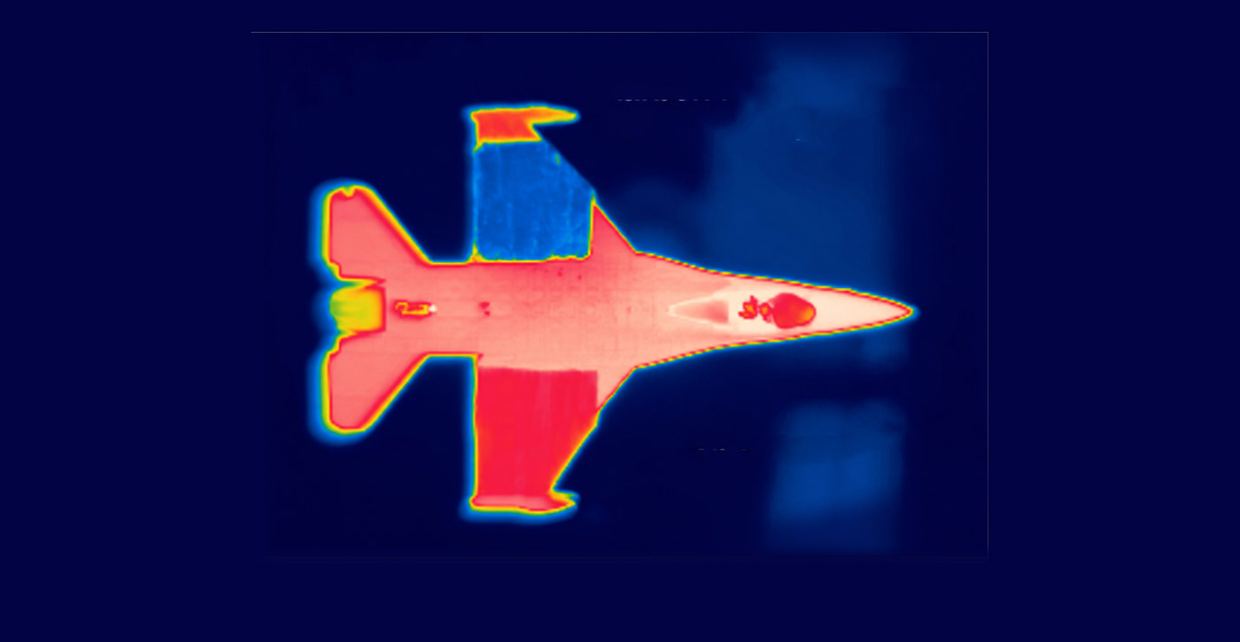
The film was attached to a hand, a warm phone and a model aircraft. The objects were imaged with a thermal camera in cold, normal and warm surroundings. In all cases the covered object appeared as cool as its environment. lomazoma.com
lomazoma.comlomazoma.comOpen source ↗
At common radar and telecommunication frequencies, the coating shielded more than 99.99 percent of incident electromagnetic radiation, which the team reports as attenuation above 90 decibels. The shielding was retained at high temperature, high humidity and under repeated deformation of the material. lomazoma.com
lomazoma.comlomazoma.comOpen source ↗
The composite had a tensile strength above one gigapascal and remained stable at pressures up to 22 gigapascal. The researchers say this is comparable to the strength of steel, and that moisture corrosion and oxidation hardly affect the material. lomazoma.com
lomazoma.comlomazoma.comOpen source ↗
The authors suggest uses for aircraft and drones, as well as suppression of electromagnetic interference in telecommunications and wearable electronics. A patent application has been filed. The team plans to optimize production further, aiming to simplify large-scale manufacture of thin films and their integration into real components. lomazoma.com
lomazoma.comlomazoma.comOpen source ↗