Tohoku University identifies lawsonite-driven partial melting in Colorado Plateau xenolith
Researchers found microscopic melt traces in an ancient eclogite xenolith, revealing a rapid two-stage transport process beneath the Colorado Plateau.
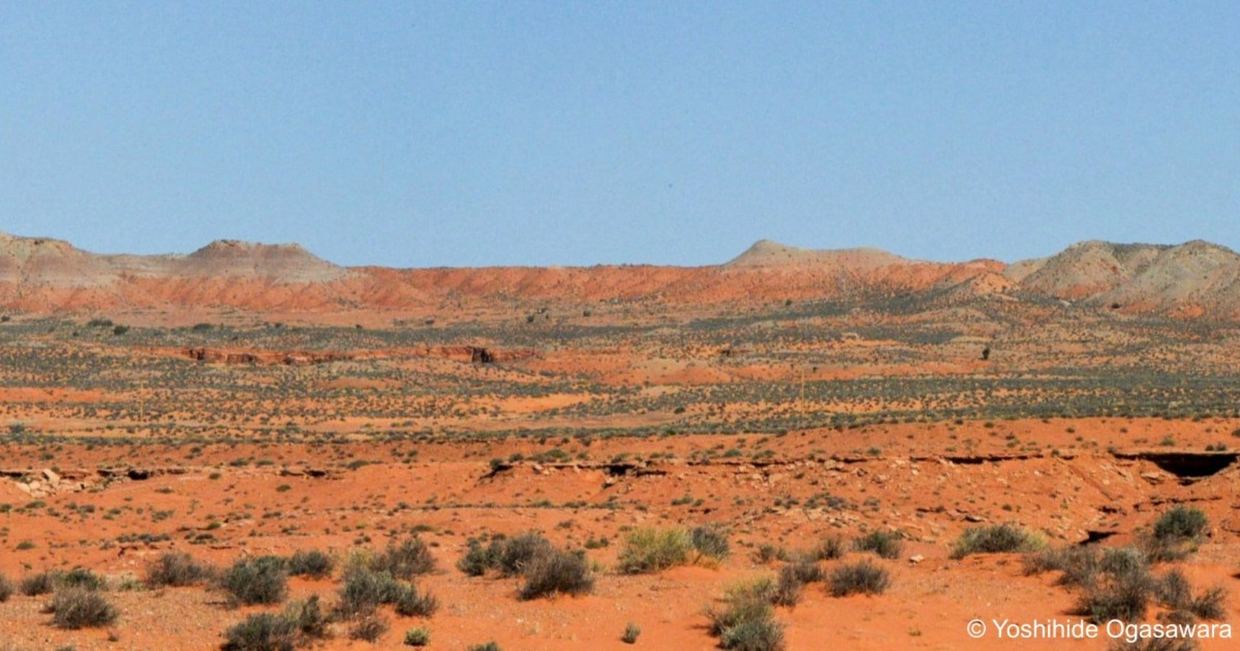
A team of researchers from Tohoku University, JAMSTEC, the University of Bayreuth, and Ehime University reported evidence of mineral breakdown triggering rock melting deep beneath North America, according to tohoku.ac.jp. By analyzing an ancient eclogite xenolith from the Colorado Plateau under high-resolution microscopes, the scientists identified microscopic remnants indicating that water-bearing lawsonite broke down and caused the host rock to partially melt tohoku.ac.jp
tohoku.ac.jptohoku.ac.jpOpen source ↗. The authors identified this as the first evidence of lawsonite releasing water to trigger partial melting in a natural rock sample
tohoku.ac.jp
tohoku.ac.jptohoku.ac.jpOpen source ↗.
Around 28 million years ago, the Farallon Plate sinking beneath North America released water into the mantle during an event called the Great Hydration, driving regional uplift and explosive eruptions. Scientists sought to determine how high-pressure rocks from these depths were moved to the surface.
Mineral signatures and thermal pulse
High-resolution microscopy of the eclogite fragment revealed unusual alterations in omphacite, a primary eclogite mineral, alongside tiny pockets of silica-rich glass tohoku.ac.jp
tohoku.ac.jptohoku.ac.jpOpen source ↗. These mineral features demonstrate that the rock reached temperatures exceeding 800°C, causing localized melting
tohoku.ac.jp
tohoku.ac.jptohoku.ac.jpOpen source ↗. While the original lawsonite crystals were completely consumed, they left distinct replacement textures and melted material produced when the hydrous mineral decomposed under high heat
tohoku.ac.jp
tohoku.ac.jptohoku.ac.jpOpen source ↗.
Calculations conducted by the team indicate that this thermal episode was rapid. The heating phase likely lasted under 10 years if the xenolith came into direct contact with surrounding hot magma at approximately 1100°C tohoku.ac.jp
tohoku.ac.jptohoku.ac.jpOpen source ↗.
Two-stage crustal transport
The analytical findings point to a two-step mechanism for transporting the deep-seated rock to the surface. Initially, ascending hot magma entrained the eclogite from deep inside the mantle, heating it rapidly during ascent tohoku.ac.jp
tohoku.ac.jptohoku.ac.jpOpen source ↗. The fragment then cooled at intermediate depths shallower than roughly 60 kilometers
tohoku.ac.jp
tohoku.ac.jptohoku.ac.jpOpen source ↗.
A subsequent explosive volcanic event later brought the xenolith to the surface, preserving the microscopic melt traces within the crystal matrix tohoku.ac.jp
tohoku.ac.jptohoku.ac.jpOpen source ↗. The findings provide direct observational constraints on deep fluid release and magma interactions during tectonic subduction.