ZooMS protein analysis shows Ireland's 'Kerry Cow' bones were a bear and a wild boar
Bone fragments from Ferriter's Cove, long read as the earliest domesticated cattle in Ireland, belong to a bear and a wild boar, so evidence of pre-4000 BCE farming is gone.
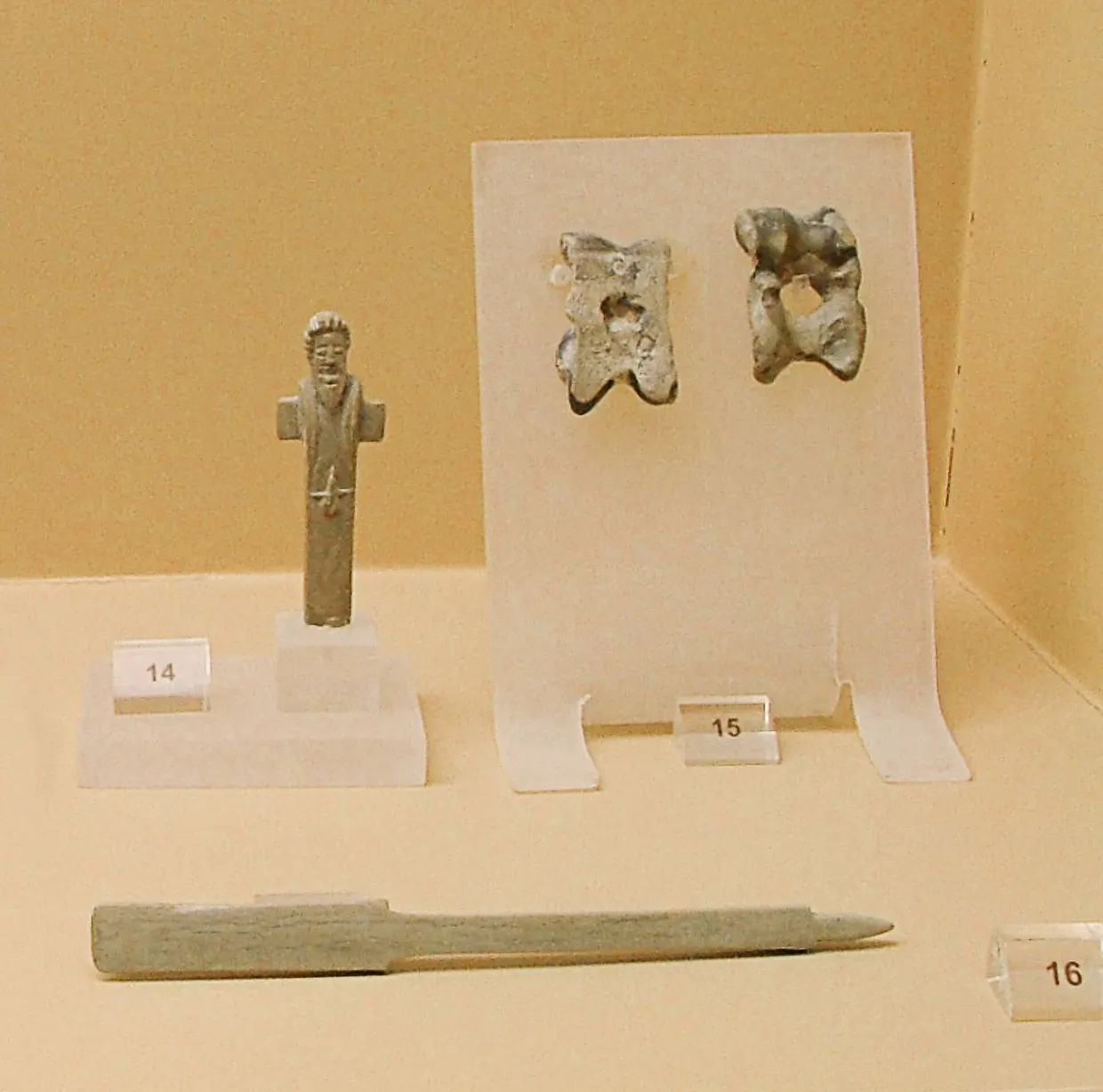
Researchers at University College Dublin (UCD) and University College Cork (UCC) have found that bone fragments long identified as domesticated cattle at Ferriter's Cove, County Kerry, come from a bear and a wild boar, SciTechDaily reports. scitechdaily.com
SciTechDailyscitechdaily.comOpen source ↗ The "Kerry Cow" had shaped the account of how farming reached Ireland for more than 30 years. The new analysis was reported in PAST, the newsletter of the Prehistoric Society.
The fragments were excavated in the 1980s and 1990s at Ferriter's Cove, a small bay on the Dingle Peninsula. They date to the end of the Irish Mesolithic, which lasted from 8000 to 4000 BCE, and were regarded as the earliest evidence of domesticated farm animals in Ireland or Britain. That reading suggested that local hunter-gatherers had contacts with Neolithic farmers from continental Europe before agriculture took hold on the island.
ZooMS identification of the bones
The team led by Dr. Martin Moucheron (UCD) returned to the original material, now stored at UCC. Together with Drs. Benjamin Gearey, Barra Ó Donnabháin and Margaret McCarthy (UCC) and Kate Kanne (UCD), they sent the bones to the CNRS laboratory in Lille, France.
There the fragments were analysed with ZooMS, a technique that identifies animals from proteins preserved in bone collagen, a structural component of bone. The result was bear and wild boar, not the domesticated cattle on which the earlier interpretation depended. scitechdaily.com
SciTechDailyscitechdaily.comOpen source ↗
What changes for Irish prehistory
According to the authors, there is currently no archaeological evidence that domesticated cattle, and by extension early farming communities, reached or influenced Ireland before 4000 BCE. Losing this evidence does not establish a new arrival date, but it changes the basis for reconstructing the transition.
The work is part of a postdoctoral project at UCD's School of Archaeology, led by Moucheron under the mentorship of Professor Graeme Warren, which re-examines important Mesolithic sites with modern scientific techniques.
Further analyses are under way to determine whether the bear remains belonged to brown bears or polar bears. The researchers hope this will add to knowledge of Ireland's prehistoric bear populations before their extinction during the Bronze Age. scitechdaily.com
SciTechDailyscitechdaily.comOpen source ↗