Codfishes Compensated for Essential Gene Loss via Aqp4 Channel Adaptation
Biologists found that codfishes produce buoyant pelagic eggs despite losing the aqp1ab genes by co-opting the Aqp4 water channel.
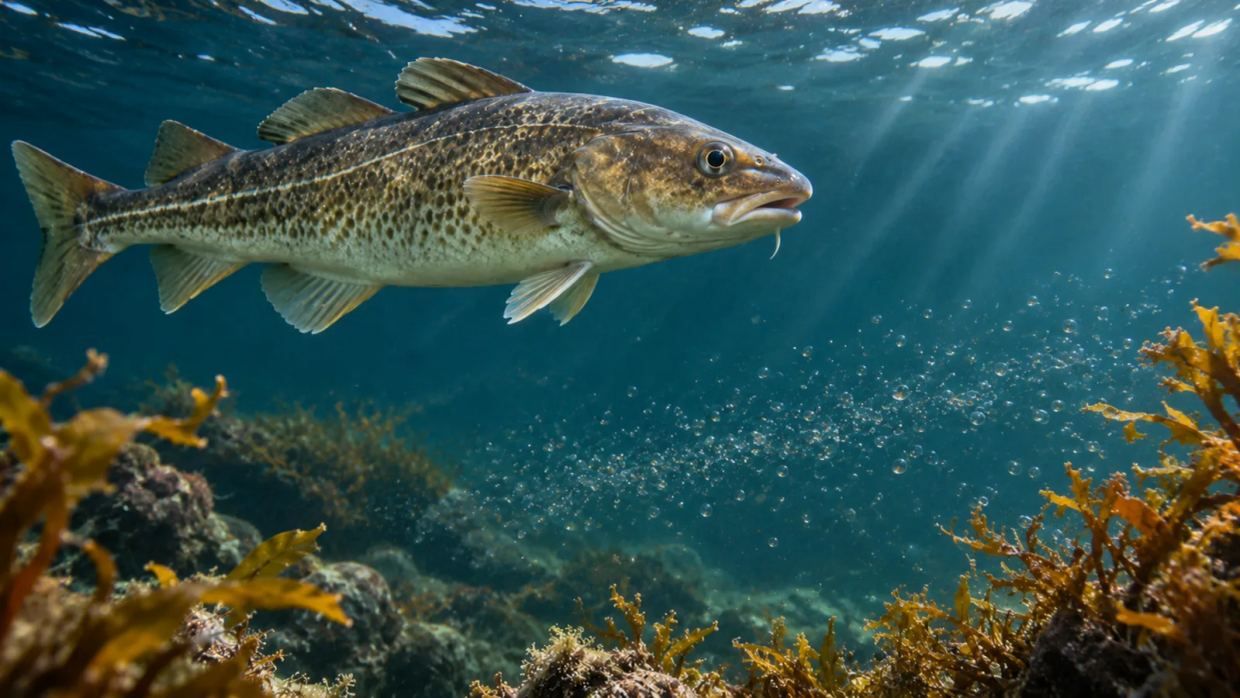
Biologists led by researchers from the University of Bergen revealed how codfishes generate highly hydrated floating eggs despite lacking genes long considered vital for embryonic survival, according to a study published in the Proceedings of the National Academy of Sciences doi.org
Proceedings of the National Academy of Sciencesdoi.orgOpen source ↗. All members of the order Gadiformes completely lost the aqp1ab-type aquaporin genes that typical marine teleosts rely on to hydrate their pelagic eggs
doi.org
Proceedings of the National Academy of Sciencesdoi.orgOpen source ↗. Despite this genetic loss, Atlantic cod produce pelagic eggs with water contents ranging between 93 and 97 percent
doi.org
Proceedings of the National Academy of Sciencesdoi.orgOpen source ↗.
Comparative transcript analyses across freshwater and marine teleosts showed that the osmotic drive mechanisms driving water uptake remain preserved in cod doi.org
Proceedings of the National Academy of Sciencesdoi.orgOpen source ↗. Proteolysis of yolk proteins into free amino acids continues to build the necessary osmotic gradient
doi.org
Proceedings of the National Academy of Sciencesdoi.orgOpen source ↗. However, instead of utilizing the lost channels, Gadiformes co-opted an Aqp4-type channel that has been chromosomally linked to the Aqp1-type channels in jawed vertebrates for over 450 million years
doi.org
Proceedings of the National Academy of Sciencesdoi.orgOpen source ↗.
Co-opting Freshwater Pathways
Functional assays, immunolocalization, and inhibition experiments performed on Atlantic cod and zebrafish demonstrated distinct physiological roles for the short isoforms of Aqp4 doi.org
Proceedings of the National Academy of Sciencesdoi.orgOpen source ↗. In zebrafish, representing ancestral freshwater lineages, Aqp4 is strictly required during ovulation for follicular egg release
doi.org
Proceedings of the National Academy of Sciencesdoi.orgOpen source ↗. Targeted inhibition experiments in Atlantic cod confirmed that blocking Aqp4 directly prevents the massive hydration of the maturing oocyte rather than ovulation alone
doi.org
Proceedings of the National Academy of Sciencesdoi.orgOpen source ↗.
Evolutionary Transition
Comparative genomic data from closely related taxa indicate that the loss of aqp1ab and the subsequent recruitment of Aqp4 occurred between 60 and 84 million years ago doi.org
Proceedings of the National Academy of Sciencesdoi.orgOpen source ↗. While ancestral and modern pelagic marine lineages continue to depend on aqp1ab, Gadiformes averted reproductive failure by repurposing the existing freshwater ovulatory machinery
doi.org
Proceedings of the National Academy of Sciencesdoi.orgOpen source ↗.