UFSC Study Maps Carbon Pools Across Vegetation, Litter, and Soil in Mixed Forest
Researchers quantified carbon partitioning in a southern Brazilian forest fragment, identifying terrain slope and species evenness as key drivers.
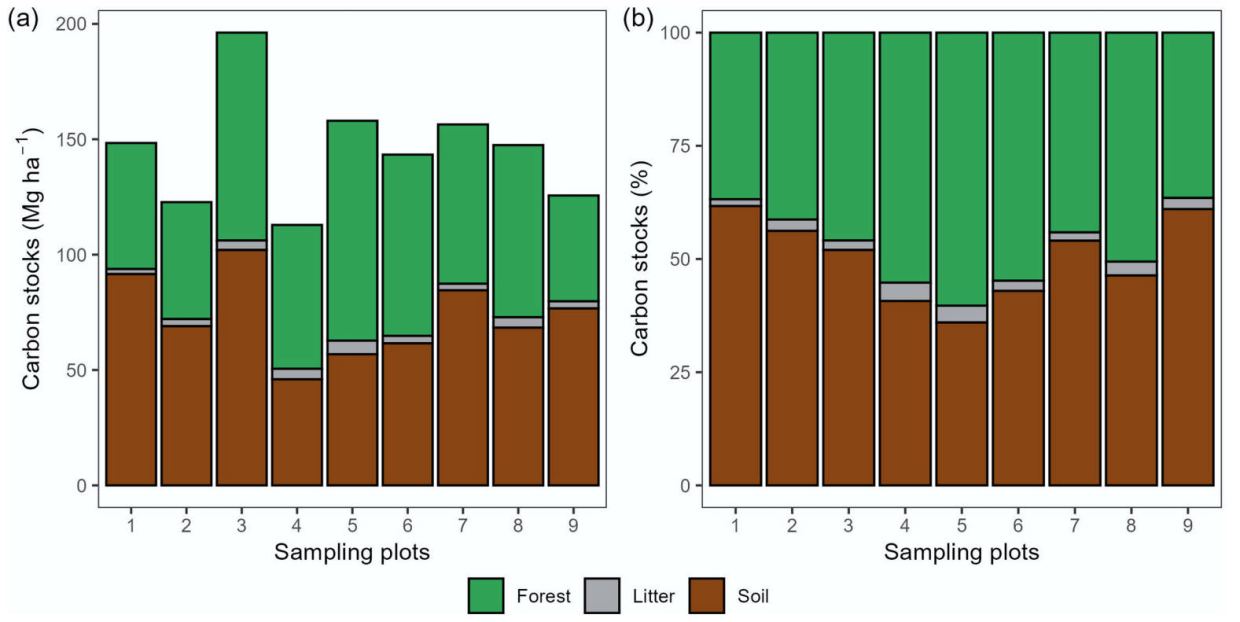
A research team from the Federal University of Santa Catarina evaluated carbon distribution across biomass, litter, and soil pools in southern Brazil, publishing their findings in Environmental and Biogeochemical Processes doi.org
Environmental and Biogeochemical Processesdoi.orgOpen source ↗. The field survey examined nine permanent 40 by 50 meter plots within an 8.3-hectare fragment of mixed ombrophilous forest in Curitibanos. Across all plots, average carbon storage reached 69.0 metric tons per hectare in aboveground vegetation, 3.7 metric tons per hectare in litter, and 73.0 metric tons per hectare in the upper 30 centimeters of soil
doi.org
Environmental and Biogeochemical Processesdoi.orgOpen source ↗.
Slope Modulates Litter Dynamics
The researchers inventoried all trees with trunk diameters of at least 10 centimeters, calculating stand basal area, wood density, and aboveground biomass doi.org
Environmental and Biogeochemical Processesdoi.orgOpen source ↗. Forest floor litter was sampled from four quadrats per plot, while soil cores were gathered from three successive layers down to a depth of 30 centimeters to evaluate organic carbon concentration and bulk density
doi.org
Environmental and Biogeochemical Processesdoi.orgOpen source ↗.
Statistical models showed that forest basal area and aboveground carbon stocks correlated positively with litter carbon storage doi.org
Environmental and Biogeochemical Processesdoi.orgOpen source ↗. However, terrain slope moderated these effects: incorporating slope into the regression models increased the explained variance of litter carbon to approximately 79% for basal area and 76% for aboveground carbon
doi.org
Environmental and Biogeochemical Processesdoi.orgOpen source ↗. The positive link between aboveground structure and forest floor litter weakened on steeper terrain and became undetectable at the highest modeled slope levels
doi.org
Environmental and Biogeochemical Processesdoi.orgOpen source ↗.
Species Evenness Drives Soil Stocks
While soil contained the largest carbon pool in most surveyed plots, litter carbon stocks and overall species diversity indices failed to predict soil carbon storage directly doi.org
Environmental and Biogeochemical Processesdoi.orgOpen source ↗. Instead, tree species evenness, which reflects the numerical balance among present species, accounted for approximately 57% of the variation in soil carbon stocks
doi.org
Environmental and Biogeochemical Processesdoi.orgOpen source ↗.
This relationship between species evenness and soil carbon operated independently of terrain slope doi.org
Environmental and Biogeochemical Processesdoi.orgOpen source ↗. In addition, carbon stored strictly within Araucaria angustifolia trees showed no significant predictive relationship with litter carbon, despite the species being a dominant component of aboveground biomass in this ecosystem
doi.org
Environmental and Biogeochemical Processesdoi.orgOpen source ↗. The authors concluded that integrated carbon accounting must incorporate topographic variables and ecological community balance across broader environmental gradients
doi.org
Environmental and Biogeochemical Processesdoi.orgOpen source ↗.