Dinosaur skeleton sold for $47.3 million at Sotheby's auction
A 67-million-year-old fossil named Jodi was acquired for $47.3 million, sparking discussions over scientific research access.
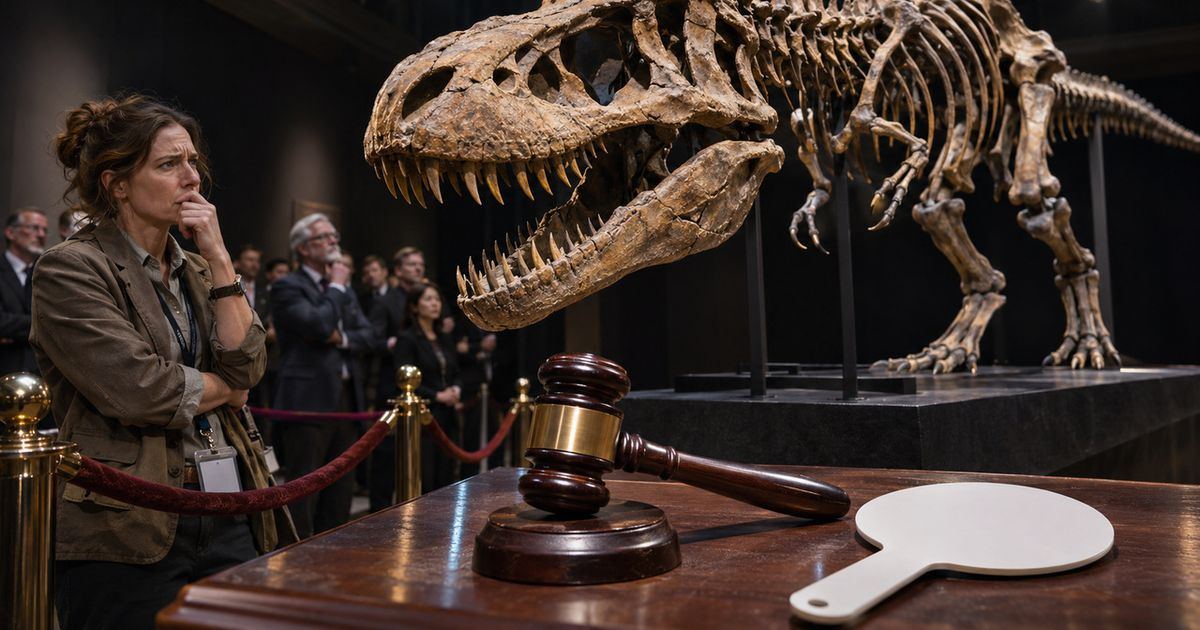
In October 2026, a fossilized dinosaur skeleton known as Jodi was sold at a Sotheby's auction for $47.3 million following a twelve-minute bidding competition, according to catracalivre.com.br catracalivre.com.br
catracalivre.com.brcatracalivre.com.brOpen source ↗. The specimen had been originally discovered in 2019 on a private property in Montana by landowner Jodi Pierson, with the subsequent excavation led by her cousin Clayton Phipps
catracalivre.com.br
catracalivre.com.brcatracalivre.com.brOpen source ↗. The auction house had initially estimated the lot at $6 million to $9 million before six interested parties drove the final price up by more than five times
catracalivre.com.br
catracalivre.com.brcatracalivre.com.brOpen source ↗.
Anatomical details and classification
The fossil consists of key structural elements of a carnivorous dinosaur dating back approximately 67 million years catracalivre.com.br
catracalivre.com.brcatracalivre.com.brOpen source ↗. The recovered individual measures about 5.8 meters in length and includes a skull, teeth, ribs, vertebrae, and limb bones
catracalivre.com.br
catracalivre.com.brcatracalivre.com.brOpen source ↗. Such structural completeness allows researchers to analyze proportions and anatomy in far greater detail than isolated bone fragments
catracalivre.com.br
catracalivre.com.brcatracalivre.com.brOpen source ↗.
The specimen was classified as Nanotyrannus cf. lancensis, placing it directly into a long-standing debate among paleontologists catracalivre.com.br
catracalivre.com.brcatracalivre.com.brOpen source ↗. For decades, specialists have disputed whether Nanotyrannus represents a distinct predatory genus or an early juvenile stage of Tyrannosaurus rex
catracalivre.com.br
catracalivre.com.brcatracalivre.com.brOpen source ↗. While studies published in 2025 supported the interpretation of a separate genus, the taxonomic distinction relies heavily on comparative morphological data such as dental, arm, leg, and cranial features belonging to the same individual
catracalivre.com.br
catracalivre.com.brcatracalivre.com.brOpen source ↗.
Research access and provenance
The identity of the winning bidder was not publicly disclosed, leaving future access to the physical specimen uncertain catracalivre.com.br
catracalivre.com.brcatracalivre.com.brOpen source ↗. Paleontologists emphasize that scientific progress requires direct access to original bone material for cross-validation, physical measurements, and future re-evaluations
catracalivre.com.br
catracalivre.com.brcatracalivre.com.brOpen source ↗. While high-resolution imaging and casts provide useful documentation, private acquisitions carry no automatic guarantee of permanent access for academic teams
catracalivre.com.br
catracalivre.com.brcatracalivre.com.brOpen source ↗. Provenance data, rock layer positioning, and precise restoration records remain critical for interpreting the fossil's evolutionary significance
catracalivre.com.br
catracalivre.com.brcatracalivre.com.brOpen source ↗.