MEGATRON simulations link dwarf galaxy iron plateau to single pair-instability supernovae
Cosmological simulations reproduce the observed iron plateau in ultra-faint Milky Way satellites through early enrichment by Population III supermassive stars.
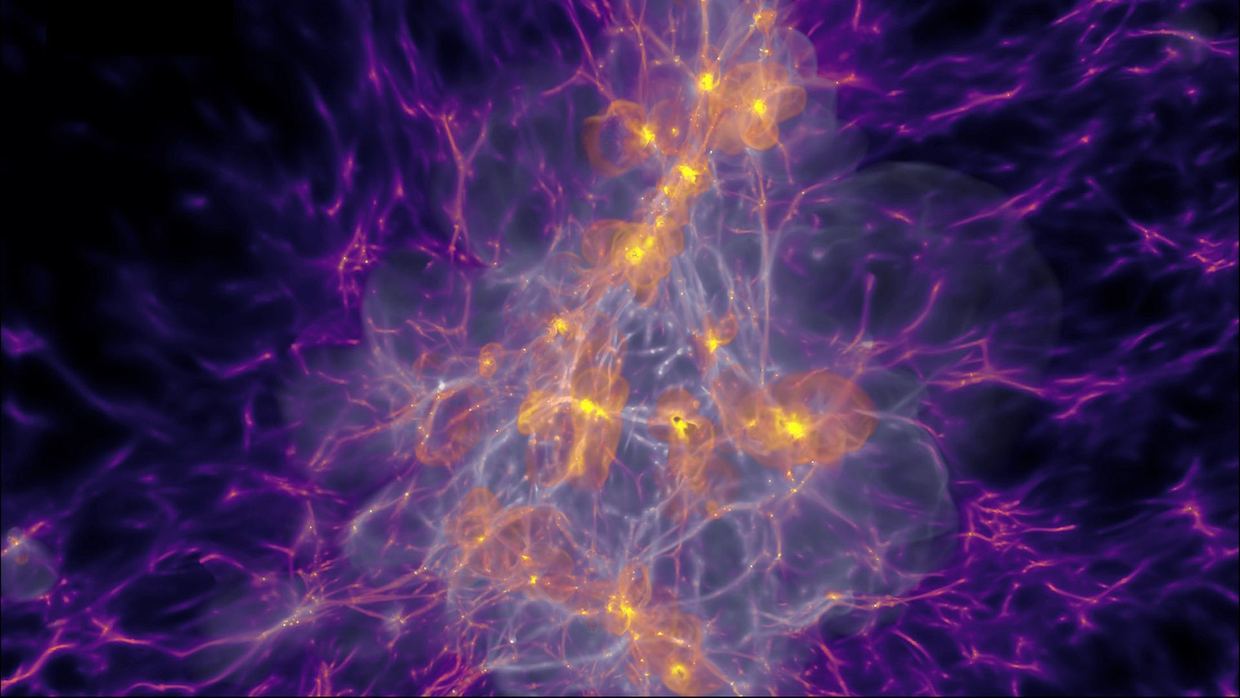
Cosmological radiation-hydrodynamics simulations carried out with the MEGATRON framework explain the origin of uniform iron abundances observed in the faintest dwarf satellites around the Milky Way, according to a study published in The Open Journal of Astrophysics doi.org
The Open Journal of Astrophysicsdoi.orgOpen source ↗. The project, led by researchers from the University of Bath alongside collaborators from the University of Chicago and the Institut d’Astrophysique de Paris, tracked gas dynamics, chemistry involving over 80 species, and stellar feedback up to redshift z ≈ 8
doi.org
The Open Journal of Astrophysicsdoi.orgOpen source ↗.
Among larger dwarf systems, average metallicity scales down with stellar mass, but below a certain threshold this trend flattens into an iron plateau doi.org
The Open Journal of Astrophysicsdoi.orgOpen source ↗. Real dwarf galaxies in this regime average roughly one three-hundredth of the solar iron fraction. Across four simulation variants testing diverse Population II stellar feedback models, over 500 small galaxies formed, and approximately 78 percent of the lowest-mass systems settled directly along this iron plateau
doi.org
The Open Journal of Astrophysicsdoi.orgOpen source ↗.
Single Supernova Enrichment
Because the iron abundance remained consistent across varying Population II feedback parameters, researchers tied the enrichment to Population III stars doi.org
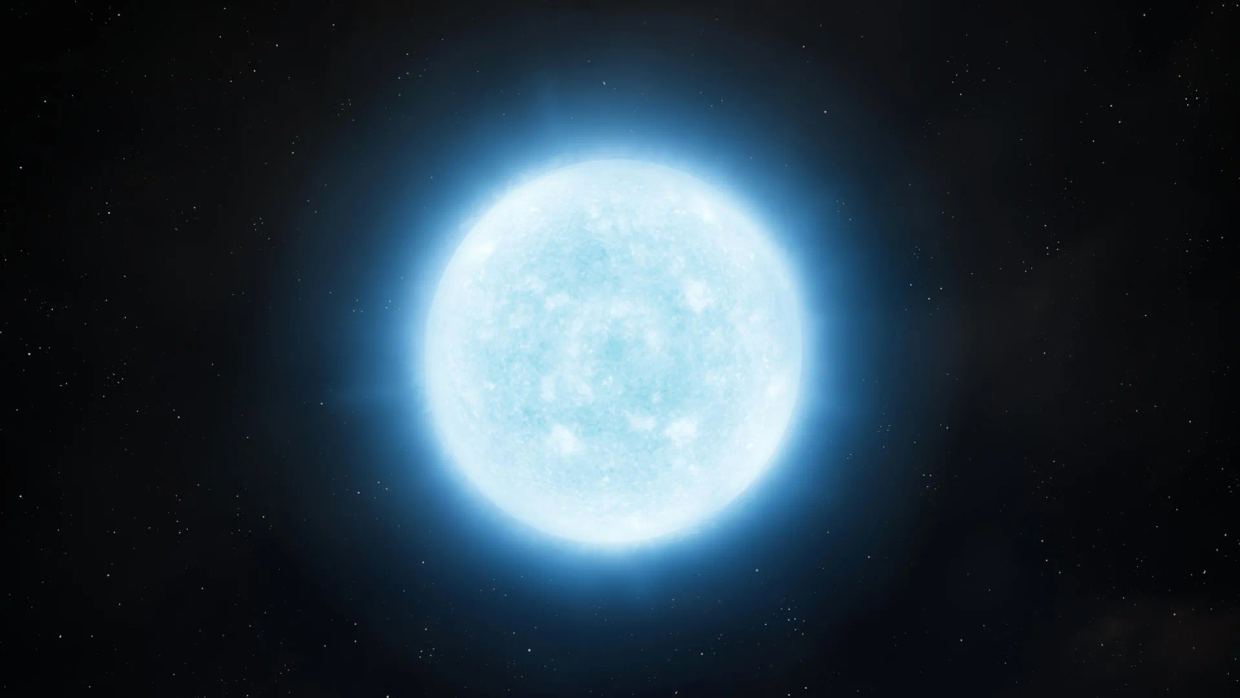
The Open Journal of Astrophysicsdoi.orgOpen source ↗. In most simulated ultra-faint galaxies, the metals originated from exactly one explosion of a primordial giant star with a mass between 160 and 300 solar masses
doi.org
The Open Journal of Astrophysicsdoi.orgOpen source ↗. Such pair-instability supernovae generate roughly 5 solar masses of iron
doi.org
The Open Journal of Astrophysicsdoi.orgOpen source ↗.
Ejecting this material usually unbinds gas in low-mass structures, but strong Lyman-Werner radiation from the central protogalaxy suppressed molecular hydrogen formation, preventing collapse in smaller clumps doi.org
The Open Journal of Astrophysicsdoi.orgOpen source ↗. Consequently, Population III stars formed only inside dark matter and gas halos massive enough, around 10 million solar masses, to retain the supernova ejecta by gravity
doi.org
The Open Journal of Astrophysicsdoi.orgOpen source ↗.
Predictions for Iron-Deficient Halos
The simulations also predict a tail of approximately 20 percent of iron-deficient dwarf galaxies, where lower-mass primordial stars around 140 solar masses produced roughly a tenth as much iron doi.org
The Open Journal of Astrophysicsdoi.orgOpen source ↗. In the dataset, about 22 percent of low-mass systems dropped below the plateau
doi.org
The Open Journal of Astrophysicsdoi.orgOpen source ↗. While none of the 38 observed ultra-faint galaxies currently fall firmly below this line, the authors calculated a 0.02 percent chance of observing zero outliers given this sample size, leaving future spectroscopic surveys to confirm or rule out this population
doi.org
The Open Journal of Astrophysicsdoi.orgOpen source ↗.