FU Berlin models 2020–2100 heatwaves surpassing recent records across multiple metrics
Climate simulations show projected 21st-century heatwaves will exceed recent terrestrial extremes in duration, spatial extent, and cumulative heat.
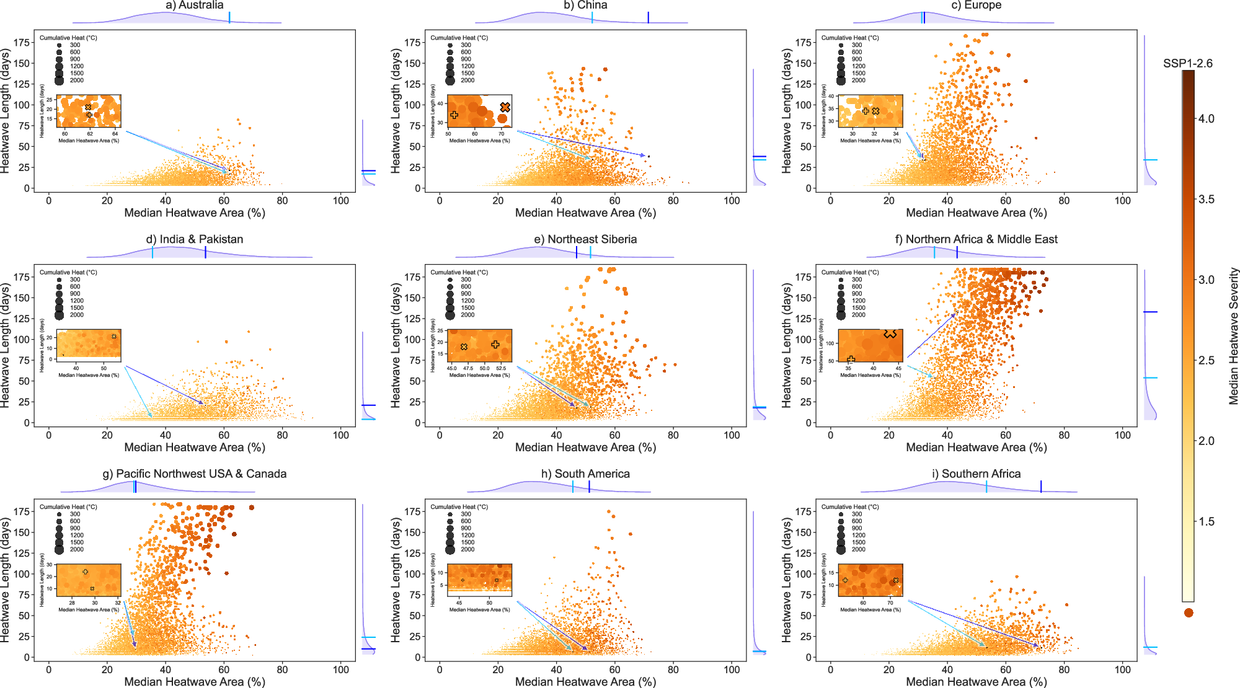
Researchers from Freie Universität Berlin have analyzed future heatwaves projected between 2020 and 2100 against historical observations from 2010 to 2023, according to a study published on nature.com. The research evaluated global climate projections from the CMIP6 and CMIP5 multi-model ensembles across Shared Socioeconomic Pathways, alongside the CanESM5 and ACCESS-ESM1.5 single model initial-condition large ensembles nature.com
nature.comnature.comOpen source ↗.
Modeling parameters and observational datasets
The authors examined 22 observed terrestrial heatwaves from 2010 to 2023, focusing on a subset of nine events recorded between 2015 and 2023. These historical events were ranked using the Berkeley Earth and ERA5 datasets. Heatwaves were defined using four calendar-day-based maximum temperature thresholds: the 90th, 95th, 97.5th, and 99th percentiles sustained for at least three consecutive days nature.com
nature.comnature.comOpen source ↗. The analysis focused primarily on the 90th percentile threshold across low-, intermediate-, high-, and very high-emissions scenarios, including SSP1-2.6, SSP2-4.5, SSP3-7.0, and SSP5-8.5, as well as RCP2.6, RCP4.5, and RCP8.5.
Projected characteristics and multi-month duration
The simulations evaluated six heatwave characteristics: duration, cumulative heat, median event severity, maximum event severity, median spatial extent, and maximum spatial extent. The team reported that projected events outmatched recent exceptional heatwaves across multiple metrics, particularly towards the end of the 21st century nature.com
nature.comnature.comOpen source ↗. Even under low-emissions scenarios such as SSP1-2.6 and RCP2.6, projected heatwaves exceeded observed reference benchmarks in several regions.
Under high- and very high-emissions scenarios, the models showed heatwaves generating several times more cumulative heat than observed extremes. Additionally, modeled heatwaves in these trajectories reached lengths of up to several months. The authors stated that if Nationally Determined Contributions under the Paris Agreement are not implemented, a large proportion of projected heatwaves will exceed all analyzed characteristics simultaneously nature.com
nature.comnature.comOpen source ↗.