JWST Detects Variable Water Clouds on Cold Brown Dwarf WISE 0855
Time-series spectroscopy confirmed dynamic water clouds and convective gas mixing 7.5 light-years away, marking a first for an extrasolar body.
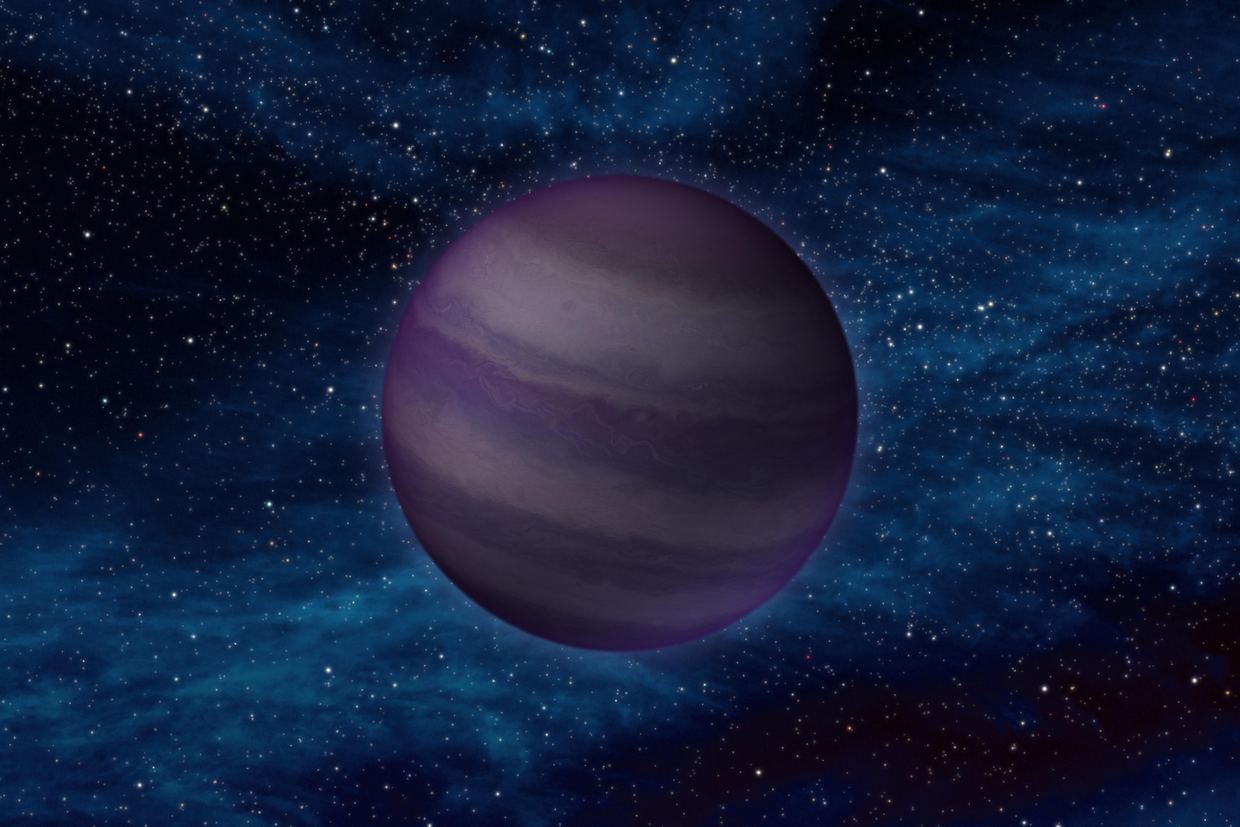
Astronomers using the James Webb Space Telescope have detected time-variable water clouds and deep atmospheric convection on the coldest known brown dwarf, WISE 0855, located 7.5 light-years from Earth. As reported by news.arizona.edu, a team led by Brittany Miles of the University of Arizona's Steward Observatory observed the object continuously for 11 hours, acquiring a spectrum every 15 minutes arizona.edu
news.arizona.edunews.arizona.eduOpen source ↗. The findings, published in The Astrophysical Journal, provide the first direct confirmation of water clouds changing thickness over time on an extrasolar body
arizona.edu
news.arizona.edunews.arizona.eduOpen source ↗.
Atmospheric Dynamics and Water Clouds
WISE 0855 has an effective temperature of roughly 265 Kelvin, a mass about twice that of Jupiter, and a comparable physical size. Using medium-resolution spectroscopy, the researchers separated signatures of cloud variability, chemistry, and temperature across individual molecular bands arizona.edu
news.arizona.edunews.arizona.eduOpen source ↗. The data reveal that upper-atmosphere water clouds grow thicker and thinner in synchrony with the brown dwarf's rotation as distinct patches pass through view
arizona.edu
news.arizona.edunews.arizona.eduOpen source ↗.
Deep Convective Mixing
In addition to rotational temperature shifts, the spectrograph captured periodic fluctuations in carbon monoxide and phosphine arizona.edu
news.arizona.edunews.arizona.eduOpen source ↗. These signals indicate disequilibrium chemistry driven by vigorous convective currents, which dredge warm gases from deep interior layers up into the observable upper atmosphere
arizona.edu
news.arizona.edunews.arizona.eduOpen source ↗. Similar mixing mechanisms govern the atmosphere of Jupiter.
Co-author Mark Marley of the University of Arizona noted that distinguishing the filtering effect of the shifting atmosphere from the underlying thermal emission was critical to interpreting the observations arizona.edu
news.arizona.edunews.arizona.eduOpen source ↗. The team plans further baseline observations with the space telescope to constrain rotational properties and map three-dimensional atmospheric circulation patterns on the object.