Aged 1 µm PVC Microplastics Boost Fluensulfone Sorption in Soil Experiments
Laboratory trials show oxidative aging enhances pesticide retention on microplastics, raising soil sorption by 15% to 25%.
Researchers from the University of Massachusetts evaluated the coupled sorption behavior of the fluorinated nematicide fluensulfone on pristine and aged polyvinyl chloride microplastics in agricultural soils, publishing their findings in Environmental and Biogeochemical Processes doi.org
Environmental and Biogeochemical Processesdoi.orgOpen source ↗. The study focused on particles sized at 1 and 150 µm to identify how physical scale and weathering alter chemical interactions in laboratory soil-plastic mixtures.
Interfacial Changes and Kinetics
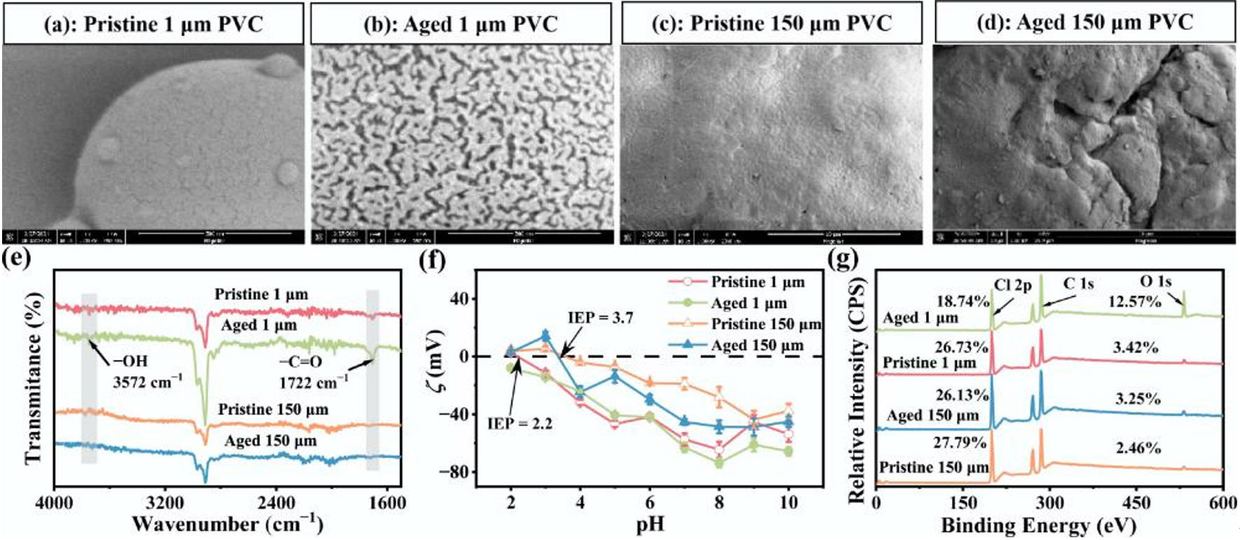
Oxidative aging modified the surface architecture of the microplastics by introducing cracks, pits, and higher porosity, alongside an increase in oxygen-containing functional groups doi.org
Environmental and Biogeochemical Processesdoi.orgOpen source ↗. These surface modifications accelerated sorption kinetics for 1 µm particles, dropping the equilibrium time to as low as 4 hours
doi.org
Environmental and Biogeochemical Processesdoi.orgOpen source ↗. The researchers reported that aging elevated the sorption capacity by 1.5- to 2.0-fold, while the desorption hysteresis index climbed from 0.08 or lower to 0.39 or higher
doi.org
Environmental and Biogeochemical Processesdoi.orgOpen source ↗. For fine 1 µm particles, fitted maximum sorption capacity increased from approximately 292 to 344 µg/g
doi.org
Environmental and Biogeochemical Processesdoi.orgOpen source ↗. The heightened affinity is linked to polar interfacial interactions, predominantly F···H–O hydrogen bonding between the fluorinated nematicide and oxygenated sites on the polymer.
Soil Systems and Matrix Effects
Environmental factors directly shifted fluensulfone retention in the experiments. Binding increased alongside pH and in the presence of calcium ions, while sodium, chloride, and nitrate suppressed uptake doi.org
Environmental and Biogeochemical Processesdoi.orgOpen source ↗. Humic acid promoted sorption with limited concentration dependence
doi.org
Environmental and Biogeochemical Processesdoi.orgOpen source ↗. Although natural soil organic matter served as the primary sink for the pesticide, aged 1 µm PVC particles acted as supplementary sorbents, raising total soil sorption by roughly 15% to 25% and accounting for approximately 30% to 35% of retained fluensulfone
doi.org
Environmental and Biogeochemical Processesdoi.orgOpen source ↗. In dual-contaminant tests, co-solute spirotetramat reduced fluensulfone sorption on isolated microplastics but increased retention in composite soil-plastic matrices
doi.org
Environmental and Biogeochemical Processesdoi.orgOpen source ↗.