Ecologists Model Food Web Shifts from US Atlantic Offshore Wind Farms
Linear inverse models evaluated ecosystem changes across three offshore wind sites, highlighting shifts driven by colonization on underwater foundations.
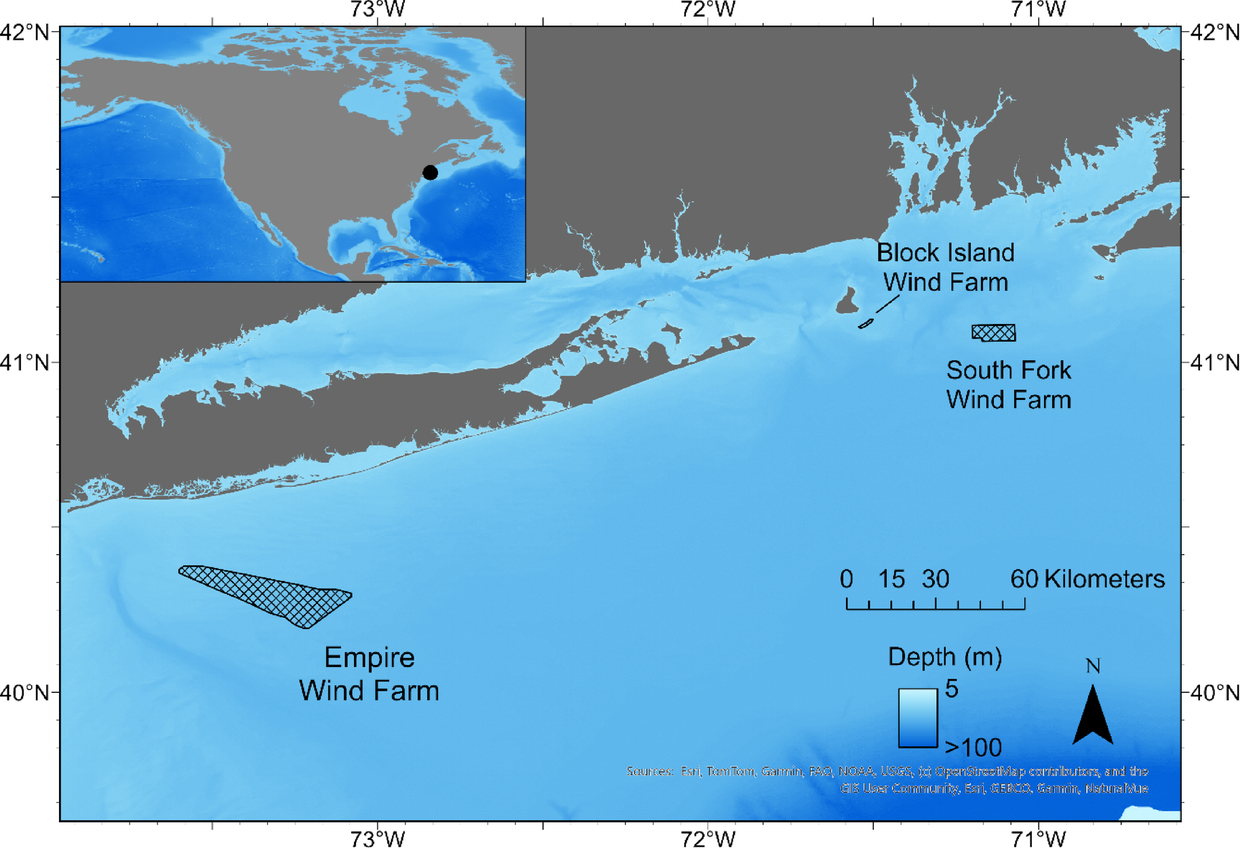
Researchers evaluated the ecological effects of submerged turbine structures across three offshore wind farm sites in the U.S. Atlantic, according to nature.com nature.com
nature.comnature.comOpen source ↗. By synthesizing publicly available data and utilizing linear inverse models, the team analyzed food web structures at the Block Island, South Fork, and Empire Wind sites. The study compared conditions prior to construction against projected states four years post-construction, tracking how energy and carbon pathways redistribute within local marine systems.
Submerged foundations and scour protection rock layers act as artificial reefs, providing hard surfaces that alter habitats previously dominated by soft sand or mud. In the calculations, each model underwent 30,000 iterations to account for data uncertainties and estimate plausible changes across trophic levels. Block Island provided operational data across four years, while projections for the other two sites integrated literature and baseline surveys.
Colonization Dynamics
Turbine-associated fauna substantially influenced the simulated food web dynamics following installation nature.com
nature.comnature.comOpen source ↗. Among newly settled organisms, fouling bivalves attached to foundations and scour protections exerted the highest trophic impact. These filter feeders draw carbon directly from the water column, rerouting nutrients that would otherwise reach native benthic communities.
Despite the localized influence of fouling species, existing sediment macrofauna retained the highest overall trophic impact across all models nature.com
nature.comnature.comOpen source ↗. Worms and other sediment-dwelling invertebrates continued to drive baseline energy transfer within the footprint of each farm. The models demonstrated that colonizing communities do not replace native benthic functions but instead introduce new, localized pathways of bentho-pelagic coupling.
System Maturity and Constraints
Comparisons between pre-construction and four-year post-construction models indicated potential shifts toward more mature and stable ecosystem structures nature.com
nature.comnature.comOpen source ↗. However, metric responses varied between sites, preventing a uniform conclusion across all ecological indicators. The models confirmed that artificial reef effects remain largely confined to the immediate footprint of turbine structures.
The authors identified critical data gaps, particularly in the microbial loop, which restricted the predictive accuracy of the inverse models nature.com
nature.comnature.comOpen source ↗. As U.S. offshore wind leases expand across continental shelf waters, these findings highlight specific monitoring priorities to track localized shifts before scaling to regional cumulative assessments.