Fraunhofer IFAM gets over €2 million for Dresden lab on rare-earth-free motors with aluminium windings
The institute will develop and test motors with ferrite magnets or reluctance design, and aluminium windings instead of copper, for vehicles and industrial use.
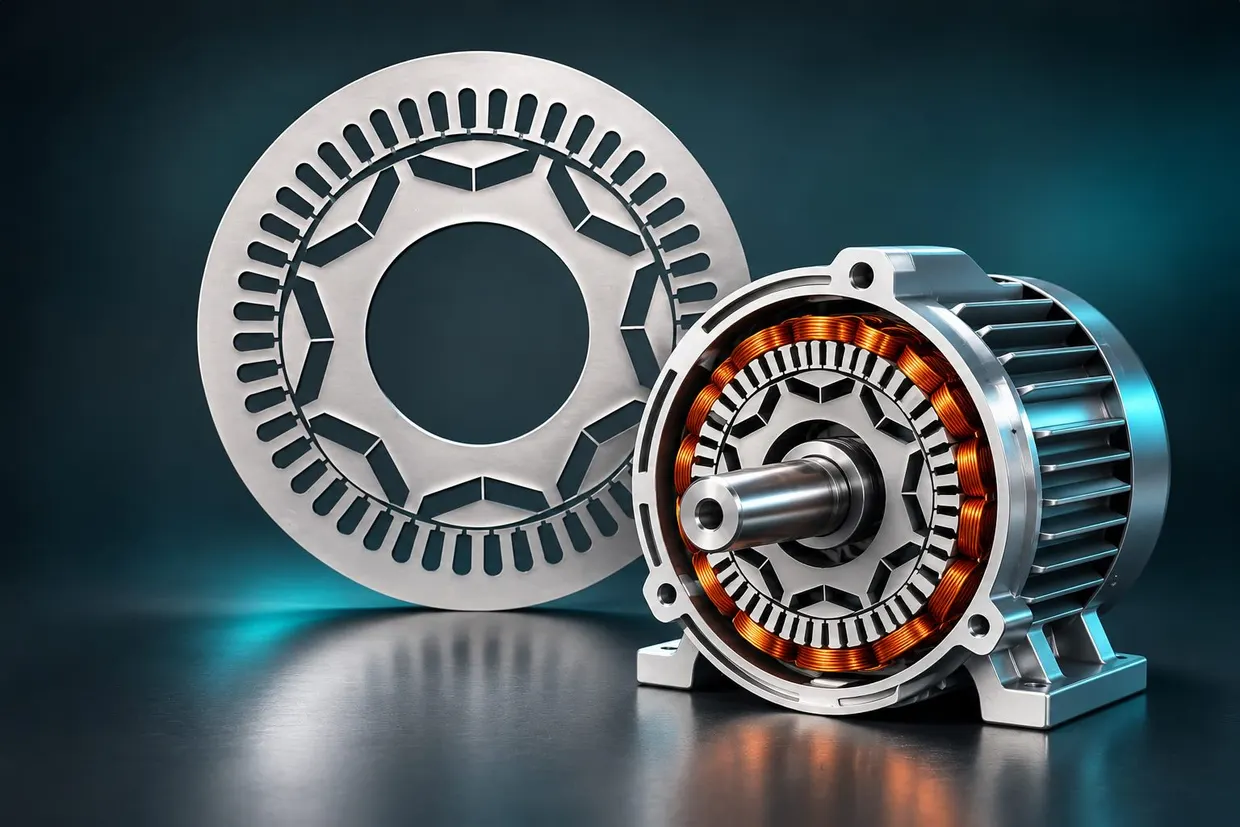
German researchers are setting up a lab in Dresden to develop electric motors that run without rare earths and use aluminium instead of copper in their windings, thedriven.io reports. The Fraunhofer Institute for Manufacturing Technology and Advanced Materials (IFAM) has secured more than €2 million from the state of Saxony and the European Union for the project thedriven.io
thedriven.iothedriven.ioOpen source ↗. The work will look at how to build and test these designs for vehicles and other industrial uses.
Ferrite and reluctance designs
One approach uses ferrite magnets in place of rare-earth magnets. Another is a high-speed reluctance motor, which produces torque as its rotor tries to align with a changing magnetic field. Fraunhofer plans to use metal additive manufacturing to combine magnetic and non-magnetic materials in shapes that are difficult to make with conventional processes.
Aluminium windings and existing designs
Aluminium conducts electricity less effectively than copper, so heat is a constraint when trying to get more power out of a compact motor. Researchers plan to build cooling channels into the aluminium windings to see how far they can push the design.
BMW has already shown one way to avoid rare-earth magnets. The iX3 50 uses an electrically excited synchronous motor (EESM) at the rear, where current through a coil creates the rotor's magnetic field, and an induction motor at the front thedriven.io
thedriven.iothedriven.ioOpen source ↗. Apart from avoiding rare-earth magnets, this lets BMW turn down the field to reduce energy losses under light load.
Such designs are far less common than the permanent-magnet motors used in many of Australia's best-selling EVs, including the Tesla Model Y, BYD Sealion 7 and Geely EX5. Lynas mines rare earths at Mt Weld, processes concentrate in Kalgoorlie and carries out further separation in Malaysia; its products include neodymium and praseodymium, used in permanent magnets.