Shanghai Jiao Tong University: Pt/CeO2–Cu catalyst turns methane to methanol in water at 180 °C
A lab-scale batch system with CO-assisted platinum on ceria and aqueous copper gave 100% methanol selectivity among detected liquid products, at 14.38 mmol/(g cat·h).
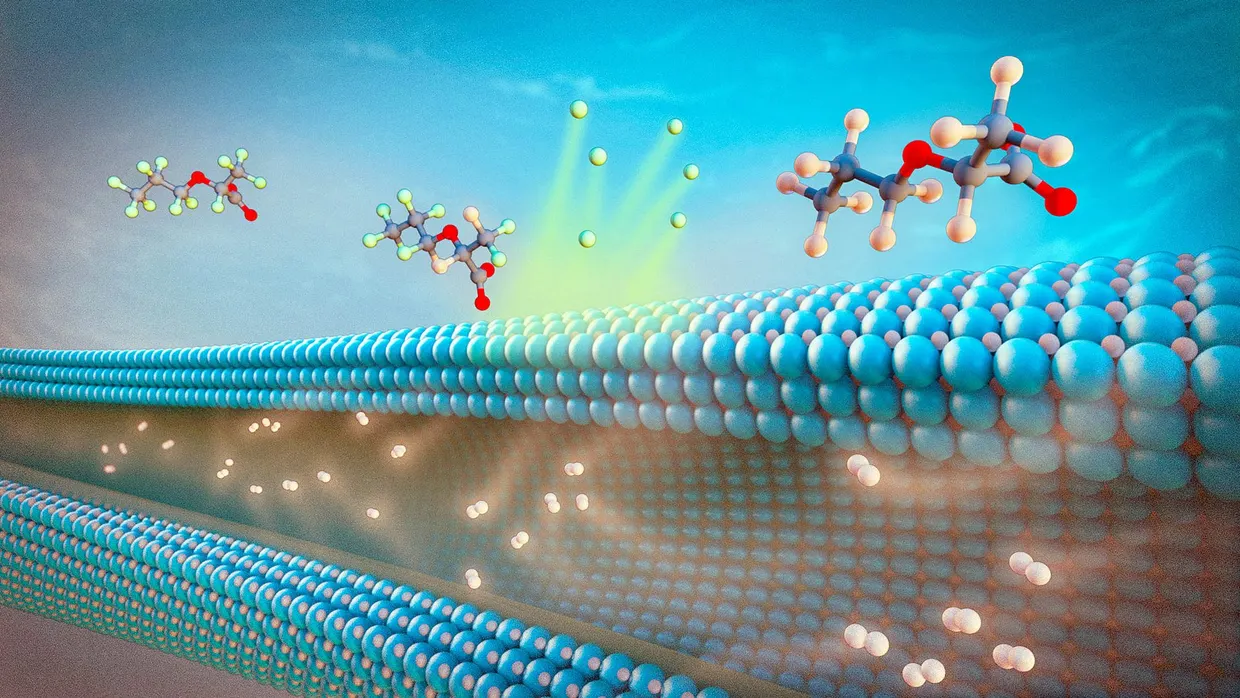
A research team led by Prof. Yulian He at Shanghai Jiao Tong University has developed a CO-assisted Pt/CeO2–aqueous Cu tandem system for selective oxidation of methane to methanol in aqueous media. The work, published in ENGINEERING Energy on 29 October 2026 (doi.org/10.1007/s11708-026-1098-5), describes laboratory batch experiments in a high-pressure autoclave. Under mild batch conditions (180 °C, 1 h), the system reached a methanol yield rate of 14.38 mmol/(g cat·h) with 100% selectivity among the detected liquid-phase products springer.com
doi.orgspringer.comOpen source ↗.
The problem: C–H activation versus over-oxidation
The methane C–H bond is strong (439 kJ/mol), so its activation needs substantial energy. Methanol, the product, is more reactive than methane and often over-oxidizes to carbon dioxide. The authors address this by assigning separate roles to the solid catalyst and the solution: oxygen activation on the surface and product preservation in the liquid.
How the tandem system works
Carbon monoxide adsorbs strongly on platinum and acts both as a surface regulator and as a co-reactant in oxygen activation. Density functional theory calculations predict a downward shift of 0.73 eV in the Pt d-band center on the model platinum surface. According to the authors, this also weakens the stabilization of surface methoxy intermediates (+0.27 eV), which helps them leave the surface as methanol instead of oxidizing further.
Isotope-labeling and sequential-reaction experiments identified gas-phase molecular oxygen, rather than water or ceria lattice oxygen, as the primary oxygen source incorporated into methanol. In situ DRIFTS spectroscopy showed surface methoxy to be the key reactive intermediate, which converts into liquid methanol once CO and water are introduced springer.com
doi.orgspringer.comOpen source ↗.
Mobile aqueous copper species are proposed to act as redox mediators. The authors suggest they may limit the accumulation of excess reactive oxygen and so suppress methanol over-oxidation.
Stability and limits
The heterogeneous Pt/CeO2 catalyst was tested over five consecutive cycles and retained about 83.3% of its initial activity, with 100% liquid-phase methanol selectivity maintained. The authors note that the current batch experiments require a significant inventory of CO co-reactant. Further work is to focus on tuning the CO/O2 ratio, improving CO recycling and optimizing copper-mediated kinetics for possible modular on-site shale gas conversion.