IISc Astrophysicists Model Magnetized White Dwarfs Reaching 2.4 Solar Masses
Simulations show magnetic pressure allows white dwarfs to exceed the 1.4 solar mass Chandrasekhar limit through accretion.
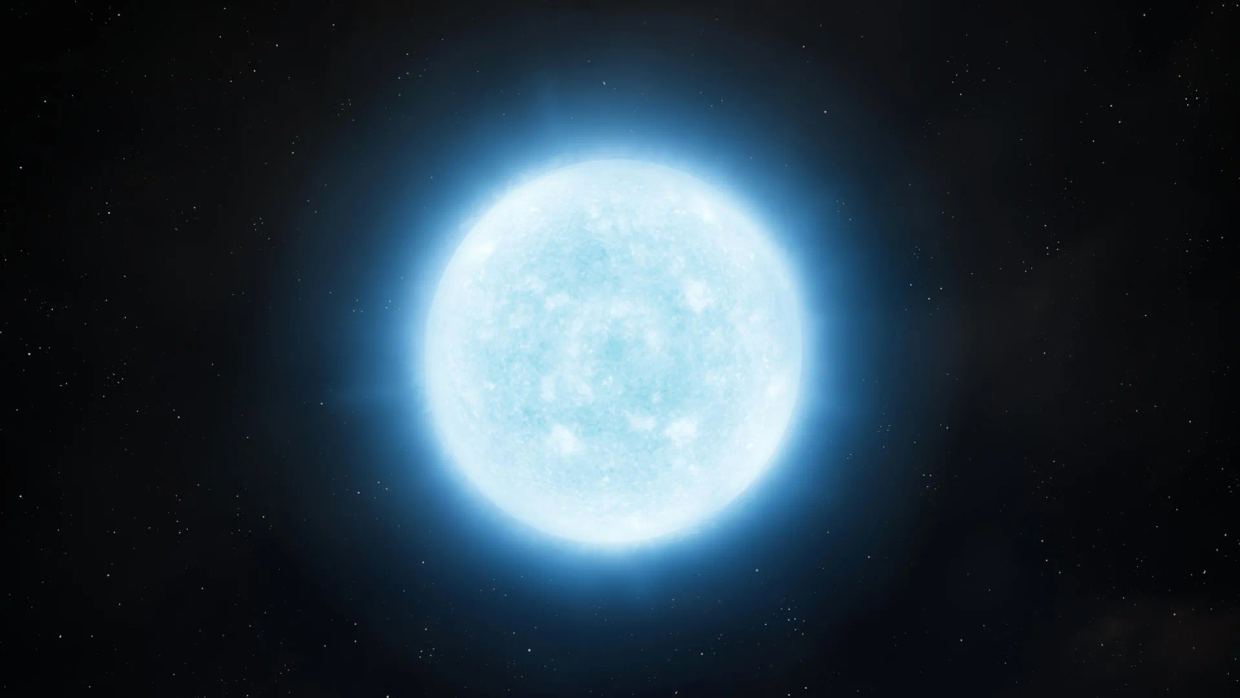
Astrophysicists from the Indian Institute of Science and their collaborators have demonstrated through numerical simulations that strong internal magnetic fields allow nonrotating white dwarfs to reach masses well above the classical 1.4 solar mass Chandrasekhar limit. The findings, published in The Astrophysical Journal Letters, track the evolution of magnetized main-sequence stars into stable, super-Chandrasekhar stellar remnants known as B-WDs doi.org
The Astrophysical Journal Lettersdoi.orgOpen source ↗.
Stellar Evolution and Accretion Models
The researchers modified the Cambridge Stellar Evolution Code, STARS, incorporating cooling rates and magnetic effects into the equations of state and structure. The team simulated the lifecycle of a progenitor star with an initial mass of eight solar masses as it evolved off the main sequence to form a carbon-oxygen white dwarf with an initial mass of 1.02 solar masses doi.org
The Astrophysical Journal Lettersdoi.orgOpen source ↗.
The model placed this remnant into a binary system where it accreted matter from a companion star at a steady rate of 10⁻⁹ solar masses per year. As the accreted material compressed the star under gravitational forces, the internal magnetic field amplified, supplying additional magnetic pressure that counteracted gravity. Under these conditions, the modeled white dwarf remained stable up to approximately 2.4 solar masses, in contrast to non-magnetized configurations that undergo thermonuclear runaway near 1.4 solar masses doi.org
The Astrophysical Journal Lettersdoi.orgOpen source ↗.
Implications for Supernovae and Star Radii
The research indicates that the maximum mass limit of a degenerate stellar remnant depends directly on magnetic field geometry, accretion dynamics, and cooling mechanisms rather than remaining a single universal constant. These results provide an evolutionary mechanism for unusually luminous Type Ia supernovae, such as SN 2003fg, whose progenitor systems were inferred to hold up to 2.8 solar masses before detonation doi.org
The Astrophysical Journal Lettersdoi.orgOpen source ↗.
In addition to describing super-Chandrasekhar regimes, the introduced magnetic pressure explains anomalies observed in sub-Chandrasekhar objects. Combined with finite-temperature effects, the magnetic field accounts for the unusually large radii detected in stars such as SDSS J123204.19+522548.2, which deviate from classical mass-radius curves doi.org
The Astrophysical Journal Lettersdoi.orgOpen source ↗.