Cornell: telecom fibre cable off Alaska recorded bowhead whale calls in a field test
A Quintillion fibre-optic cable near Utqiaġvik registered bowhead calls using distributed acoustic sensing, according to Cornell. Earlier, such cables mostly detected blue and fin whales.
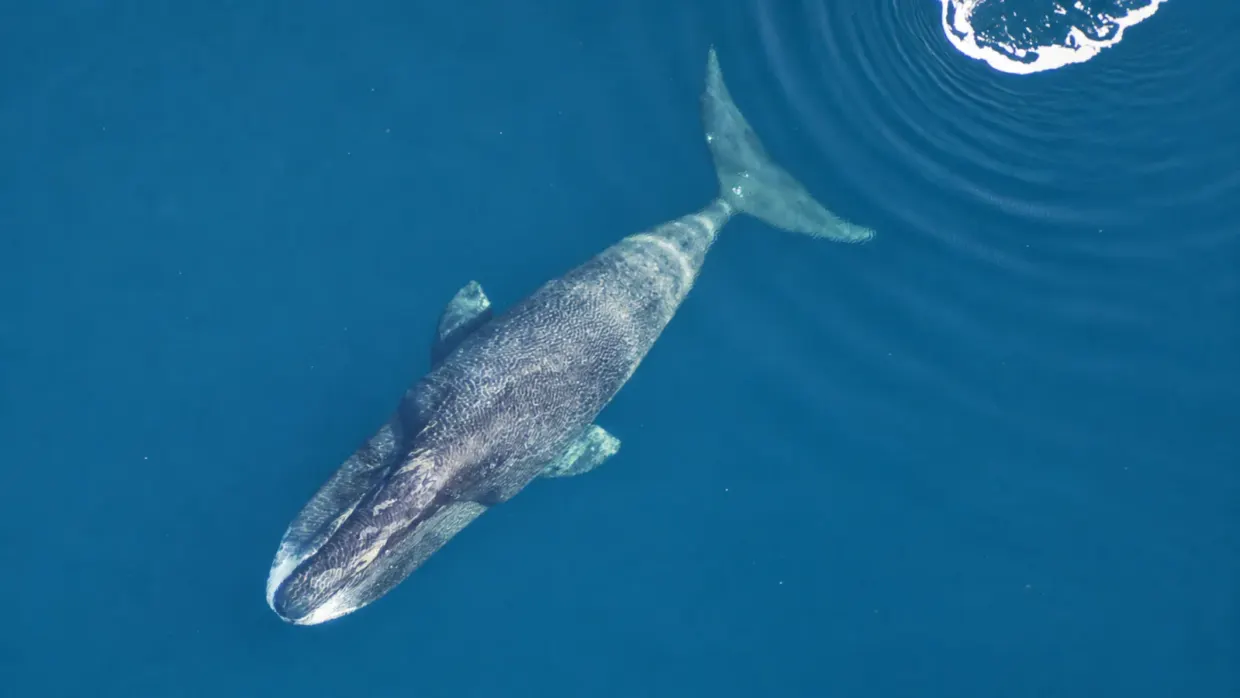
In spring 2026, bioacoustician Léa Bouffaut of Cornell University ran measurements on an existing fibre-optic line near Utqiaġvik on Alaska's north coast. According to Cornell, as reported by scinexx, the cable recorded bowhead whale calls for the first time in such measurements scinexx.de
scinexxscinexx.deOpen source ↗. The cable belongs to the northern Alaska network of the telecommunications company Quintillion. Bouffaut worked with local whaling representatives and the regional wildlife agency.
How the cable listens
The method is called distributed acoustic sensing (DAS). A device sends laser pulses into the fibre and analyses the backscattered light. Sound waves strain the fibre minimally and shift the travel time or phase of the returning light, which creates many virtual sensors along the line. Unlike single hydrophones, this gives spatially resolved signals over tens of kilometres, readable from shore.
The target was harder than in earlier trials. Bowhead whales often call at about 150 to 300 hertz and comparatively quietly, while fibre cables had previously picked up mainly the louder calls of blue and fin whales below 100 hertz. Finding the calls took weeks of analysing terabytes of data. A 2022 study off Spitsbergen recorded blue and fin whale songs along a 120-kilometre cable, and later work with two parallel cables tracked several fin whales at once to about 100 metres under the tested conditions.
Limits and open questions
The bowhead detection has so far been described only in an official Cornell release. A separate peer-reviewed study with the measurement protocol, detection rate and statistics could not be found, so the reliability of the method for other baleen whales is not yet known. Sensitivity depends on cable routing, sheathing and the seabed, and high frequencies and quiet calls are harder to detect than low, loud ones. A straight single cable usually leaves open which side a calling whale is on; several cables or curved sections can reduce this ambiguity.
The data volume is large: for 50 kilometres of cable, 4 metres between measuring points, 2,000 measurements per second and two bytes per value, about 4.3 terabytes accumulate daily. In her recent review, Bouffaut lists next steps: comparable tests for different whale species and cable types, automated call detection, and rules for handling large and possibly sensitive datasets. Possible uses include earlier detection of migrating whales to coordinate shipping and noisy work, but this remains a prospect, not a deployed early-warning system.