Hereon simulation: full North Sea wind buildout lowers coastal rainfall by 10–12%
A 10-year simulation of maximum offshore wind deployment on the Northwest-European Shelf shows less rain on coasts and more over farms; authors call for multi-model checks.
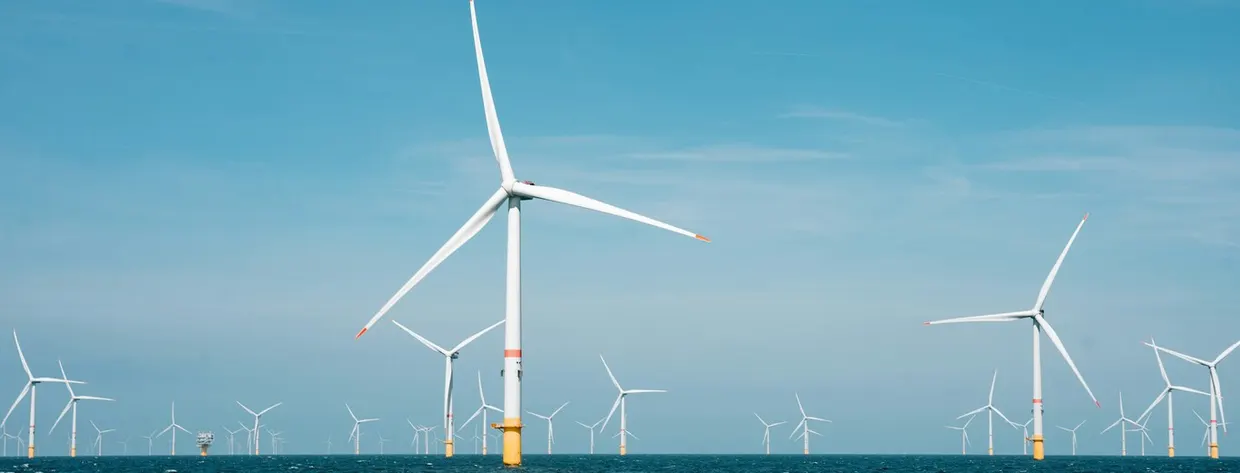
A team from Helmholtz-Zentrum Hereon simulated how offshore wind farms affect the atmosphere over the Northwest-European Shelf. The results were published in Communications Earth & Environment. The model covered a 10-year period and three cases: farms existing in 2023, farms planned for 2030, and a maximum scenario beyond 2050 nature.com
Communications Earth & Environmentnature.comOpen source ↗.
The study used turbines of 5, 10 and 15 MW. According to the authors, this combination of turbine sizes and time span had not been simulated before.
Wind and precipitation
In the simulation, large-scale farm expansion reduces surface wind speeds by up to 2–3 m/s. In the 2023 and 2030 cases the effects are small and mostly limited to the sea area, according to the Hereon team's description of the results.
In the post-2050 scenario, precipitation falls by 10–12% in the coastal regions of Germany, the Netherlands and the United Kingdom nature.com
Communications Earth & Environmentnature.comOpen source ↗. In parts of Jutland, Denmark, the decrease exceeds 15%, particularly under south-westerly winds. Over the wind farm areas themselves precipitation increases, by up to 8–10 mm per month.
The proposed mechanism is as follows: the farms slow the wind and make it more turbulent, part of the air rises into colder layers, and moisture condenses there. The air that reaches the coast is drier. The effect appears with south-westerly winds, which dominate in autumn and winter, and almost disappears with north-westerly winds and in summer.
Scenario and limits
The post-2050 case assumes the maximum deployment in all development zones currently identified in North Sea countries. It is a technical ceiling, not a forecast. The EU targets 60 GW of offshore wind by 2030 and 300 GW by 2050, and the North Sea countries have committed to at least 260 GW.
The simulation used one model, one scenario and a fixed capacity density of 8 MW/km². There is no direct evidence that rainfall is changing today because of wind farms. The authors conclude that extensive offshore wind deployment may significantly alter regional climate patterns and that further multi-model investigations are needed to reduce uncertainty nature.com
Communications Earth & Environmentnature.comOpen source ↗.