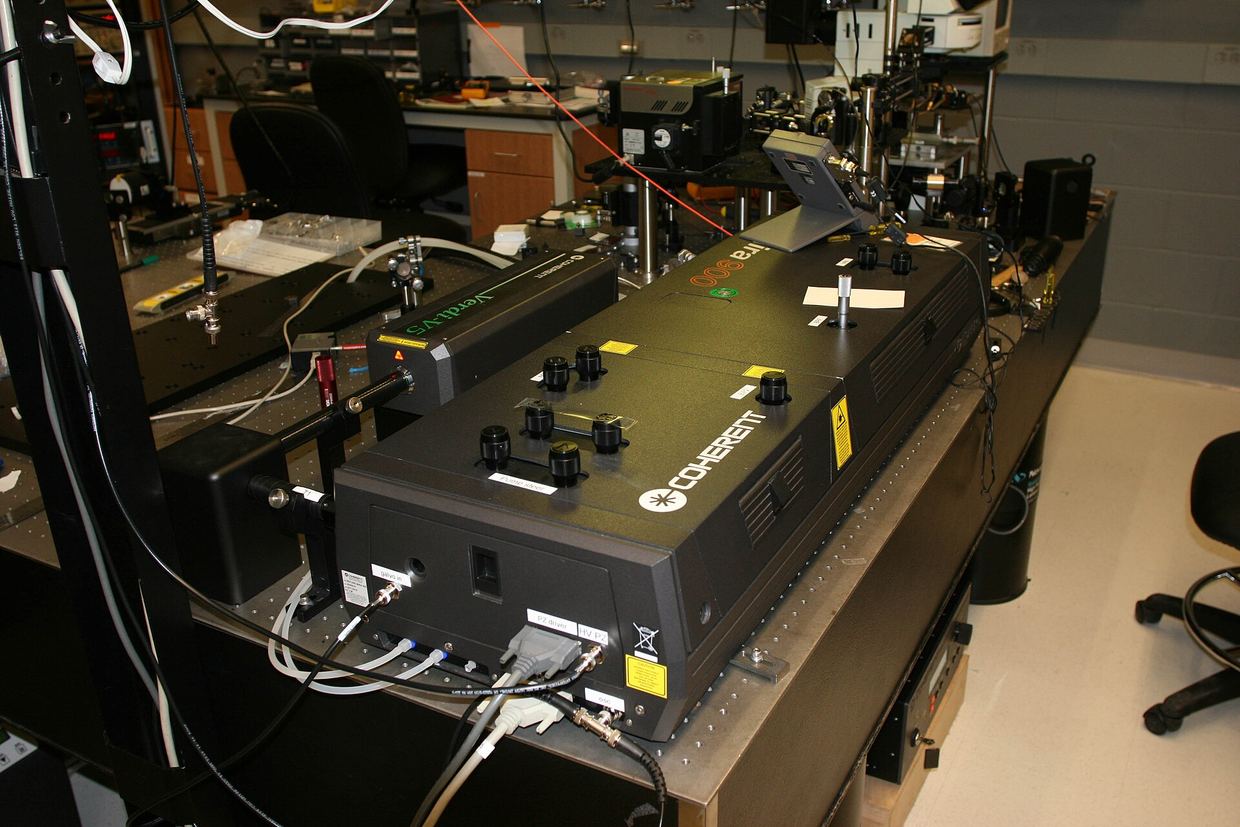
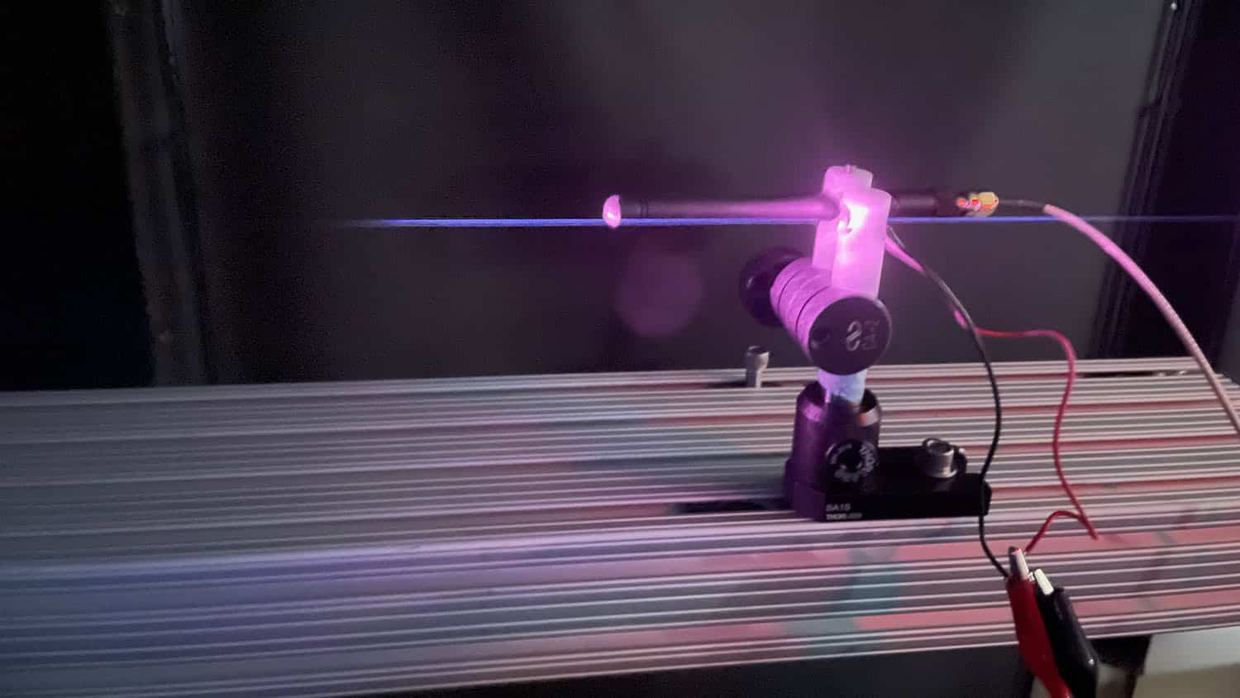
NC State demonstrates a laser-induced plasma filament antenna transmitting 30 MHz radio waves in the lab
Researchers at North Carolina State University made a plasma filament in air with a laser and used it to transmit a 30 MHz signal. It is a laboratory demonstration at a distance of about 5 cm.
Researchers at North Carolina State University have demonstrated a technique that uses a laser to produce a plasma beam antenna capable of transmitting radio waves, according to news.ncsu.edu. The work is published open access in the IEEE Journal of Microwaves under the title "Laser-Induced-Plasma-Filament Antenna Transmitting 30 MHz VHF" ncsu.edu
news.ncsu.edunews.ncsu.eduOpen source ↗. Authors say it is the first demonstration of this concept
ncsu.edu
news.ncsu.edunews.ncsu.eduOpen source ↗.
The study was led by Ph.D. student Prya Darshni together with Paul Franzon. Arthur Dogariu of Texas A&M University and Princeton University helped with measurements ncsu.edu
news.ncsu.edunews.ncsu.eduOpen source ↗.
How the plasma antenna works
A laser beam of a specific power and diameter ionizes a thin beam of air and creates a defined shaft of plasma, called a plasma filament ncsu.edu
news.ncsu.edunews.ncsu.eduOpen source ↗. According to the authors, electrons on the edge of the filament behave like the skin electrons of a conductor, so the filament has the basic elements needed to act as an antenna
ncsu.edu
news.ncsu.edunews.ncsu.eduOpen source ↗.
A direct metallic contact would distort the filament, so the team built a contactless feed. It is a metal ring that acts as a capacitor; the laser passes through the ring, and the plasma filament is surrounded by it ncsu.edu
news.ncsu.edunews.ncsu.eduOpen source ↗. A radio-frequency generator feeds a signal into the capacitor, which creates an electromagnetic field, and the field makes the filament transmit radio waves at the required frequency
ncsu.edu
news.ncsu.edunews.ncsu.eduOpen source ↗.
The authors state that the laser parameters set the properties of the filament, including its length. Length matters because it determines the frequencies an antenna can transmit and receive ncsu.edu
news.ncsu.edunews.ncsu.eduOpen source ↗. The angle of the antenna can be changed by shifting the direction of the laser, that is, by beam steering
ncsu.edu
news.ncsu.edunews.ncsu.eduOpen source ↗.
Measurement results
In the experiment, a 30 MHz signal was fed into the filament through the capacitive feed ncsu.edu
news.ncsu.edunews.ncsu.eduOpen source ↗. The transmitting filament and the receiving antenna were linearly polarized with the same orientation and placed about 5 cm apart, within the unobstructed near field
ncsu.edu
news.ncsu.edunews.ncsu.eduOpen source ↗. The received signal strength was first recorded with the capacitive feed alone, with the laser blocked, and then with the filament present
ncsu.edu
news.ncsu.edunews.ncsu.eduOpen source ↗. With the filament as the antenna, the signal strength increased 2.5 times (150%)
ncsu.edu
news.ncsu.edunews.ncsu.eduOpen source ↗.
The team has not demonstrated reception of radio signals by the plasma antenna, though Darshni says there is no reason to believe it would not work as a receiver ncsu.edu
news.ncsu.edunews.ncsu.eduOpen source ↗. The paper also examines the feasibility of such antennas for HF/VHF applications on small to large satellites and aircraft. Franzon notes that in low Earth orbit there is enough air to form a plasma
ncsu.edu
news.ncsu.edunews.ncsu.eduOpen source ↗. According to Darshni, the next step is to improve the antenna's performance
ncsu.edu
news.ncsu.edunews.ncsu.eduOpen source ↗.