Hera probe images Didymos from 28.5 km in visible, multispectral and thermal infrared
ESA's Hera used three instruments to image Didymos and Dimorphos; the data should help explain why the DART impact deflected Dimorphos more than simulations predicted.
The European Space Agency's Hera planetary defence mission has surveyed its target asteroids with three instruments, according to esa.int. The larger asteroid, Didymos, was imaged from just 28.5 km in visible light, multispectral and thermal infrared vision esa.int
esa.intesa.intOpen source ↗. Didymos is 780 m in diameter and dominated by an equatorial ridge. Its moonlet Dimorphos is 151 m across.
Three instruments, three kinds of data
The monochrome image came from the Asteroid Framing Camera, which is used for both navigation and science. Its spatial resolution is about 2.7 m per pixel.
The HyperScout H instrument observes the surface in 25 different hues, from the red visible to the human eye up to the near-infrared. Small differences in the intensity of reflected sunlight are linked to composition. These spectral measurements can be compared with laboratory measurements of meteorites and mineral samples.
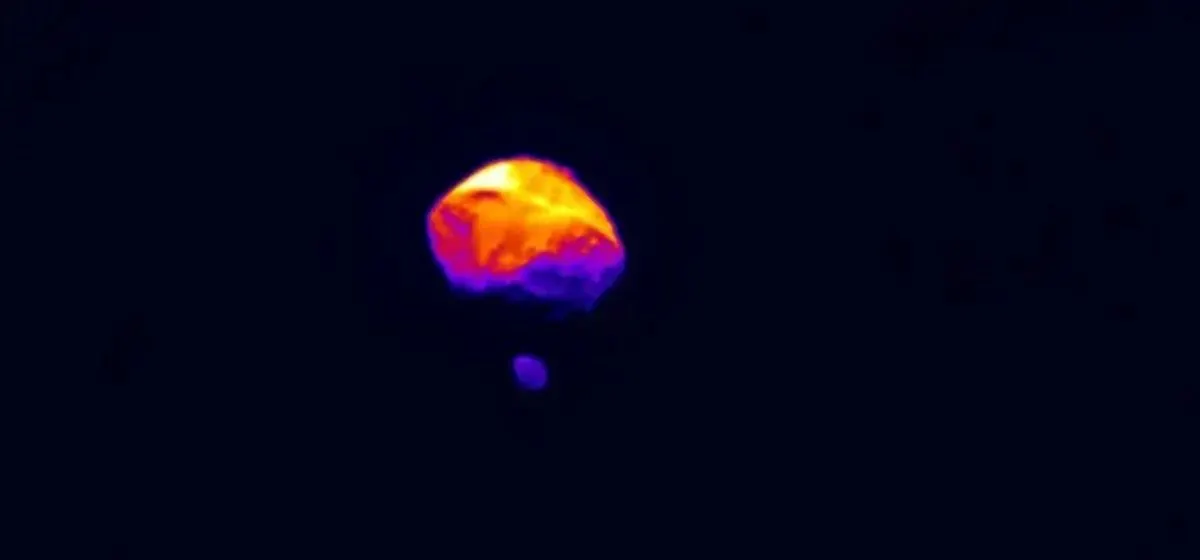
The Thermal Infrared Imager (TIRI) was supplied and is operated by JAXA. Mapping temperatures across regions of Dimorphos, and how they change over time, shows whether the surface is solid, porous or broken rock, or loose material down to dust esa.int
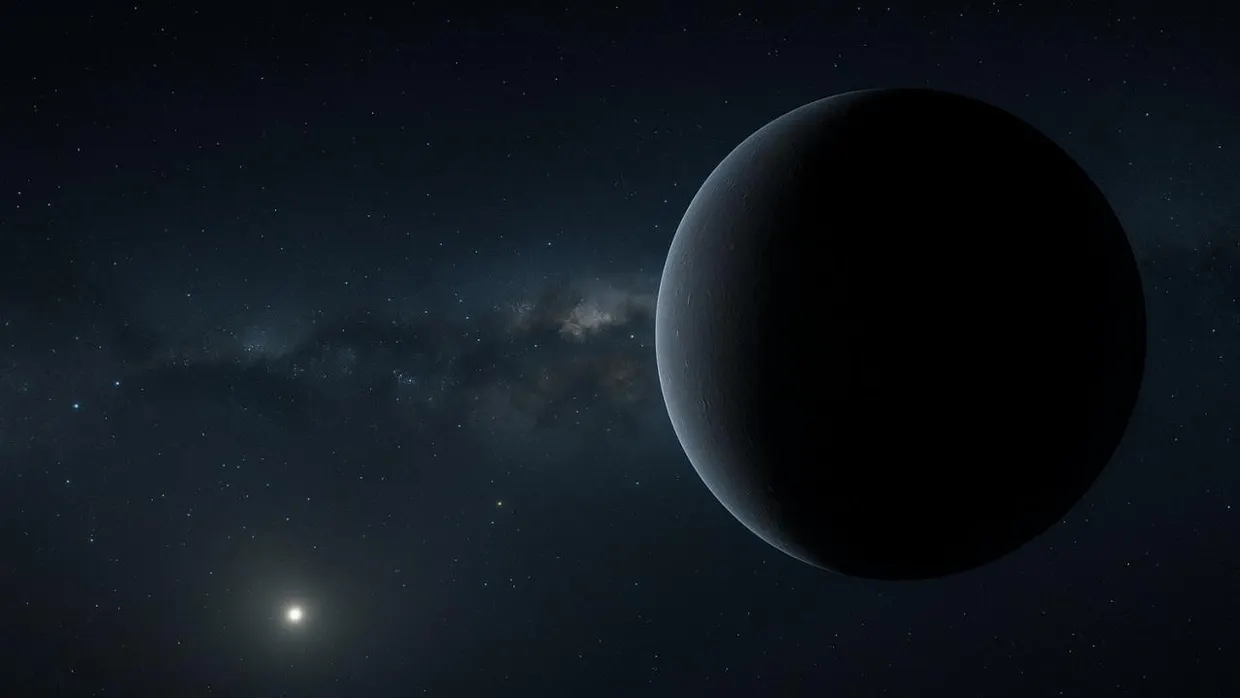
esa.intesa.intOpen source ↗. Dimorphos is almost entirely in shadow in the images, with a single small speck in sunlight. Only in the TIRI image is the whole moonlet visible.
The ridge and the open DART questions
Hera Principal Investigator Patrick Michel noted boulder-rich areas, clearer regions and traces of what might be landslides towards the central ridge. Didymos rotates every 2.2 hours, which is very fast for its size. Michel said this spin might be encouraging material to migrate towards the equator and help form the ridge.
On 26 September 2022, NASA's 580-kg DART spacecraft hit Dimorphos at 6.1 km/s. The collision sent a plume of debris across 10 000 km and slowed the asteroid's orbit by around 33 minutes. Open questions remain: whether the impact left a crater or reshaped the body, what Dimorphos's makeup, structure and mass are, and why the deflection was much greater than impact simulations predicted.
Over the coming months Hera will carry out a close-up investigation of the crash site. It will deploy two shoebox-sized CubeSats for a closer survey, and eventually proceed to landing esa.int
esa.intesa.intOpen source ↗. Detailed images of both asteroids will be unveiled on 25 November.