Fraunhofer IDMT and Pan Acoustics measure light rain on solar panels with 1.88 mm/h error
Structure-borne sound sensors on PV modules and machine learning gave an average error of 1.88 mm/h at 2–5 mm/h in lab and outdoor tests, with no moving parts.
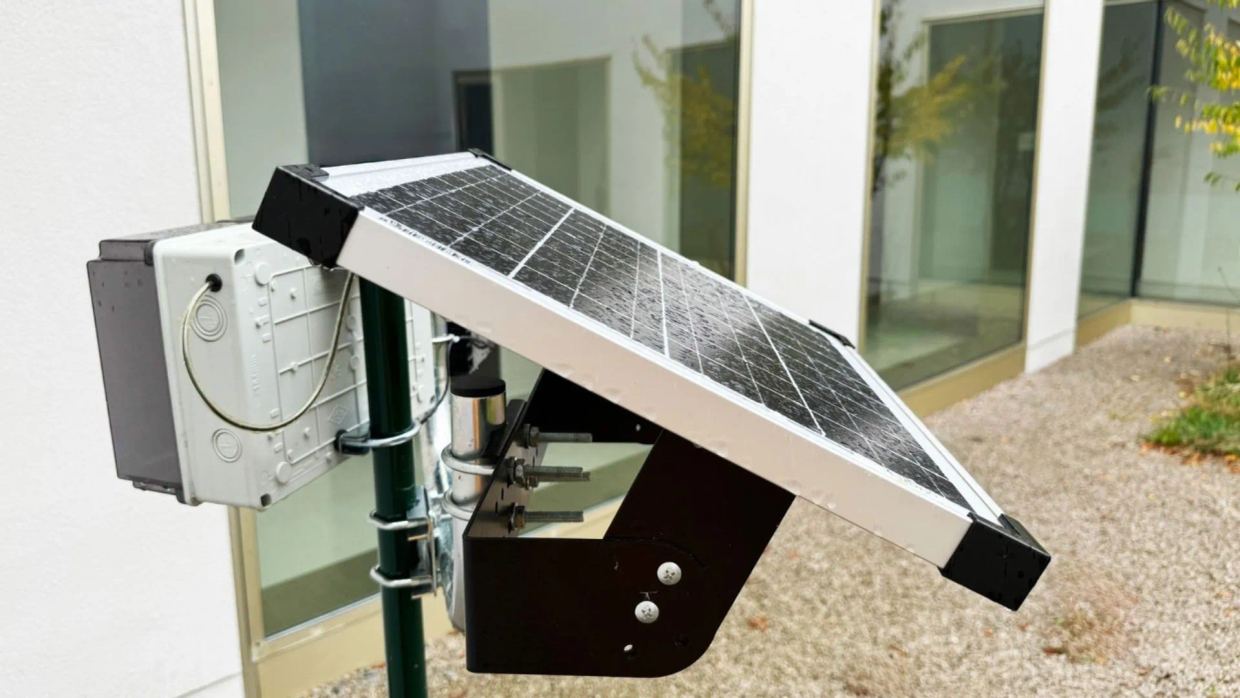
Researchers at Germany's Fraunhofer Institute for Digital Media Technology (IDMT) and Pan Acoustics GmbH have developed a system that estimates rainfall from the vibrations of raindrops hitting solar panels, Interesting Engineering reports. For rainfall rates between 2 and 5 mm per hour, the average error was 1.88 mm per hour interestingengineering.com
Interesting Engineeringinterestingengineering.comOpen source ↗. The system has no moving parts and was built within the recently completed lokalRAIN project
interestingengineering.com
Interesting Engineeringinterestingengineering.comOpen source ↗.
Structure-borne sound sensors are attached to photovoltaic modules. Each drop that hits the panel produces microscopic vibrations, and their acoustic signature varies with rainfall intensity interestingengineering.com
Interesting Engineeringinterestingengineering.comOpen source ↗.
How the measurement works
Raw sensor data is not sent to remote servers. A machine learning model runs on an energy-efficient microcontroller at the measurement site, and only the calculated rainfall values are transmitted. This reduces power consumption and wireless bandwidth requirements interestingengineering.com
Interesting Engineeringinterestingengineering.comOpen source ↗.
Pan Acoustics developed the hardware and software for the wireless network. In field tests the transmission range was about 4 km in urban environments and more than 35 km in rural areas with an unobstructed line of sight, according to the statement interestingengineering.com
Interesting Engineeringinterestingengineering.comOpen source ↗. Data from several sensor nodes is combined in a central infrastructure to produce localized precipitation maps
interestingengineering.com
Interesting Engineeringinterestingengineering.comOpen source ↗.
Testing and next steps
The team first ran experiments in a rain simulator, varying droplet size, rainfall intensity, PV modules and sensor placement. Three outdoor systems were then installed at Fraunhofer IDMT in Ilmenau, at Pan Acoustics in Wolfenbüttel and in the weather garden of the Technical University of Ilmenau. The data was compared with reference rainfall measurements to train and validate the models interestingengineering.com
Interesting Engineeringinterestingengineering.comOpen source ↗. According to the researchers, the result meets the World Meteorological Organization's Class C accuracy requirement for low-intensity precipitation
interestingengineering.com
Interesting Engineeringinterestingengineering.comOpen source ↗.
The authors stress that the technology is meant to supplement high-precision rain gauges, not replace them interestingengineering.com
Interesting Engineeringinterestingengineering.comOpen source ↗. Conventional stations with dedicated gauges are costly to install and maintain, so monitoring networks in many regions are sparse
interestingengineering.com
Interesting Engineeringinterestingengineering.comOpen source ↗.
"We have proven the feasibility of our approach for light rain," said Jakob Bergner, scientific director of the project at Fraunhofer IDMT. Data for the less frequent heavy rain events is still to be collected interestingengineering.com
Interesting Engineeringinterestingengineering.comOpen source ↗. The team is looking for industry partners for further pilot deployments and plans to refine the sensor housing, electronics and quality-assurance processes. Fraunhofer IDMT is also exploring use of the sensor network in agrivoltaic systems in another project
interestingengineering.com
Interesting Engineeringinterestingengineering.comOpen source ↗.