Recurv Pharma starts phase 1/2a trial of Stony Brook taxane RP-001 in colorectal cancer
A nanoemulsion taxane conjugate developed at Stony Brook University has entered human trials in advanced colorectal cancer. Before this, it was tested in mouse tumor models.
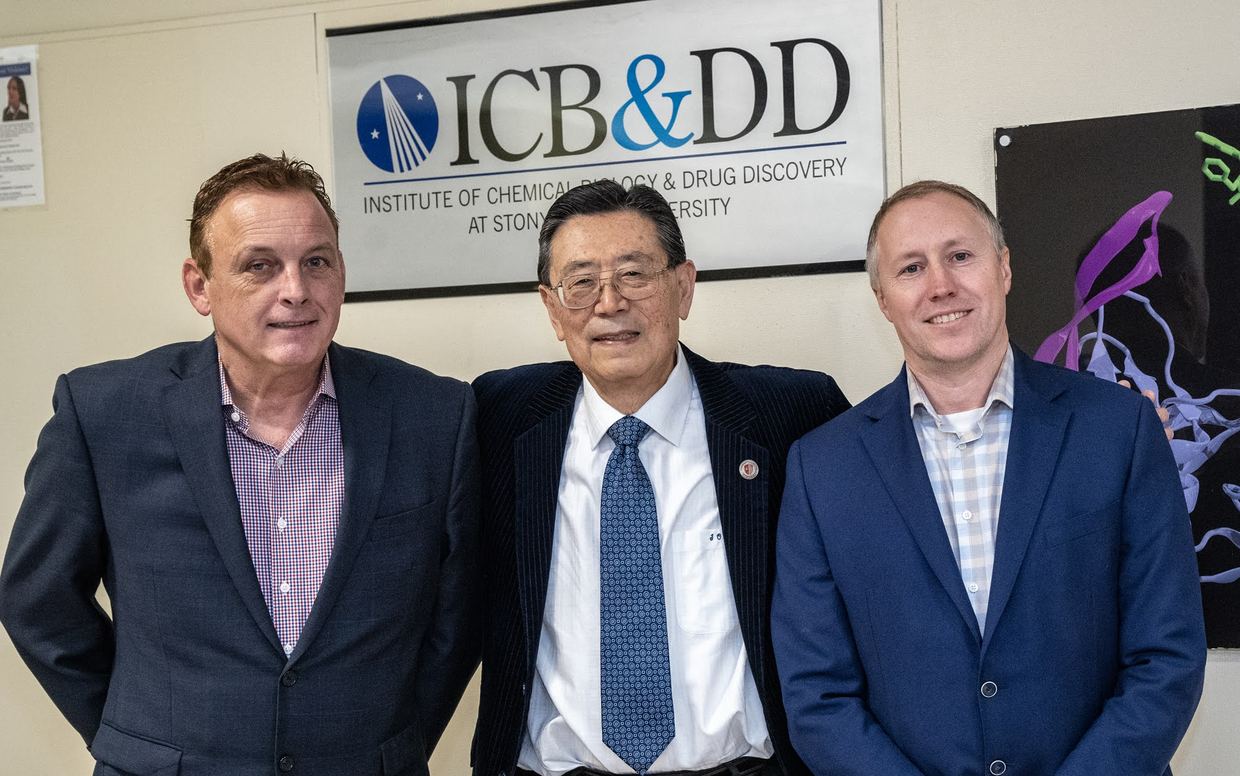
According to newswise.com, Stony Brook University announced on November 5, 2026 that the investigational agent RP-001, originally coded NE-DHA-SBT-1214, has entered human clinical trials. Recurv Pharma Inc. launched the trial in patients with advanced colorectal cancer. The compound was originally developed by researchers at the university. newswise.com
newswise.comnewswise.comOpen source ↗
RP-001 is a polyunsaturated fatty acid conjugate of a second-generation Stony Brook taxane in a nanoemulsion formulation. Taxanes are anti-cancer agents designed to block cell division and trigger programmed cell death in solid tumors. newswise.com
newswise.comnewswise.comOpen source ↗
Trial design and plans
Earlier this year the U.S. Food and Drug Administration approved Recurv Pharma's Investigational New Drug Application. It covers an open-label multicenter phase 1/2a trial of the safety, tolerability and anti-tumor activity of RP-001 in adults with advanced and metastatic disease. The trial is based in Texas and the United Kingdom, and the company plans additional trials in the UK. newswise.com
newswise.comnewswise.comOpen source ↗
James E. Egan, CEO of Recurv Pharma, said the company is conducting a phase 1 safety and dose-escalation study, to be followed by a phase 2 study in pancreatic and colorectal cancer. If phase 2 results are positive, the company will seek a partner to conduct an approval study. It also plans to develop a combination of RP-001 with immuno-oncology therapy for pancreatic cancer. newswise.com
newswise.comnewswise.comOpen source ↗
Colorectal cancer remains a leading cause of cancer incidence and death in the United States. According to the National Cancer Institute, nearly two-thirds of patients reach the five-year survival mark. Multidrug resistance and adverse effects, including those of the mainstream taxanes paclitaxel and docetaxel, continue to reduce treatment effectiveness. newswise.com
newswise.comnewswise.comOpen source ↗
From laboratory to licensing
The work began with Iwao Ojima, SUNY Distinguished Professor in the Department of Chemistry and Director of the Institute of Chemical Biology & Drug Discovery at Stony Brook. His group developed a potent second-generation taxane that overcame multidrug resistance. Conjugated to DHA, an omega-3 fatty acid, it became DHA-SBT-1214. newswise.com
newswise.comnewswise.comOpen source ↗
The nanoemulsion was developed by TargaGenix together with Mansoor Amiji of Northeastern University. In mouse models, it was effective against multidrug-resistant solid tumor xenografts and xenografts initiated by cancer stem cells. Ojima said the formulation enabled tumor-selective delivery through the enhanced permeability and retention (EPR) effect characteristic of nanosize particles. newswise.com
newswise.comnewswise.comOpen source ↗
In 2016 the SUNY Research Foundation licensed the conjugate to TargaGenix, a Stony Brook spinout. TargaGenix later sub-licensed the candidate to Recurv Pharma, which received a $24M investment from TVM Capital Life Sciences. Ojima's team continues to develop third- and fourth-generation Stony Brook taxanes and other classes of anti-cancer agents. newswise.com
newswise.comnewswise.comOpen source ↗