OHSU: observational study of almost 200,000 adults links late-night eating to 20–30% more liver disease
Researchers at Oregon Health & Science University found a 20–30% higher rate of liver disease among people reporting eating after dinner or bedtime; the data are observational and self-reported.
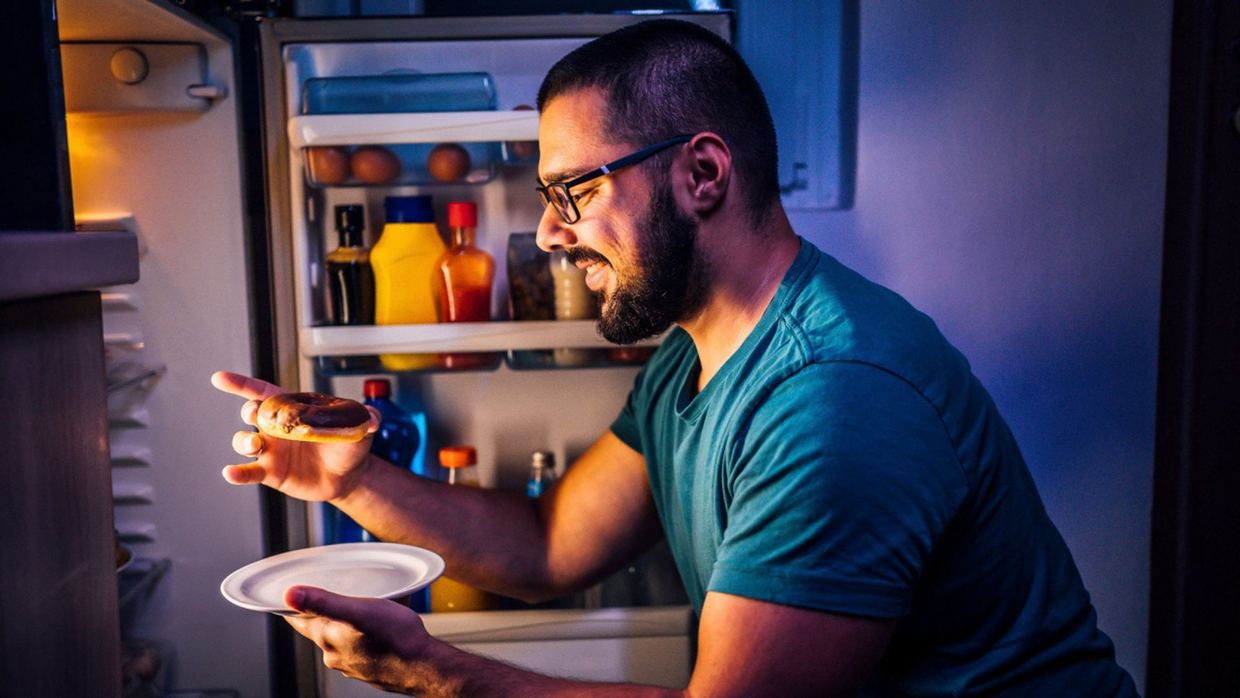
Researchers led by Oregon Health & Science University (OHSU) reported an association between late-night eating and a higher risk of two liver diseases, according to news.ohsu.edu. The study, published in the journal Clinical Gastroenterology and Hepatology, analyzed self-reported data from almost 200,000 participants. People who reported eating after dinner or after bedtime had 20–30% higher rates of all forms of liver disease than those who did not. ohsu.edu
news.ohsu.edunews.ohsu.eduOpen source ↗
Data and method
The team analyzed three large, preexisting nationwide datasets: the Nurses' Health Study, the Nurses' Health Study II and the Health Professionals Follow-up Study. They extracted diet and lifestyle habits reported by participants, grouped them by eating behaviors, and looked for correlations with reported cases of fatty liver disease (metabolic dysfunction-associated steatotic liver disease, MASLD) and cirrhosis. ohsu.edu
news.ohsu.edunews.ohsu.eduOpen source ↗
Previous research had associated late-night snacking with heart disease and obesity. In this work the authors looked for a signal of liver disease. Lead author Robert Wilechansky, M.D., a hepatologist at OHSU who specializes in liver transplantation, said that a few studies had hinted at the idea, but this is among the first long-term analyses to explicitly draw the connection to fatty liver disease. According to OHSU, as much as 30% of the U.S. population is affected by fatty liver disease. ohsu.edu
news.ohsu.edunews.ohsu.eduOpen source ↗
Circadian timing and study limits
Wilechansky noted that the liver is closely tuned to the body's circadian rhythms, and that the aim is to explore changing the timing of eating without changing what people eat. Co-author Andrew McHill, Ph.D., a sleep and circadian physiologist at OHSU, said the group has shown that eating at night, when the internal clock promotes sleep, reduces the body's ability to metabolize food efficiently. He added that earlier animal-model research shows the liver to be one of the organs most susceptible to misalignment between eating and sleep. ohsu.edu
news.ohsu.edunews.ohsu.eduOpen source ↗
The authors stress the limits of the work. The study is observational and based on broadly defined, self-reported data, so it shows an association rather than proof of cause. Wilechansky also noted that only a small fraction of people who develop fatty liver disease go on to serious forms such as cirrhosis. ohsu.edu
news.ohsu.edunews.ohsu.eduOpen source ↗
An OHSU team that includes Wilechansky is now recruiting for a study that will monitor eating behaviors directly and test whether eating earlier improves clinical measures of underlying fatty liver disease. Other co-authors are Kevin Casey, Andrew Chan and Tracey Simon of Massachusetts General Hospital in Boston. ohsu.edu
news.ohsu.edunews.ohsu.eduOpen source ↗