Wuhan researchers: VHL keeps p62 condensates liquid, and a chimeric peptide curbs tumorigenesis
Authors from Wuhan University showed that VHL tunes the liquidity of p62 condensates under proteotoxic stress. A chimeric peptide reproduced this effect and suppressed tumorigenesis in their experiments.
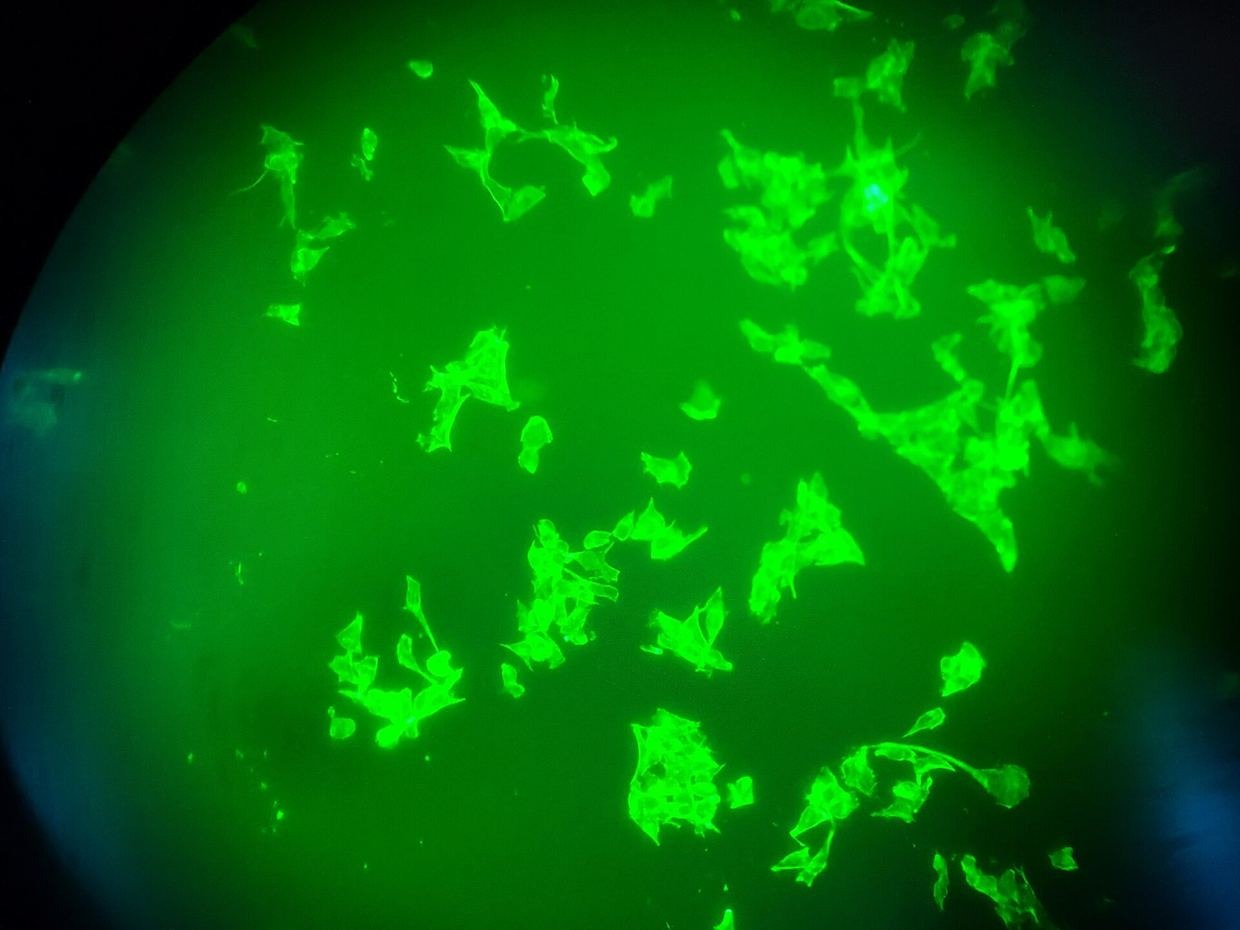
A team from Zhongnan Hospital and the School of Basic Medical Sciences of Wuhan University, with colleagues from Dalian Medical University and the General Hospital of Central Theater Command, has reported how the Von Hippel-Lindau protein (VHL) regulates protein aggregation. The work was published on 4 November 2026 in Nature Communications doi.org
Nature Communicationsdoi.orgOpen source ↗. The authors studied how cells coordinate two linked processes: the aggregation of proteins when proteostasis is lost, and aggrephagy, the autophagic removal of those aggregates
doi.org
Nature Communicationsdoi.orgOpen source ↗.
The authors note that the coordination of these processes has remained unclear. They showed that p62 condensates change from a gel-like to a more liquid-like state in response to proteotoxic stress doi.org
Nature Communicationsdoi.orgOpen source ↗.
How VHL changes the state of p62 condensates
According to the authors, VHL is recruited to aggresomes and colocalizes with p62 there doi.org
Nature Communicationsdoi.orgOpen source ↗. This is crucial for p62 to perform its distinct functions in aggresome formation and in autophagic degradation
doi.org
Nature Communicationsdoi.orgOpen source ↗.
Mechanistically, VHL binds to p62 through its IDR1 region. It increases the liquid-like properties of the condensates through its IDR2 region doi.org
Nature Communicationsdoi.orgOpen source ↗.
Consequences of VHL loss and the chimeric peptide
VHL depletion, or disease-associated mutations in IDR2, impaired the dynamics of p62 condensates doi.org
Nature Communicationsdoi.orgOpen source ↗. This led to excessive accumulation of aggregated proteins. It was accompanied by sequestration of KEAP1 and stabilization of NRF2
doi.org
Nature Communicationsdoi.orgOpen source ↗.
The researchers also built a chimeric peptide that links the p62 PB1 domain to VHL IDR2. The peptide recapitulated the fluidity-promoting activity of VHL. The authors report that it suppressed tumorigenesis and protein aggregation doi.org
Nature Communicationsdoi.orgOpen source ↗.
The authors conclude that the data point to an HIF-independent tumor-suppressive role of VHL in regulating proteostasis. They suggest that targeting condensate dynamics could serve as a new approach to cancer treatment doi.org
Nature Communicationsdoi.orgOpen source ↗. The abstract does not describe clinical testing of the peptide.