Argonne demonstrates 4D neutron scattering to track correlated ion motion in a strontium chloride crystal
A team led by Argonne National Laboratory tested 4D-QENS at the Spallation Neutron Source on a model crystal. The method showed direct evidence of correlated ion motion, relevant to solid-state electrolytes.
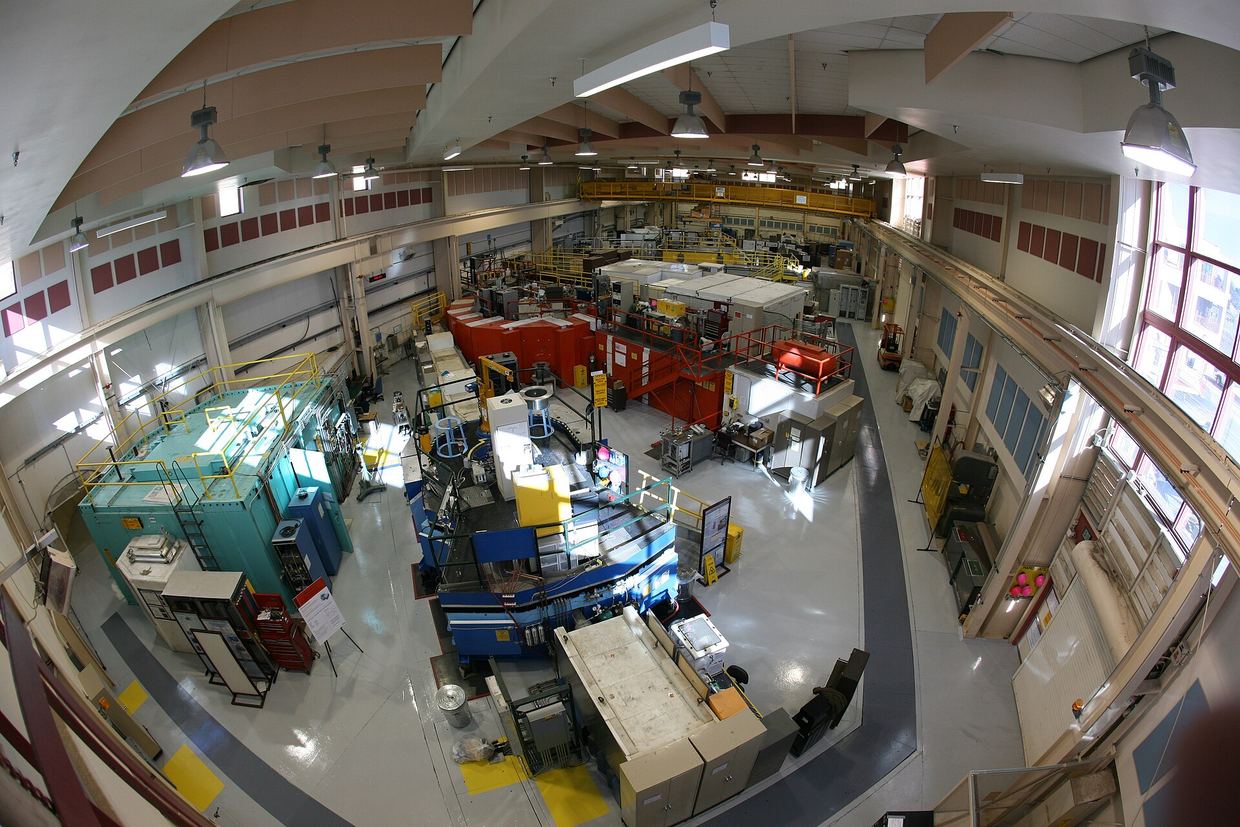
A team led by the U.S. Department of Energy's Argonne National Laboratory has demonstrated a method for measuring ion activity in solids, called 4D quasielastic neutron scattering (4D-QENS), according to azom.com. The technique was tested at the Spallation Neutron Source, a DOE Office of Science user facility at Oak Ridge National Laboratory (ORNL). The authors report that it gives more detail on how ions move and interact, which can improve the theoretical models used to design solid-state batteries and related technologies. azom.com
azom.comazom.comOpen source ↗
Why ion motion matters
Some materials let ions, which are charged atoms or molecules, move quickly. This makes them suitable as electrolytes in solid-state batteries, which could store more energy and be safer than conventional batteries with liquid electrolytes. azom.com
azom.comazom.comOpen source ↗
Researchers have generally assumed that ionic motion in solids is an independent, diffusion-based process. They are now exploring the idea that correlated motion, driven by interactions between ions, is key to ultrafast conductivity. Direct experimental observation of it has remained elusive. azom.com
azom.comazom.comOpen source ↗
How 4D-QENS works
Quasielastic neutron scattering directs neutrons at a sample and measures the changes in their direction and energy as they scatter. These changes reveal the movements of atoms or molecules in the material. In 4D-QENS, a single-crystal sample is rotated while exposed to the neutrons. The data cover three spatial dimensions plus energy transfer, which gives the fourth. azom.com
azom.comazom.comOpen source ↗
"The idea of doing these sample rotations has been around at pulsed neutron sources for about 15 years, but it has not been applied to QENS before," said Raymond Osborn, senior physicist at Argonne and lead author of the study. azom.com
azom.comazom.comOpen source ↗
The team measured single-crystal strontium chloride, a salt that becomes a fast-ion conductor above 1,200 degrees Fahrenheit. It is not a candidate for future applications, but its well-studied properties made it a suitable model crystal. azom.com
azom.comazom.comOpen source ↗
The results on hopping of ions between sites in the crystal lattice agreed with earlier studies. The measurements also gave direct evidence of correlated motion among ions. Such motion can either ease movement through the material or cause "traffic jams" that would be detrimental in a battery. azom.com
azom.comazom.comOpen source ↗
The volume of data grew with the recent power upgrade of the Spallation Neutron Source, which is the world's most powerful pulsed neutron source, and with DOE computing resources such as the Argonne Leadership Computing Facility. The researchers said this type of analysis would suit future 4D-QENS work on more complex materials relevant to solid-state electrolytes. The work is described in the journal PRX Energy. azom.com
azom.comazom.comOpen source ↗