Eight coral species in a 2.5-year mesocosm test show adaptive or dysbiotic symbiont shifts
In a 2.5-year future-ocean experiment, some corals shifted symbionts adaptively under heat, while others diverged stochastically, consistent with dysbiosis.
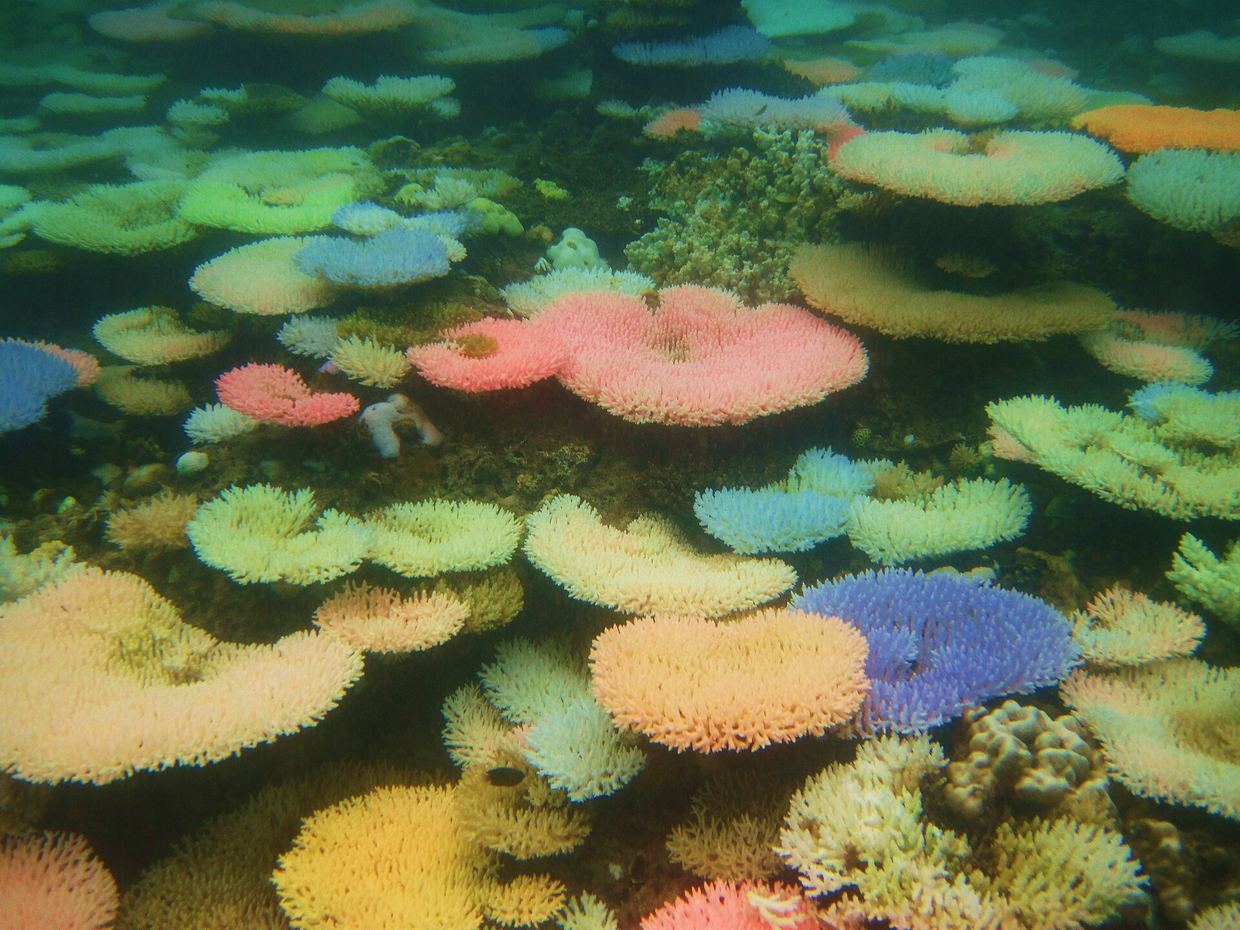
In a 2.5-year factorial future-ocean mesocosm experiment, researchers tracked symbiont community shifts in eight coral species representing the major coral lineages, according to a study in Science Advances doi.org
Science Advancesdoi.orgOpen source ↗. They compared replicate fragments taken from the same individual coral
doi.org
Science Advancesdoi.orgOpen source ↗. The authors note that coral reefs support over a quarter of marine species and nearly a billion people worldwide.
Responses differed between corals. Some showed stochastic divergence of symbiont communities, consistent with dysbiosis, while others showed deterministic, thermally adaptive shifts doi.org
Science Advancesdoi.orgOpen source ↗. Heat stress generally reduced symbiont diversity and promoted predictable restructuring of the community
doi.org
Science Advancesdoi.orgOpen source ↗.
The authors report that the results support deterministic processes under moderate stress and stochastic dysbiosis under extreme conditions doi.org
Science Advancesdoi.orgOpen source ↗. They propose that adaptive and stochastic responses are endpoints along a continuum of host-orchestrated symbiont sorting
doi.org
Science Advancesdoi.orgOpen source ↗. The study addresses a long-standing debate over whether coral symbioses will be disrupted or respond adaptively under future ocean conditions, and links coral reef ecology with broader host–microbiome theory
doi.org
Science Advancesdoi.orgOpen source ↗.