Cooper’s Ferry in Idaho: authors challenge ASI index inference of vertical mixing at the site
Authors argue that ASI, a statistical index built on binned artifact counts, does not support claims of large-scale mixing at the Idaho site, dated to ∼16,000 calibrated years BP.
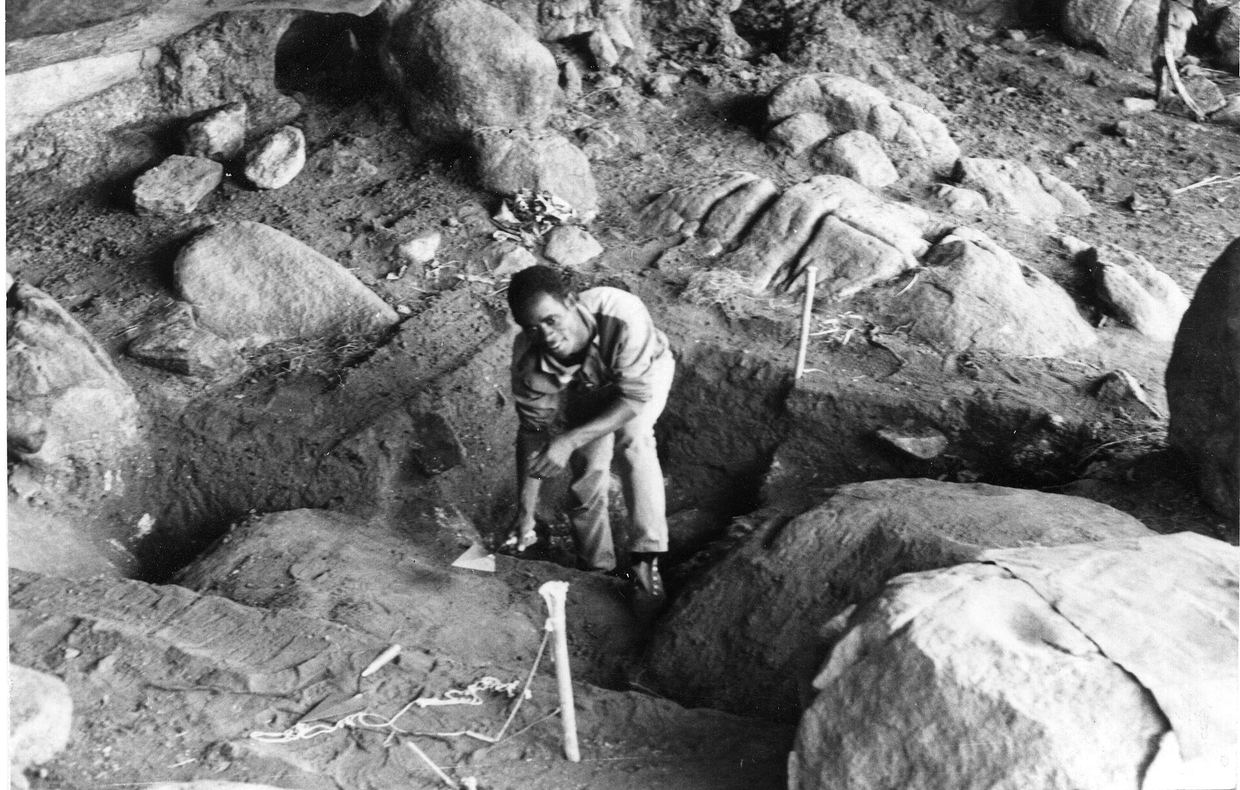
A paper in Science Advances re-examines the Apparent Stratigraphic Integrity Index (ASI), a statistical measure used to infer postdepositional mixing at Late Pleistocene sites and to support a relatively late occupation of temperate North America. The authors tested it on Cooper’s Ferry/Nipéhe in Idaho, where the occupation is dated to ∼16,000 calibrated years before the present doi.org
Science Advancesdoi.orgOpen source ↗.
ASI describes vertical discontinuity in artifact-frequency profiles split into bins. According to the authors, it does not directly measure artifact movement or stratigraphic integrity doi.org
Science Advancesdoi.orgOpen source ↗. At Cooper’s Ferry, the 5-centimeter absolute-elevation bins used for the calculation do not match the actual stratigraphic positions of artifacts across the irregular LU2 surface, on which LU3 loess accumulated
doi.org
Science Advancesdoi.orgOpen source ↗.
The authors conclude that the resulting ASI value cannot support claims of large-scale vertical mixing. They cite independent chronological, stratigraphic, pedogenic, archaeological and excavation evidence for the integrity of the occupation doi.org
Science Advancesdoi.orgOpen source ↗. In their view, the site provides early inland evidence of the kind expected under coastal-migration models, and models should be evaluated against archaeological evidence rather than used to override it
doi.org
Science Advancesdoi.orgOpen source ↗.
Sources · 1
Found a mistake?Read also