43 HCN1 variants in neurodevelopmental disorders sorted into four functional classes in HEK293 cells
Patch-clamp tests in HEK293 cells, compared with data from 49 patients, linked loss-of-function variants to milder phenotypes and gain-of-function variants to epilepsy.
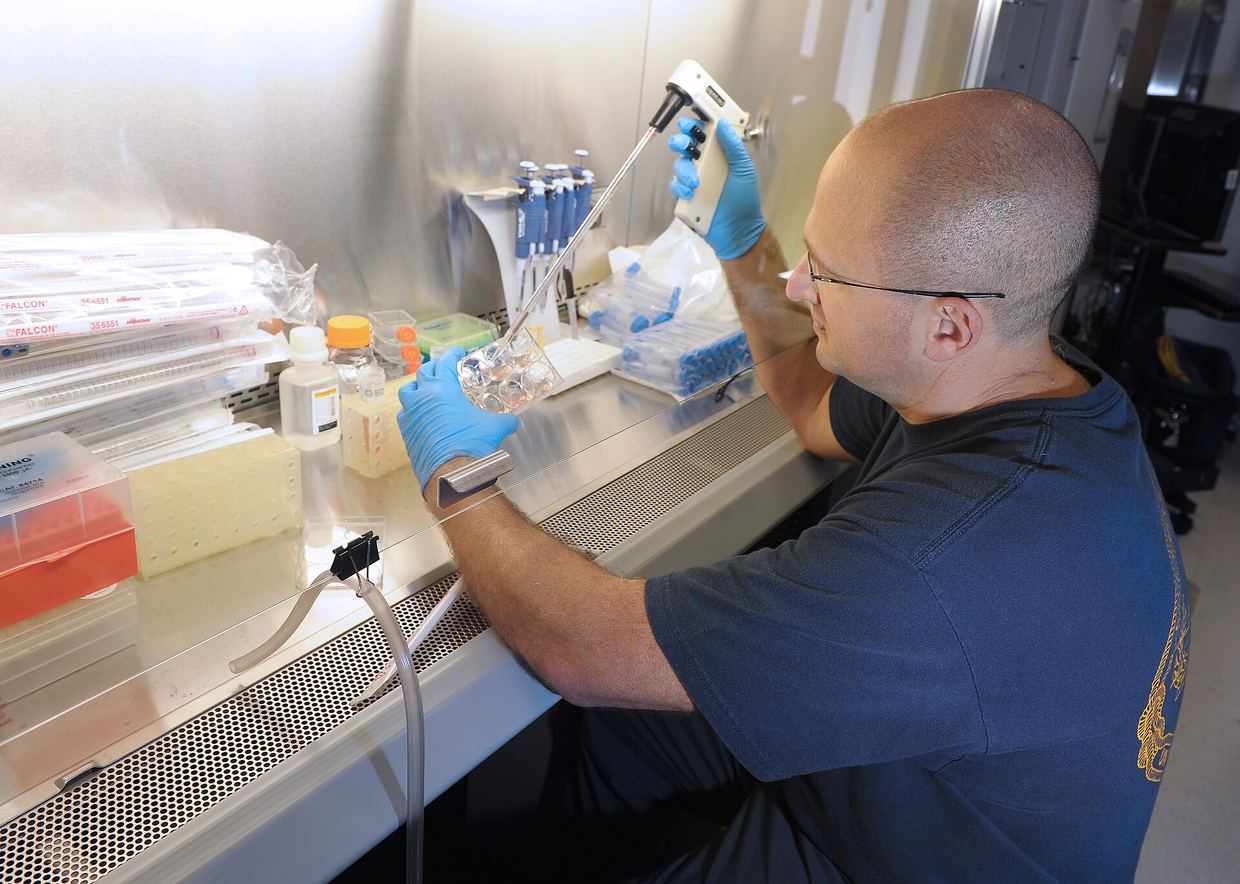
Researchers functionally characterized 43 variants of the HCN1 gene found in patients with neurodevelopmental disorders, with or without epilepsy. They used patch-clamp electrophysiology and confocal imaging in HEK293 cells and compared the results with clinical data from a cohort of 49 patients. The work was published in Proceedings of the National Academy of Sciences doi.org
Proceedings of the National Academy of Sciencesdoi.orgOpen source ↗.
HCN1 channels mediate the Ih cationic current and play a central role in regulating neuronal excitability and synaptic integration. The channel is expressed mainly in the neocortex and hippocampus. Pathogenic variants in HCN1 have been found in people with a broad spectrum of epileptic disorders, from severe developmental and epileptic encephalopathy (DEE) to milder epilepsies doi.org
Proceedings of the National Academy of Sciencesdoi.orgOpen source ↗.
Four functional classes of HCN1 variants
Based on biophysical properties, the authors defined four classes: (I) low or no current, (II) a hyperpolarizing (left) shift in voltage dependence, (III) a depolarizing (right) shift in voltage dependence, and (IV) generation of an instantaneous current doi.org
Proceedings of the National Academy of Sciencesdoi.orgOpen source ↗.
Genotype-phenotype correlation and modulators
Loss-of-function variants were strongly enriched among individuals without epilepsy or with milder generalized phenotypes. Gain-of-function and mixed variants were predominantly associated with epilepsy, including all cases of DEE doi.org
Proceedings of the National Academy of Sciencesdoi.orgOpen source ↗. Non-epileptic cases clustered within a subgroup of loss-of-function variants that affect the selectivity filter
doi.org
Proceedings of the National Academy of Sciencesdoi.orgOpen source ↗.
The team also tested allosteric modulators: the peptides NB6 and TRIP8b nano and the small molecule J&J12e. In these cell experiments, the modulators normalized the functional properties of mutant HCN1 channels in three of the classes doi.org
Proceedings of the National Academy of Sciencesdoi.orgOpen source ↗.
The authors state that the findings provide a clinically relevant framework for interpreting HCN1 gain- and loss-of-function variants, and that the direction of channel dysfunction is a major determinant of epilepsy risk and severity doi.org
Proceedings of the National Academy of Sciencesdoi.orgOpen source ↗.