CU Boulder: glass thread one atom wide conducts heat in steps of 40% of the quantum limit
Researchers at CU Boulder measured heat flow through glass stretched to a one-atom thread and saw quantized steps. It matters for thermal design of nanoscale chips, where glass serves as insulation.
Researchers at CU Boulder, with colleagues from Spain, reported that glass stretched into a thread one atom wide conducts heat in discrete steps, according to colorado.edu colorado.edu
colorado.educolorado.eduOpen source ↗. Each step equals 40% of the maximum amount a single channel can carry under the laws of quantum physics. The authors say this is the first observation of such quantized heat flow carried by atomic vibrations. The work was published in Nature Nanotechnology.
The result runs against expectation, because glass is known as a poor thermal conductor. Guilherme de Vilhena of the Materials Science Institute of Madrid, a co-author, said the thread lets heat through with an efficiency never seen before in an insulator. The team was led by Longji Cui, an assistant professor in the Paul M. Rady Department of Mechanical Engineering at CU Boulder.
Why heat passes through
In ordinary glass, the disordered arrangement of atoms scatters the vibrations that carry heat. In a thread one atom wide there is no room for such disorder, so the vibrations pass straight through, as the researchers explain.
Scanning thermal probe microscope
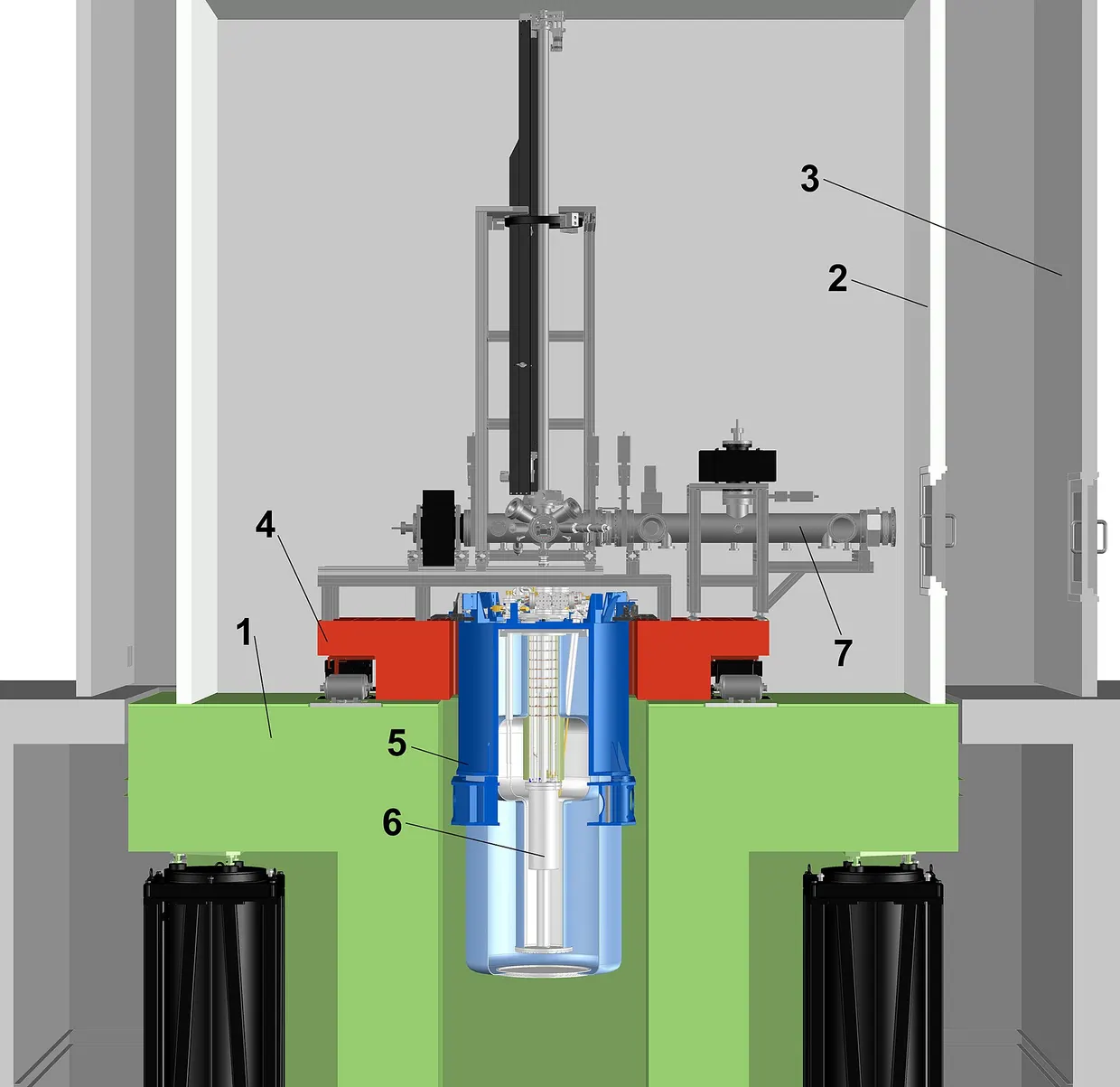
The measurements used a scanning thermal probe microscope (SThM). It has a glass tip and a built-in thermometer, and it measures how heat flows through atomic-scale contacts. Cui compares it to an extremely small fingertip that can read temperature and heat flow through a single atom colorado.edu
colorado.educolorado.eduOpen source ↗.
In the experiment, two pieces of glass were pressed together and then slowly pulled apart. The contact was stretched until it narrowed to a thread one atom wide and then snapped.
Relevance for electronics
Glass in the form of silicon dioxide is used throughout current computer chips as an insulating layer. The authors say the findings could have implications for how engineers design smaller nanoscale electronics. Cui said similar behavior could occur in other materials, and the microscope can be used to study atomic-scale thermal transport in metals and insulators alike. He named semiconductors, the building blocks of nanoelectronics, as materials of particular interest.
The team also included researchers from the Autonomous University of Madrid. The research was supported by the U.S. National Science Foundation colorado.edu
colorado.educolorado.eduOpen source ↗.