RTU MIREA synthesizes high-entropy metal-organic frameworks from five to seven rare-earth metals
Researchers at RTU MIREA, RUDN and the Kurchatov Institute made new porous frameworks that, in laboratory tests, absorbed methane and water vapor better than simpler analogues.
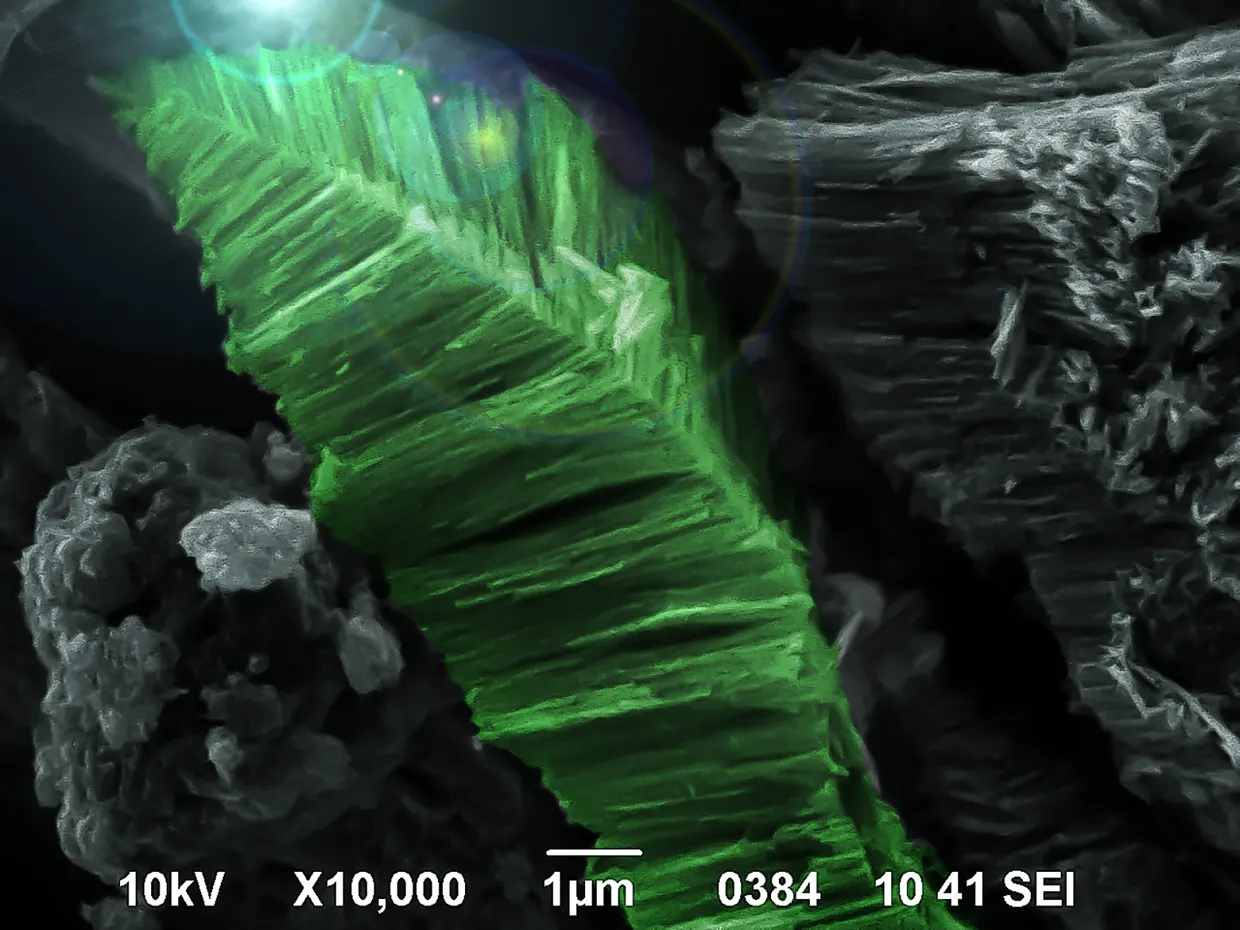
Researchers at RTU MIREA, together with colleagues from RUDN University and the Kurchatov Institute, have for the first time synthesized high-entropy metal-organic frameworks (MOFs) based on rare-earth metals, according to Nauchnaya Rossiya. Each material contains five, six or seven different rare-earth elements in a single structure. The authors report that the compounds show increased chemical stability and absorb methane, hydrogen and water vapor scientificrussia.ru
Научная Россияscientificrussia.ruOpen source ↗.
What high-entropy MOFs are
In high-entropy materials, five or more different atoms statistically occupy the same position in a crystal structure. MOFs are porous frameworks, often compared to molecular sponges: they capture and hold substances and release them on demand. They are considered for gas adsorption and storage, water purification and catalysis.
Until now, high-entropy materials have mostly been made from metals, alloys and intermetallic compounds. MOFs are usually built on transition metals such as copper, zinc, cobalt and nickel. Analogues based on rare-earth metals, including samarium, europium, gadolinium, terbium, dysprosium, holmium and erbium, had not been obtained or studied in this context.
Synthesis and test results
The team used a hydrothermal method to place five, six and seven different rare-earth cations in one structure. The authors note that seven is not the limit. The synthesis was carried out by student Daniil Valeshny and postgraduate Anton Mushtakov scientificrussia.ru
Научная Россияscientificrussia.ruOpen source ↗.
In tests, the new materials absorbed methane, and especially water vapor, significantly better than analogues of simple composition, and were more resistant to chemical attack. The researchers link this to a so-called cocktail effect, in which a combination of different elements gives a MOF properties exceeding those of an individual compound.
Galina Kuzmicheva, professor at RTU MIREA, said the work extends the concept of high-entropy materials from transition metals to rare-earth elements in various combinations. Mushtakov reported record absorption of water vapor and methane compared with single-component analogues. The authors see possible uses in gas storage, water purification, targeted drug delivery, and as adsorbents and desiccants. They add that the chemical stability makes the materials suitable for aggressive environments.
The results were published in the Journal of Molecular Structure scientificrussia.ru
Научная Россияscientificrussia.ruOpen source ↗. The work was done on laboratory samples; the material gives no data on industrial use.