Gladstone atlas in mice: blood-brain barrier admits 92 of 861 tracked blood proteins
A mouse study in Cell maps blood proteins carried into the brain and links reduced APOA1 import to early changes in an Alzheimer's mouse model.
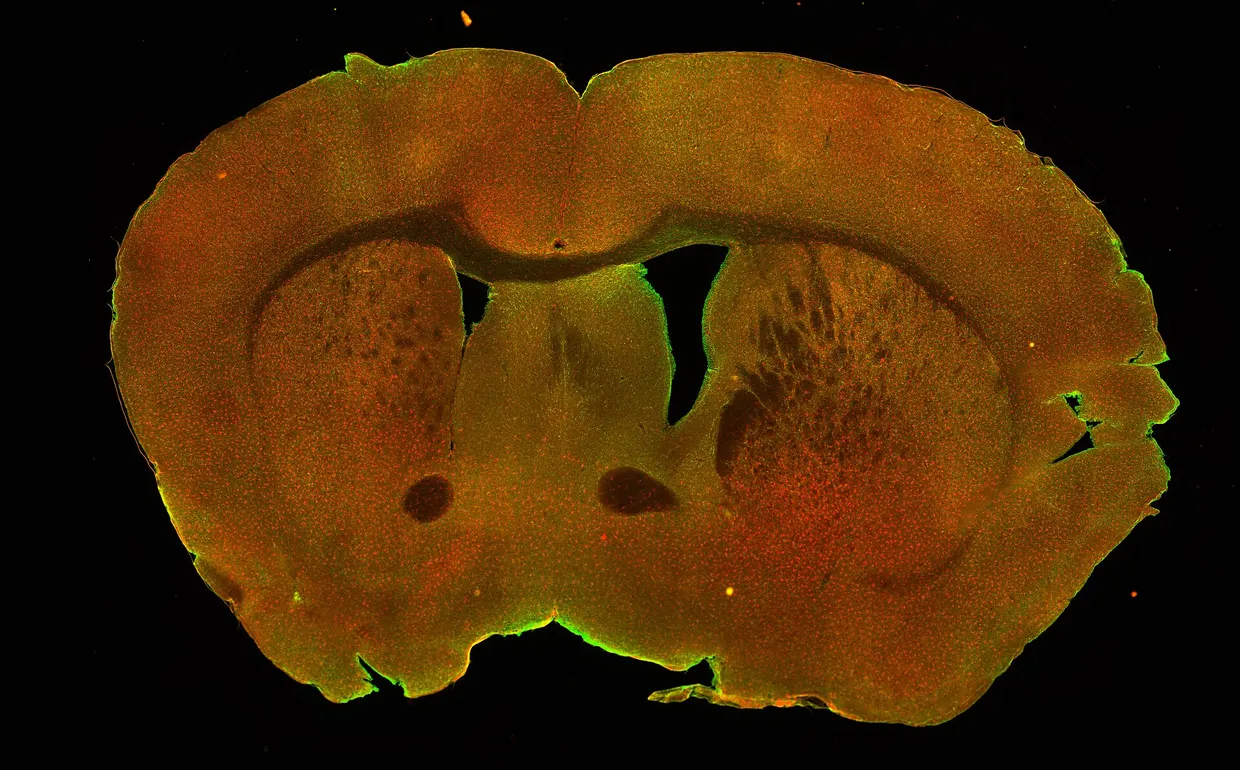
Researchers at Gladstone Institutes in San Francisco, led by Andrew Yang, PhD, have built the first atlas of blood proteins transported across the blood-brain barrier into the brain, working in mice. According to a report in the journal Cell, covered by eurekalert.org, the atlas contains 92 proteins so far eurekalert.org
eurekalert.orgeurekalert.orgOpen source ↗. Of the 861 proteins the team tracked, the barrier allowed only 92 to enter the brain.
How blood proteins were tracked into the brain
The authors said existing methods were inefficient and risked interfering with the body's processes. Instead, the team used Nobel Prize-winning protein-labeling chemistry to label the full repertoire of mouse blood proteins and injected them back into the bloodstream of mice. They then examined brain tissue to see which labeled proteins had crossed the barrier.
Most of the proteins that entered the brain were produced in distant parts of the body, especially the liver. The findings suggest that the barrier uses specialized receptors to identify and transport specific plasma proteins. Once inside the brain, different proteins were directed to specific types of brain cells.
One example is apolipoprotein A1 (APOA1), made in the liver and delivered to astrocytes. There it activates a pathway that maintains healthy connections between neurons; failure of this pathway has previously been linked to a higher risk of Alzheimer's disease eurekalert.org
eurekalert.orgeurekalert.orgOpen source ↗. Another liver protein, alpha-1 antitrypsin, goes to microglia, and in healthy mice microglia that took up more of it expressed more genes associated with neurodegeneration.
What changed in a mouse model of Alzheimer's
In a mouse model of Alzheimer's, the barrier stopped importing protective proteins such as APOA1 before it began to break down and leak harmful proteins. This change was accompanied by loss of neuronal connections, behavioral changes and other early signs of the disease. In these mice, brain APOA1 was reduced and alpha-1 antitrypsin uptake increased.
In mice engineered to produce extra APOA1 in the liver, more of the protein crossed the barrier, and the animals showed fewer signs of Alzheimer's disease. The authors suggest that the barrier's delivery function may be an early failure point in Alzheimer's and other neurodegenerative diseases.
They name two possible directions: boosting production of beneficial proteins in organs such as the liver, and using the barrier's natural "ZIP code" system to deliver therapies to specific brain cell types eurekalert.org
eurekalert.orgeurekalert.orgOpen source ↗. The group is also pursuing the use of the barrier's transport machinery to help drugs reach the brain. All results so far come from mice.