AWI and BAS sediment cores show West Antarctic glaciers retreated inland in past warm periods
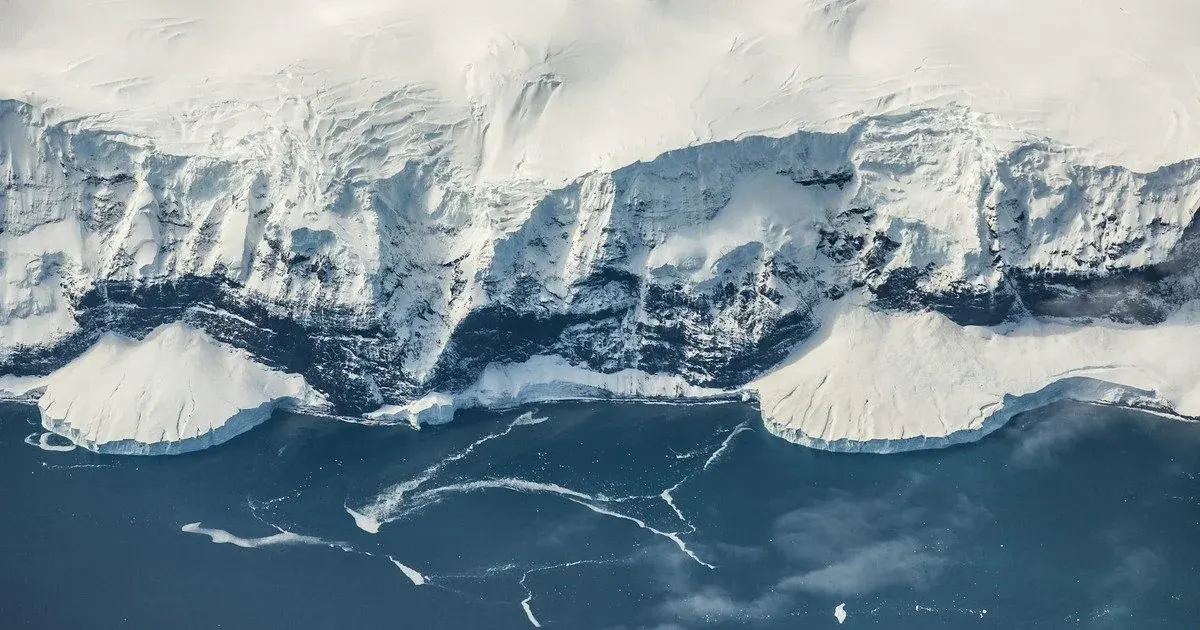
Over the past 800.000 years, the Thwaites and Pine Island glaciers repeatedly retreated far inland in natural warm periods at global temperatures similar to today's, the authors report.
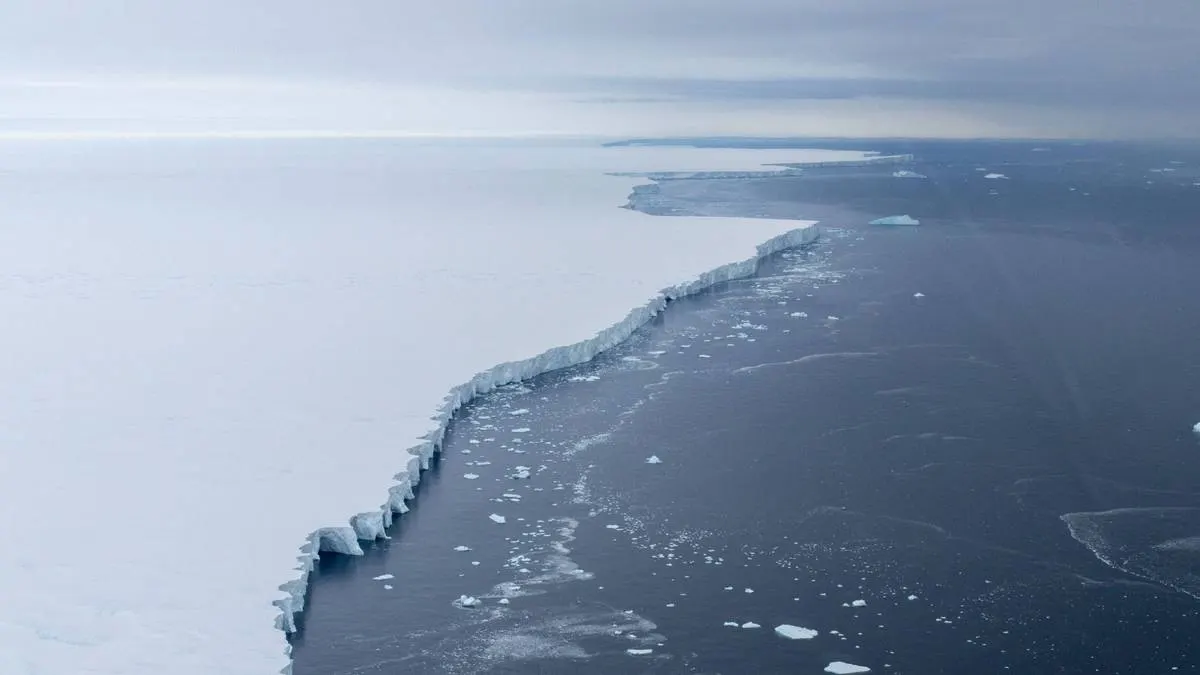
An international team led by the British Antarctic Survey (BAS), with direct participation of the Alfred Wegener Institute (AWI), reports that the most vulnerable ice streams of West Antarctica, including the Thwaites Glacier, repeatedly retreated far inland during natural warm periods of the past 800.000 years, according to awi.de. This happened at global temperatures similar to today's. The results are published in Nature Communications awi.de
awi.deawi.deOpen source ↗.
Kaolinite signal in seabed sediments
Kaolinite is a clay mineral that typically forms by weathering under warm, humid conditions. More than 34 million years ago such conditions also prevailed on the Antarctic continent, and the ancient kaolinite is now locked in the rock beneath the West Antarctic Ice Sheet. Glaciers such as Thwaites and the neighboring Pine Island Glacier grind the bed on their way to the sea and carry the mineral out. Icebergs and ocean currents then move it to the seabed, so sediments there carry a kaolinite signal.
In sediment cores from a water depth of around 4.000 meters, the team found no kaolinite during any single interglacial of the past 800.000 years. According to study leader Claus-Dieter Hillenbrand, a marine geologist at BAS, this means the ice resting on the seabed in the Amundsen Sea sector, including Thwaites and Pine Island, must have melted and withdrawn far inland.
Warm deep water and local temperatures
The same samples contain magnesium-rich smectite, a clay mineral typical of the deep Pacific, far to the north. It was deposited near the coast at the same time as the kaolinite disappeared awi.de
awi.deawi.deOpen source ↗. The team considers the most plausible explanation to be warm deep-water currents that reached the West Antarctic continental shelf, carried the smectite south and melted the ice on the seabed.
To test this, the researchers analyzed fossil diatoms, whose shell shape depends on water temperature. The global mean temperature of earlier warm periods was only about 1,0 to 1,5 degrees Celsius above the preindustrial level, comparable to today or slightly milder. Meanwhile, the waters off West Antarctica warmed locally by about one to three degrees Celsius relative to present conditions.
The authors note that under natural conditions the melting of Thwaites probably took several thousand years. Today, human-made greenhouse gas emissions warm the oceans faster than ever before and could shorten this process to a few centuries. A complete collapse of Thwaites would raise global sea level by about 65 centimeters, and Pine Island could add another 51 centimeters. If larger parts of the West Antarctic Ice Sheet were destabilized, sea level could rise by three to five meters in total.
AWI marine geologist Johann Klages said he was surprised that the ice sheet at least partly collapsed even under natural conditions. AWI geophysicist Karsten Gohl, co-leader of the drilling campaign, said the results show that natural warm periods were also linked to considerable ice loss awi.de
awi.deawi.deOpen source ↗.