Imperial College London: incense use in 112 London homes linked to up to 1293 µg/m³ fine dust
Imperial College London measured indoor air in 112 homes; incense-linked hourly fine particle levels reached 1293 µg/m³, the highest among air-freshening products.
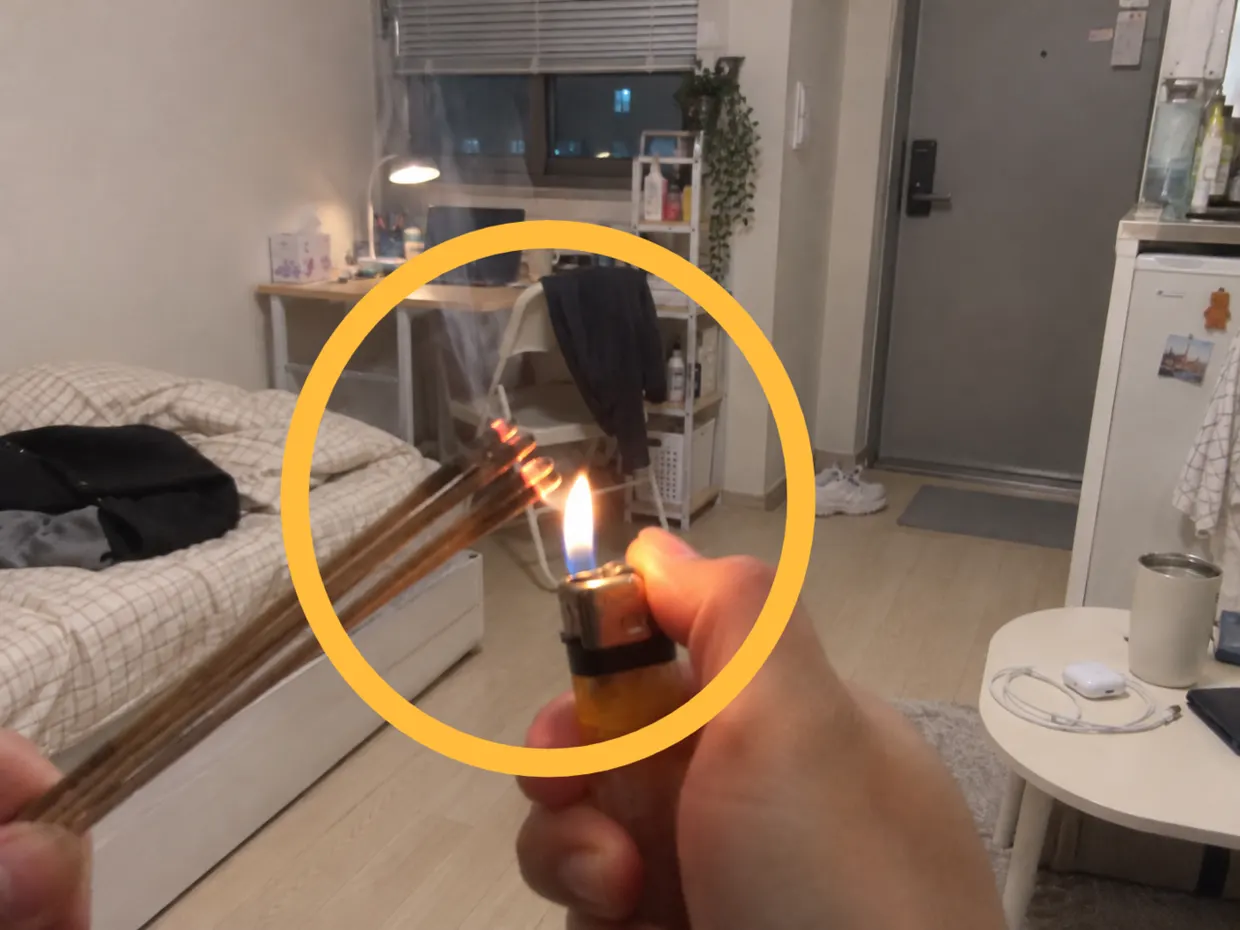
Researchers at Imperial College London analysed indoor air quality in 112 London homes and published the results in August, according to biz.heraldcorp.com. The team compared the use of scented candles, incense and oil diffusers with changes in indoor fine particulate matter concentration. The highest level was linked to incense: the hourly concentration associated with its use reached 1293 µg/m³ biz.heraldcorp.com
biz.heraldcorp.combiz.heraldcorp.comOpen source ↗.
For comparison, South Korea classes an outdoor daily average of 76 µg/m³ or more as "very bad", the worst level. The indoor value is 17 times higher.
Incense, candles and diffusers
A 2003 study by Taiwanese researchers in the journal Chemosphere measured particles from burning a single incense stick. One stick emitted 32.6–52.7 mg, which, by emitted mass alone, equals about 2–4 cigarettes. Sticks are usually made of wood powder, fragrance and adhesive; incomplete combustion produces smoke and fine particles. Burning also releases benzene, formaldehyde, toluene and carbon monoxide, and benzene and formaldehyde are Group 1 carcinogens.
In 2024, researchers from Eulji University and Seoul National University bought five candles and five incense sticks sold online in Korea. They burned each in a sealed space measuring 3 m by 2 m by 2.3 m and measured particles nearby. The mean next to a candle was 17.4 µg/m³; next to incense it was 1901.3 µg/m³, about 109 times higher biz.heraldcorp.com
biz.heraldcorp.combiz.heraldcorp.comOpen source ↗. In the candle tests, concentrations of some chemicals, including benzene and toluene, also rose.
The way a candle is put out mattered. Blown out by mouth, the mean next to the candle rose to 2365.7 µg/m³; with a lid, it was 13 µg/m³, a difference of more than 180 times. For oil diffusers, which use no flame, the highest hourly concentration in the Imperial study was 858 µg/m³, above the highest candle reading. The US Environmental Protection Agency states that fragrance components of some products can react in indoor air and form particles and formaldehyde.
Ventilation and guidance
In 2021, Sungkyunkwan University researchers studied cooking, cleaning and candle burning in real homes. For many activities, concentrations remained above the study's reference level 30 minutes after particle generation ended. The Imperial study also found higher exposure linked to air-freshening products in small homes and poorly ventilated spaces.
The EPA names removing or reducing the source of pollutants as the most effective way to improve indoor air. In 2018, the Korea Consumer Agency found benzene above the recommended level for newly built apartments in 5 of 10 incense products. In 3 of 10 candles, chemical concentrations exceeded the recommended level for public facilities biz.heraldcorp.com
biz.heraldcorp.combiz.heraldcorp.comOpen source ↗. The agency advises against inhaling the smoke directly, against use in enclosed places, and recommends ventilating during and after use.