Colorado State University builds tensegrity robots with claws that join into chains and loops
Authors report a modular robot with a compliant tensegrity body and claw connectors. Prototypes manipulate objects, move, and self-assemble into chains, loops and branches.
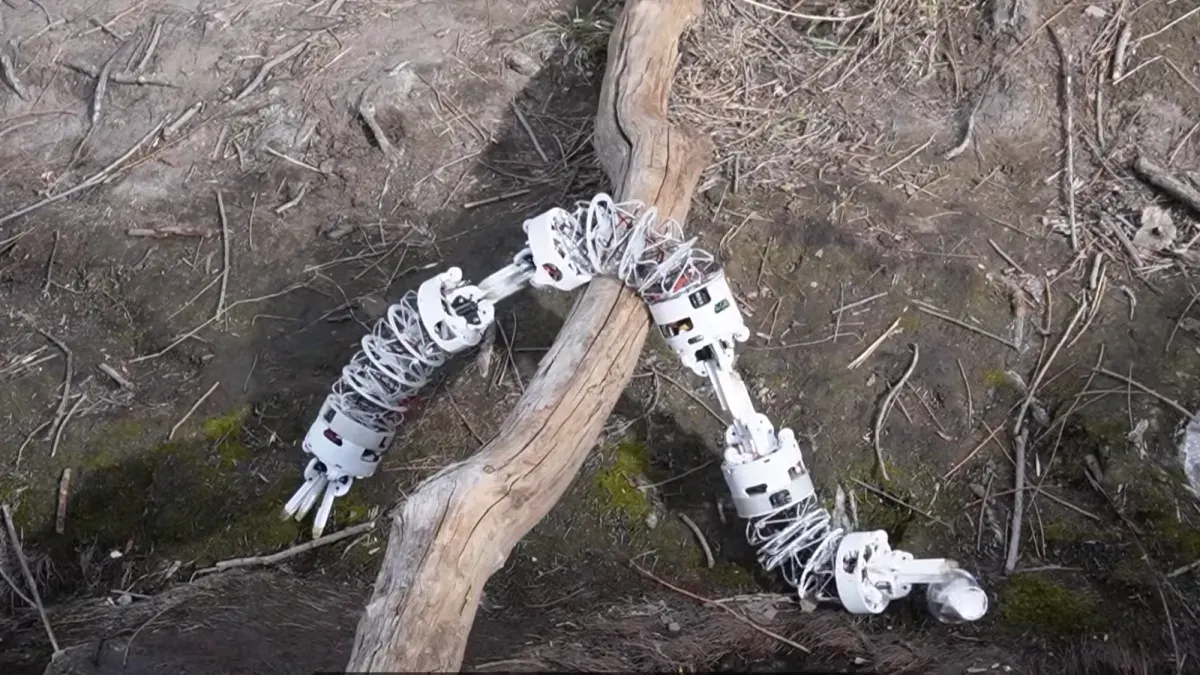
A team at Colorado State University has described a modular reconfigurable robot that combines a compliant tensegrity-based body with claw-based connection mechanisms. The work is published under doi.org, and the news coverage places it in Nature Machine Intelligence nature.com
doi.orgnature.comOpen source ↗. Each robot can manipulate objects and move on its own. Several robots can also rearrange themselves into chains, loops and branches for cooperative manipulation and locomotion.
The design is inspired by elephant trunks. According to the authors, existing modular robots mostly use rigid modules with little structural compliance, while continuum robots are flexible but cannot reconfigure themselves into multi-robot arrangements. The new machine is meant to combine both properties.
Tensegrity body and claw connectors
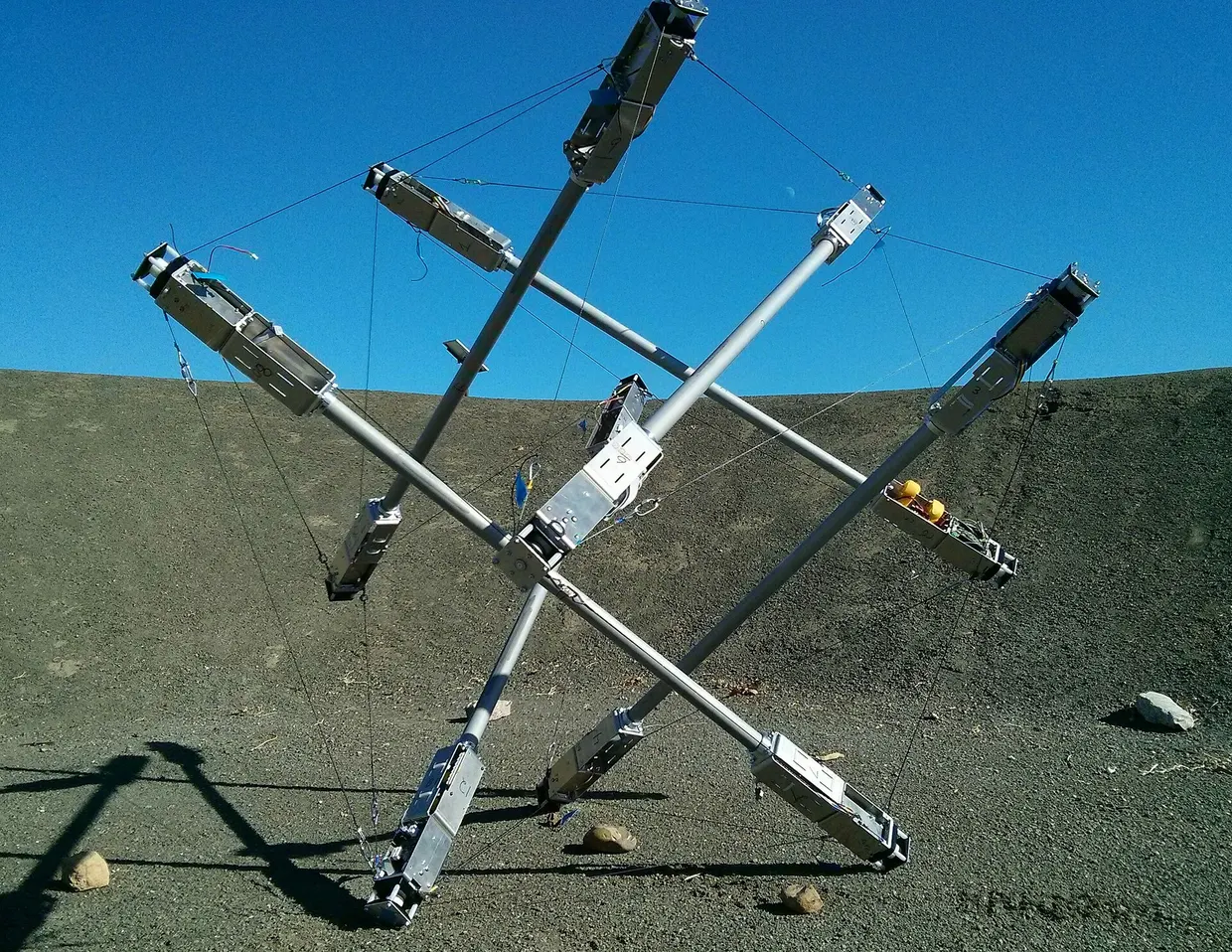
Tensegrity means that stiff rods are held together by a network of tensioned cables. Such a structure can stretch, bend and collapse without conventional joints along its body. Each robot is tube-shaped and has gripping claws at both ends. The claws can hold an object or attach to another robot.
The team chose mechanical claw connections instead of magnets. The aim is to make alignment and reliable connection easier when robots form larger structures. Finding motors that were both compact and dependable was one of the engineering challenges, and the researchers tested several types.
Demonstrations and limits
The authors demonstrated coordinated object manipulation and transport, multimodal locomotion, and loco-manipulation in real-world scenarios nature.com
doi.orgnature.comOpen source ↗. Prototypes were also taken out of the laboratory to test movement over natural terrain.
The work is at an early stage. Two robots have shown that they can find each other and connect automatically. Broader tasks still require human operators. Firmware for the ESP32 transmitter and receiver units, along with the autonomous visual docking implementation, has been released under an MIT licence.
The authors name manufacturing, space exploration and search-and-rescue operations as possible applications. Future work will focus on faster movement and greater independence. The researchers note that coordination becomes harder as the number of robots grows, so reliable sensing and control will be required for larger groups.
Sources · 2
Found a mistake?Read also