CMU Engineers Model Nerve Cell Transport 10 Times Faster on Bridges-2
A computational surrogate developed at Carnegie Mellon University accelerates intracellular transport simulations tenfold to study neurodegenerative disorders.
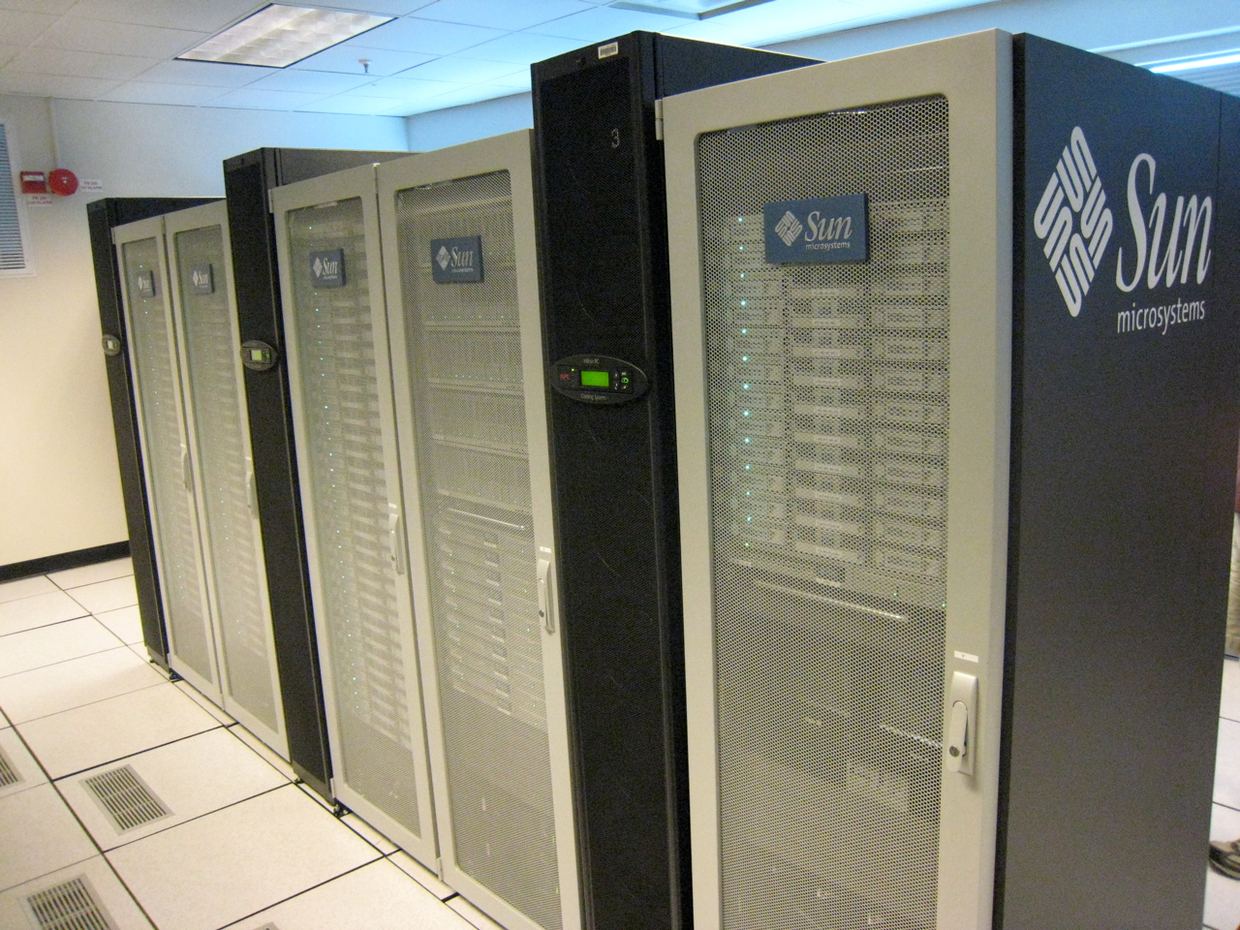
Researchers at Carnegie Mellon University utilized the Pittsburgh Supercomputing Center's Bridges-2 supercomputer to simulate molecular transport inside branching nerve cells, according to psc.edu psc.edu
psc.edupsc.eduOpen source ↗. The project aims to accelerate the study of neurodegenerative conditions such as amyotrophic lateral sclerosis (ALS), where disruptions in nutrient and signal movement along axons break communication between nerves and muscles
psc.edu
psc.edupsc.eduOpen source ↗. By replacing resource-intensive wet-lab trials with in silico models, scientists can evaluate hypotheses regarding transport bottlenecks before conducting physical experiments
psc.edu
psc.edupsc.eduOpen source ↗.
Detailed physical models tracking fluid and nutrient dynamics across complex three-dimensional neurite branches typically create prohibitive computational demands psc.edu
psc.edupsc.eduOpen source ↗. To overcome these scaling constraints, graduate student Tsung Yeh Hsieh and Professor Jessica Zhang designed a surrogate framework named Graph-Autoencoder-based Latent Dynamics Surrogate (GALDS)
psc.edu
psc.edupsc.eduOpen source ↗. The method mathematically simplifies axons and branching neurites into networks of branching pipes, compressing spatial data into primary features to compute traffic behavior efficiently
psc.edu
psc.edupsc.eduOpen source ↗.
Computational Performance on Bridges-2
The team trained and executed the GALDS architecture using hardware allocations on the Bridges-2 system, which features 47 graphics processing unit nodes with 384 accelerators and 504 central processing unit nodes offering more than 64,000 cores psc.edu
psc.edupsc.eduOpen source ↗. The traffic simulations periodically utilized roughly 1,000 CPU cores, relying on node memory configurations of 256 to 512 gigabytes of RAM to store intermediate data without input-output bottlenecks
psc.edu
psc.edupsc.eduOpen source ↗.
Benchmark Accuracy and Simulation Scope
The surrogate model was tested across eight neurite geometries alongside four abnormal transport scenarios psc.edu
psc.edupsc.eduOpen source ↗. The system accelerated calculation speeds by a factor of 10 compared to conventional methods while maintaining an average prediction error of approximately 3 percent relative to full-scale physics simulations, with peak errors remaining below 8 percent
psc.edu
psc.edupsc.eduOpen source ↗.
Results appeared in Computer Methods in Applied Mechanics and Engineering in December 2025 psc.edu
psc.edupsc.eduOpen source ↗. Current limitations of GALDS include spatial averaging that bypasses local microscale mechanics and a restriction to static geometries, preventing the simulation of dynamically growing arborizations
psc.edu
psc.edupsc.eduOpen source ↗. Ongoing development focuses on variable-resolution models capable of accommodating morphological changes
psc.edu
psc.edupsc.eduOpen source ↗.