Korea University team makes gold–selenium core-shell nanopigment with Q-factor up to 15 in lab tests
Researchers at Korea University developed a structural-color nanopigment of gold and selenium with a Q-factor up to about 15; samples showed no visible color change in storage.
A team led by Professor Lee Seung-woo of the KU-KIST Graduate School of Converging Science and Technology and the Department of Integrative Energy Engineering at Korea University developed a structural-color nanopigment based on gold and selenium, dailysmart.co.kr reports. The university announced the result on the 5th. The work was published online in Advanced Materials on 13 October dailysmart.co.kr
dailysmart.co.krdailysmart.co.krOpen source ↗.
Core–shell structure and Q-factor
Conventional dyes fade because their molecules break down under sunlight or artificial lighting. Structural color, as in butterfly wings or peacock feathers, comes from fine material structure reflecting specific wavelengths and does not depend on molecules. Single-component structural pigments, however, respond over too wide a wavelength range, which limits how sharp a color can be dailysmart.co.kr
dailysmart.co.krdailysmart.co.krOpen source ↗.
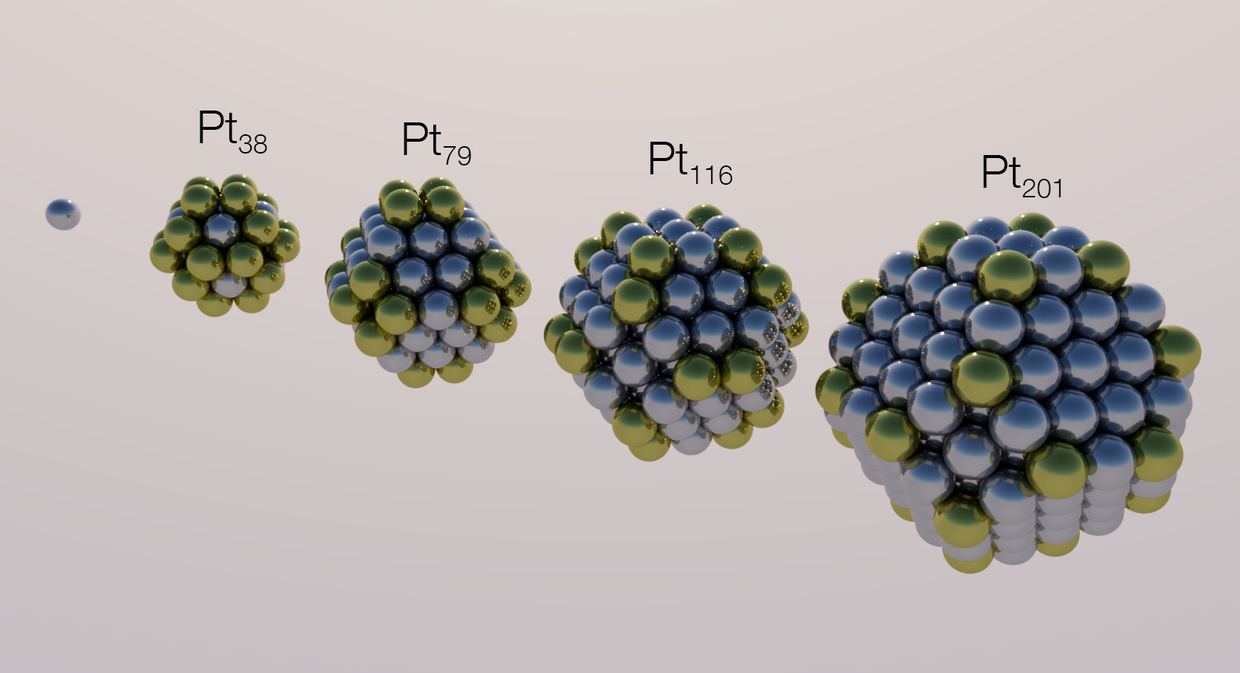
The team designed gold nanoparticles wrapped in a selenium shell. The gold core and selenium shell interfere with each other as they interact with light. This Fano-type interference made the response at specific wavelengths more distinct, raised color purity and widened the range of colors compared with single-component particles dailysmart.co.kr
dailysmart.co.krdailysmart.co.krOpen source ↗.
The Q-factor reached about 15 at maximum. For gold nanoparticles used in existing structural-color pigments it is generally below 10 dailysmart.co.kr
dailysmart.co.krdailysmart.co.krOpen source ↗.
Inks, filters and stability tests
The pigment was made into a water-based ink, loaded into a fountain pen and used to draw Van Gogh's The Starry Night on paper. Mixed into UV-curable resin, it was used to produce red, green and blue color filters at 254 ppi dailysmart.co.kr
dailysmart.co.krdailysmart.co.krOpen source ↗.
From November 2025 to July 2026 the team kept nanoparticle dispersions, dried paintings and UV-cured films indoors and found no noticeable color change or deformation. The optical properties of the UV-cured film also remained stable in UV irradiation, heating and freezing tests dailysmart.co.kr
dailysmart.co.krdailysmart.co.krOpen source ↗.
Permanent color retention has not been fully verified. Long-term durability and manufacturing cost still need further evaluation before commercial use dailysmart.co.kr
dailysmart.co.krdailysmart.co.krOpen source ↗.