Kindai University simulations point to an unseen planet of about 2 Earth masses in the outer Solar System
Orbits of small bodies beyond Neptune fit a model with a distant planet of 1–2 Earth masses; the planet itself has not been observed.
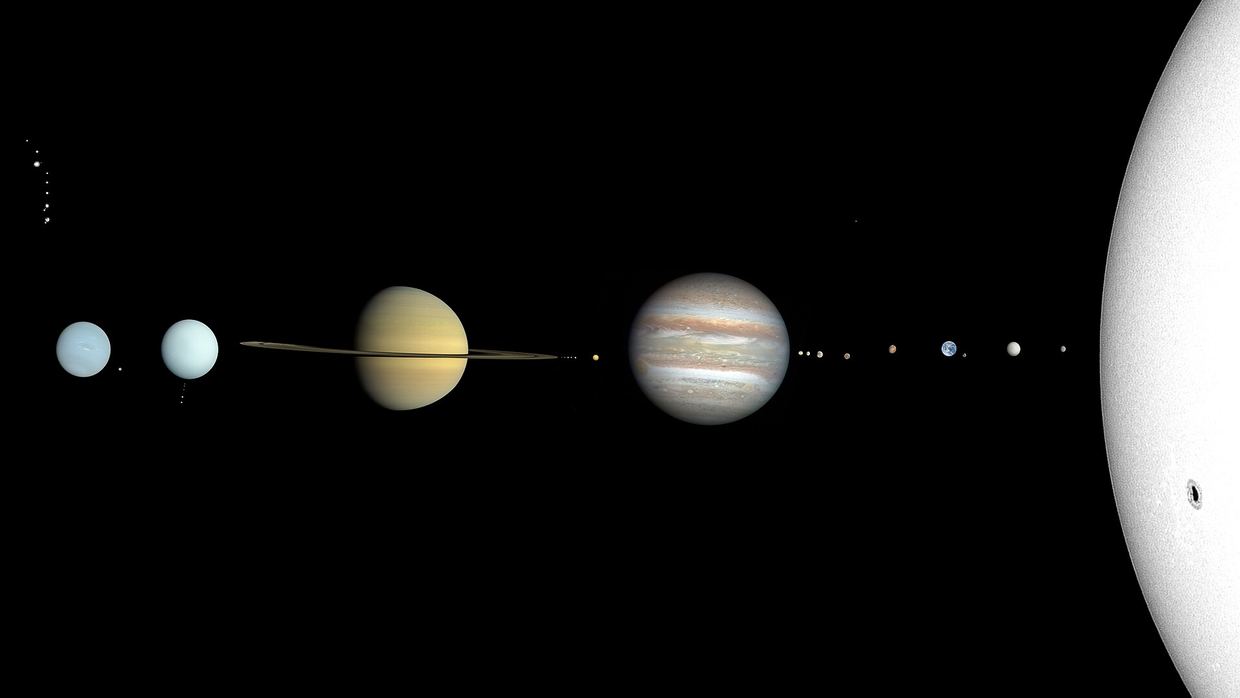
A research team at Kindai University and other institutions reports that an unknown planet about twice the mass of Earth may exist in the outer Solar System, newssalt.com writes. newssalt.com
newssalt.comnewssalt.comOpen source ↗ The study was published on October 28 in Monthly Notices of the Royal Astronomical Society.
newssalt.com
newssalt.comnewssalt.comOpen source ↗
Some small bodies beyond Neptune stay far from its orbit even at closest approach to the Sun, have orbits inclined 45 degrees or more, or move on extremely elongated paths. Sedna stays about 76 astronomical units away at closest approach. newssalt.com
newssalt.comnewssalt.comOpen source ↗
The team simulated the motion of bodies since the Solar System formed, including Neptune's migration. Protoplanets of Mars to Earth mass were ejected and did not reproduce the observed distribution, while a distant planet of 1–2 Earth masses did. A planet of about twice Earth's mass, with a semi-major axis of 350–500 astronomical units and perihelion near 200 astronomical units, also explained Sedna-like orbits. newssalt.com
newssalt.comnewssalt.comOpen source ↗
This is a simulation result: the planet has not been found. Vera C. Rubin Observatory observations may test it. newssalt.com
newssalt.comnewssalt.comOpen source ↗