Macquarie team finds 793 related pairs among 3,524 ALS and FTD patients, building 73 new pedigrees
In a Brain study of 3,524 ALS and FTD patients, genome-wide IBD analysis revealed hidden relatedness and gave clinicians clearer context for inherited risk.
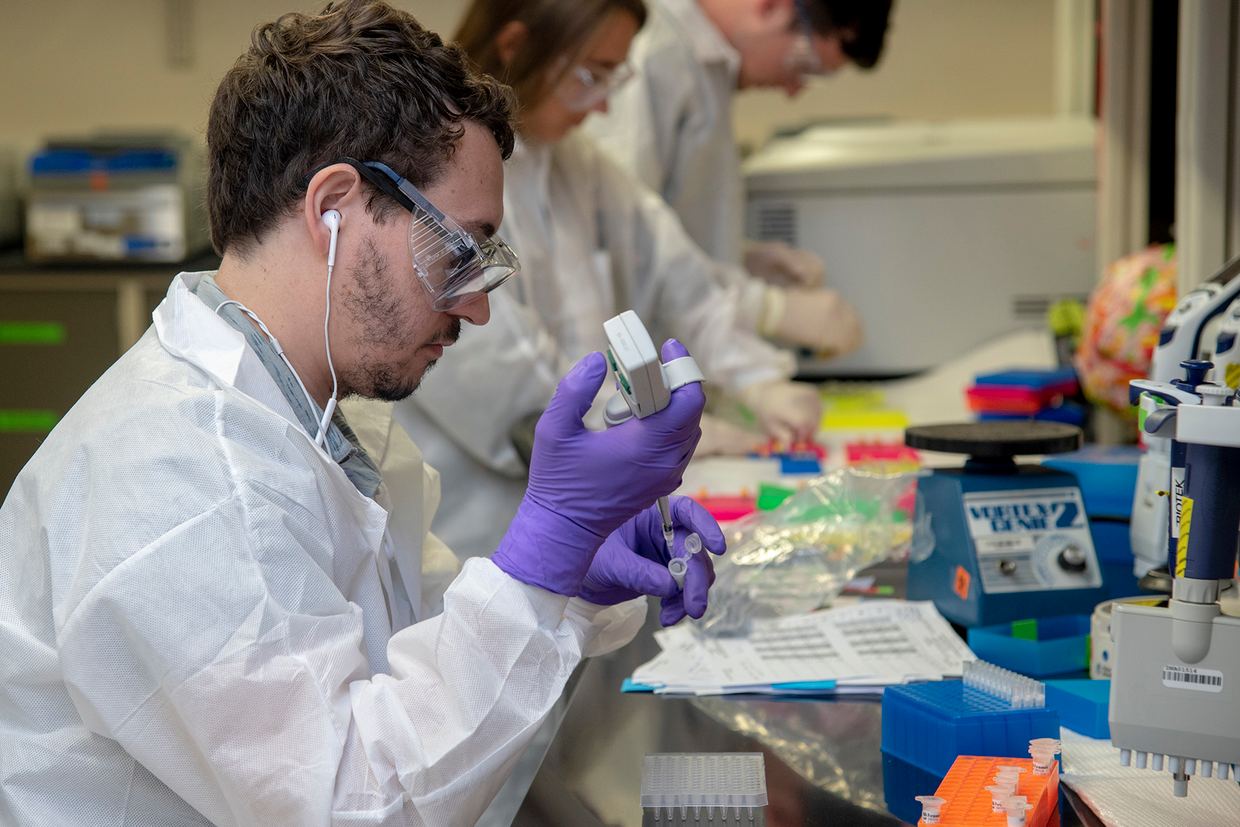
Researchers at the Macquarie University Brain Institute and Clinic analysed genome-wide data from 3,524 people of European ancestry across the amyotrophic lateral sclerosis (ALS) and frontotemporal dementia (FTD) spectrum, according to a study in Brain doi.org
Braindoi.orgOpen source ↗. The cohort was assembled across continents, with participants from Australia, New Zealand and the United Kingdom. Identity-by-descent (IBD) analysis found 793 pairs of first- to sixth-degree relatives, from siblings to second cousins once removed
doi.org
Braindoi.orgOpen source ↗.
Hidden relatives and reduced penetrance
Of the 793 pairs, 31.5% were previously unrecognised, and 15.8% had different clinical diagnoses doi.org
Braindoi.orgOpen source ↗. Among individuals recorded as sporadic, 5.5% of ALS and 15.9% of FTD cases were genetically related to another affected person in the cohort. The authors report that this shows reduced penetrance masks a substantial share of heritable disease
doi.org
Braindoi.orgOpen source ↗.
Affected carriers of known ALS/FTD-associated variants had balanced male-to-female ratios, regardless of reported family history or IBD-inferred relatedness. Those without an identified disease-linked variant retained the male predominance expected in ALS/FTD cohorts doi.org
Braindoi.orgOpen source ↗.
Founder networks and new pedigrees
IBD analysis identified cross-continent founder networks for known ALS genes, including SOD1 and C9orf72. It also produced 73 new IBD-defined pedigrees from probands who appeared unrelated doi.org
Braindoi.orgOpen source ↗.
The team used SOD1 mutation-positive families as a positive control. Expanding these pedigrees through IBD kept the known disease locus in distant relatives while reducing the number of candidate regions across the genome doi.org
Braindoi.orgOpen source ↗.
In one IBD-identified extended pedigree with five affected individuals, genome-wide variant filtering found three rare variants in a candidate locus on chromosome 13q21.33. Four individuals shared this locus by IBD, and multipoint linkage analysis supported it doi.org
Braindoi.orgOpen source ↗.
Lead author Lyndal Henden said family history does not always tell the whole story in MND and FTD. Senior author Kelly Williams said that where only one person could once be studied, affected relatives can now be compared and shared DNA regions prioritised. The authors add that the approach gives clinicians clearer context for inherited risk and genetic counselling doi.org
Braindoi.orgOpen source ↗.