HKPU and Zhejiang University stabilize perovskite solar cells to 2,200 hours at 26.55% efficiency
Researchers identified an asymmetric photodegradation pathway at crystal grain boundaries and passivated it with a fluorinated additive in prototype cells.
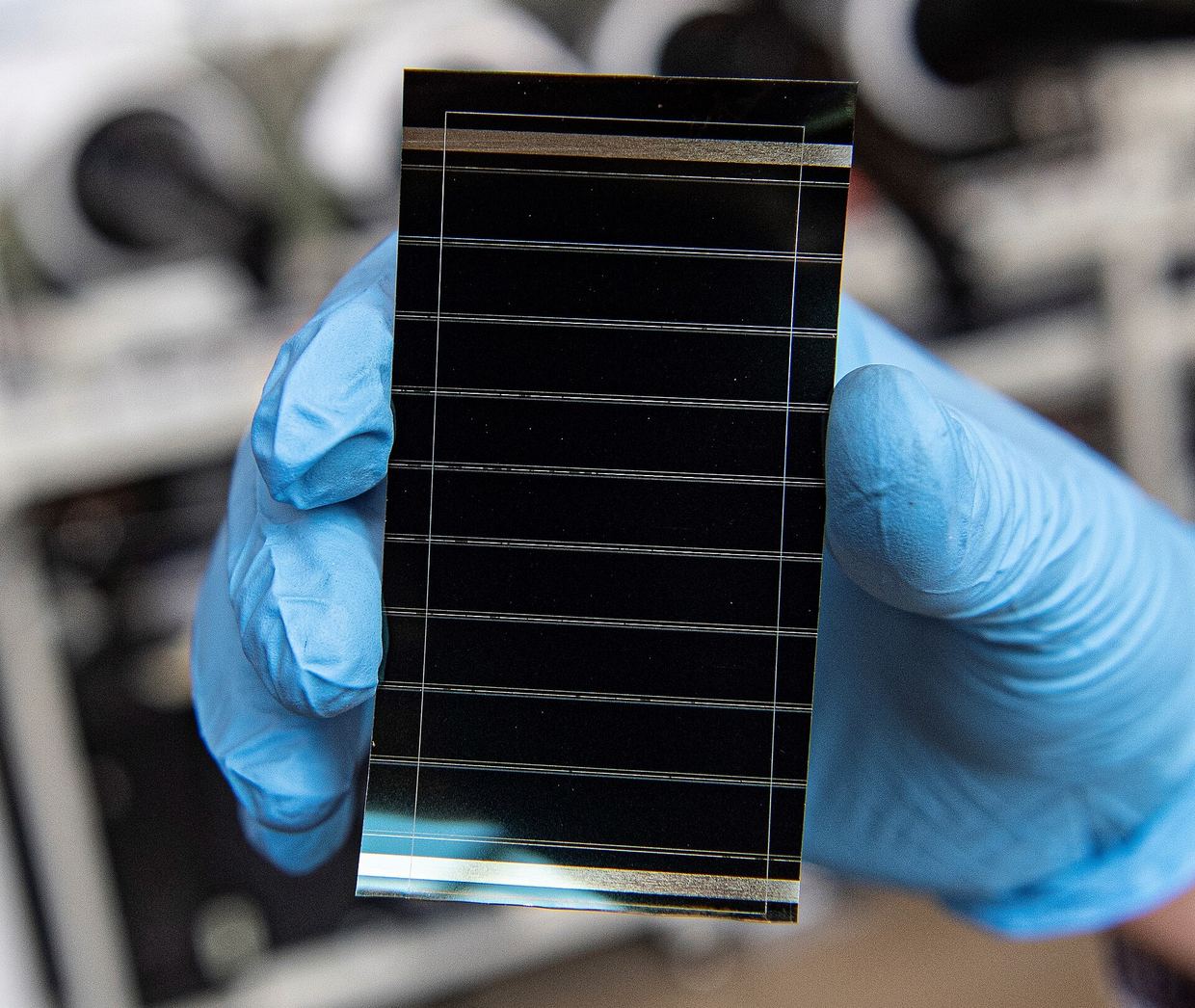
Researchers from The Hong Kong Polytechnic University and Zhejiang University have identified a microscale degradation mechanism at crystal boundaries in polycrystalline perovskite solar cells, according to a study published in the journal Watt doi.org
Wattdoi.orgOpen source ↗. By applying a targeted chemical treatment to passivate facet-specific defects, the team produced prototype solar cells that achieved a power conversion efficiency of 26.55% and maintained over 90% of their performance after more than 2,200 hours of continuous one-sun illumination
doi.org
Wattdoi.orgOpen source ↗.
Inter-grain defect mechanism
Polycrystalline perovskite films consist of microscopic grains with differing crystal facet orientations, such as (100) and (111). The researchers determined that hetero-facet grain boundaries induce an asymmetric inter-grain charge recombination pathway under illumination doi.org
Wattdoi.orgOpen source ↗. Despite the superior intrinsic photostability of the (111) facet, formamidinium vacancy defects concentrated at the (111) side of these boundaries caused a non-equilibrium accumulation of photogenerated positive charge carriers, or holes
doi.org
Wattdoi.orgOpen source ↗. This localized imbalance accelerated photodegradation precisely at the hetero-facet interfaces.
Targeted defect passivation
To suppress this degradation route, the authors introduced 3-fluorophenylethylammonium bromide (m-F-PEABr) into the material doi.org
Wattdoi.orgOpen source ↗. The compound targeted the identified formamidinium vacancies at the (111)-facet grain boundaries, effectively homogenizing carrier recombination across adjacent grains
doi.org
Wattdoi.orgOpen source ↗. In laboratory tests under continuous one-sun conditions, treated prototype cells reached a T90 operational lifetime exceeding 2,200 hours alongside the 26.55% efficiency mark
doi.org
Wattdoi.orgOpen source ↗. Further research is required to evaluate the performance of this interface stabilization strategy in large-area modules under fluctuating outdoor operating environments.