Kanazawa University finds poorly crystalline silicate in Ryugu samples
Synchrotron XANES analyses revealed magnesium silicate hydrate-like phases that explain compositional retention during aqueous alteration.
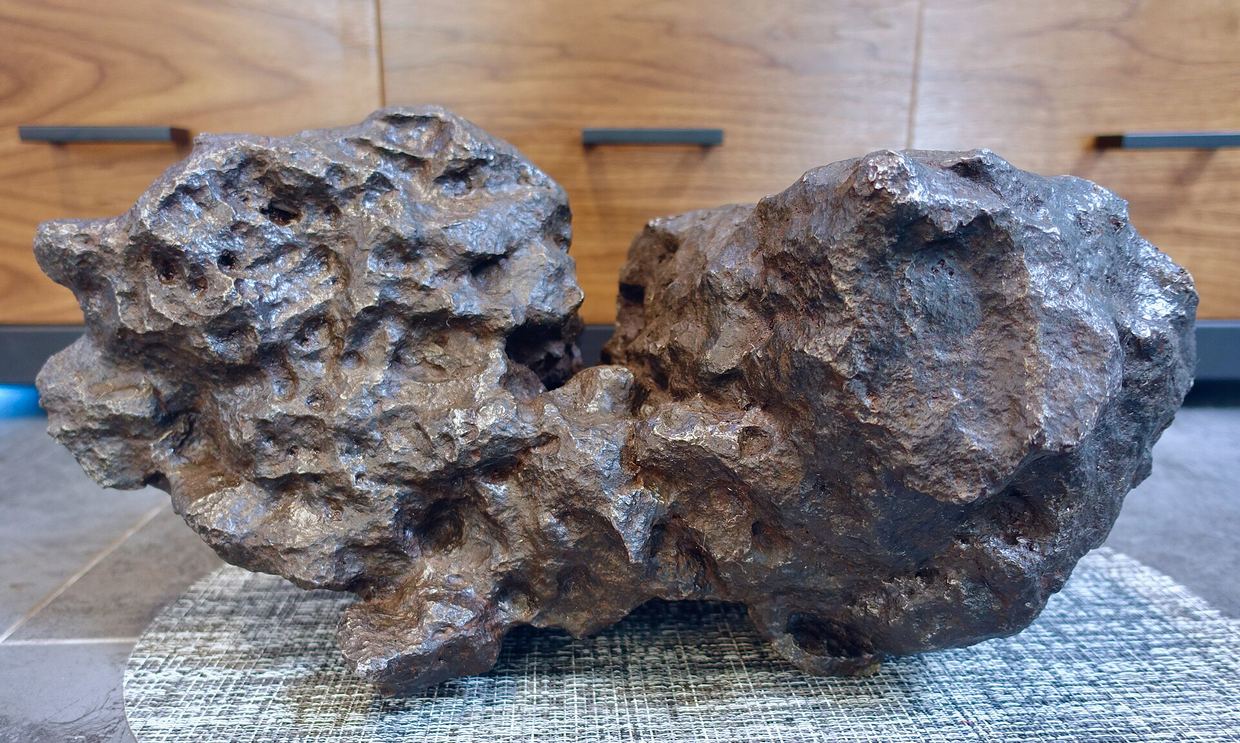
Researchers from Kanazawa University, The University of Tokyo, and partner institutes investigated fine-grained matrices from asteroid Ryugu and carbonaceous chondrites using synchrotron radiation. According to a study published on nature.com, the magnesium coordination environments in these samples reveal a widespread presence of poorly crystalline magnesium silicate hydrate (M-S-H)-like material alongside standard serpentine- and saponite-like phyllosilicates nature.com
nature.comnature.comOpen source ↗. The findings provide a physicochemical model for how ancient asteroid matrices preserved localized composition during extensive aqueous reactions.
Synchrotron XANES spectroscopy
To identify the phase structure of the fine-grained silicates, the team recorded magnesium K-edge X-ray absorption near-edge structure (XANES) spectra, including bulk XANES and scanning transmission X-ray microscopy (STXM-XANES) measurements. Data were collected using facilities at KEK-PF and SPring-8 on pristine grains delivered by the Hayabusa2 mission and carbonaceous chondrite specimens nature.com
nature.comnature.comOpen source ↗. The spectral profiles did not fully match well-crystalline terrestrial layered silicates, showing instead that poorly ordered hydrous silicates form a substantial fraction of the matrix mass.
Thermodynamic buffering and transformation
Previously, aqueous processing on C-type parent bodies was modeled as producing primarily crystalline serpentine and saponite, which typically require distinct geochemical environments to yield wide compositional variance. Integrated analysis of M-S-H solubility indicated that this poorly crystalline precursor exhibits coherent physicochemical behavior across broad magnesium-to-silicon ratios under uniform fluid conditions nature.com
nature.comnature.comOpen source ↗. The authors suggest that initial precipitation of M-S-H and its subsequent solid-state mineralogical transformation account for the observed chemical variability without requiring isolated aqueous regimes for each micro-environment.