CGDG connects 60 MW/600 MWh liquid-air energy storage facility to the grid in China
The demonstration cryogenic plant in Qinghai provides 10 hours of continuous discharge without underground caverns.
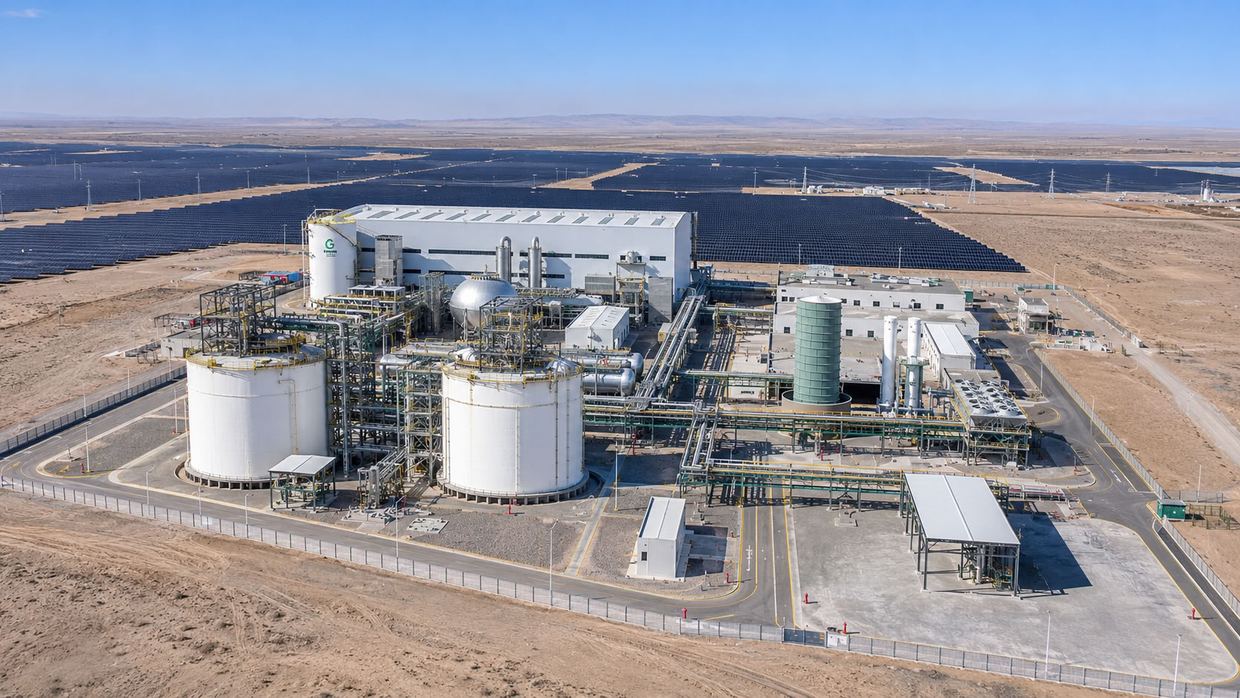
On October 30, a 60 MW/600 MWh liquid air energy storage demonstration project was connected to the power grid and began generating electricity in Golmud, Qinghai province, northwest China, pv-magazine.com reported. Developed by the China Green Development Investment Group in collaboration with the Technical Institute of Physics and Chemistry of the Chinese Academy of Sciences, the plant is described by the developer as the world’s largest grid-connected liquid-air energy storage facility by rated power and capacity pv-magazine.com
pv-magazine.compv-magazine.comOpen source ↗. Construction of the unit began in July 2023.
According to CGDG, the facility is designed to deliver electricity continuously for 10 hours, accommodating roughly 600 MWh of surplus renewable electricity daily and supplying an estimated 180 GWh to the grid annually pv-magazine.com
pv-magazine.compv-magazine.comOpen source ↗. The system operates on ambient air without requiring electrochemical battery cells or underground geological caverns for storage
pv-magazine.com
pv-magazine.compv-magazine.comOpen source ↗.
Cryogenic storage cycle
During the charging cycle, excess electrical power drives a three-stage centrifugal compressor that pressurizes purified ambient air to roughly 7 MPa pv-magazine.com
pv-magazine.compv-magazine.comOpen source ↗. Compression heat is captured and stored as hot water reaching temperatures of up to 195 °C
pv-magazine.com
pv-magazine.compv-magazine.comOpen source ↗. The pressurized gas undergoes multistage cooling, liquefies at approximately -194 °C, and enters insulated cryogenic tanks maintained at near-atmospheric pressure
pv-magazine.com
pv-magazine.compv-magazine.comOpen source ↗.
To discharge stored energy, the liquid air is pressurized, reheated, and vaporized to drive power generation turbines pv-magazine.com
pv-magazine.compv-magazine.comOpen source ↗. Thermal energy recovery systems capture cold energy released during vaporization and store it for reuse in subsequent air-liquefaction charging cycles
pv-magazine.com
pv-magazine.compv-magazine.comOpen source ↗.
Equipment and grid support
CGDG stated that all primary equipment achieved a 100% domestic manufacturing rate, incorporating locally built centrifugal compressors, liquid expanders, and cryogenic heat exchangers pv-magazine.com
pv-magazine.compv-magazine.comOpen source ↗. Engineering design was carried out by Hualu Engineering & Technology, with China National Chemical Engineering Third Construction handling construction work
pv-magazine.com
pv-magazine.compv-magazine.comOpen source ↗.
Because storage relies on insulated tanks rather than specific underground geological formations, the technology offers broader siting flexibility than conventional compressed-air storage pv-magazine.com
pv-magazine.compv-magazine.comOpen source ↗. The developer also noted that the plant's rotating turbine machinery provides physical inertial support to the regional electrical grid
pv-magazine.com
pv-magazine.compv-magazine.comOpen source ↗.