STAR collaboration measures baryon number transport in nuclear collisions
Measurements at RHIC show baryon number separates from electric charge, challenging the standard valence quark model.
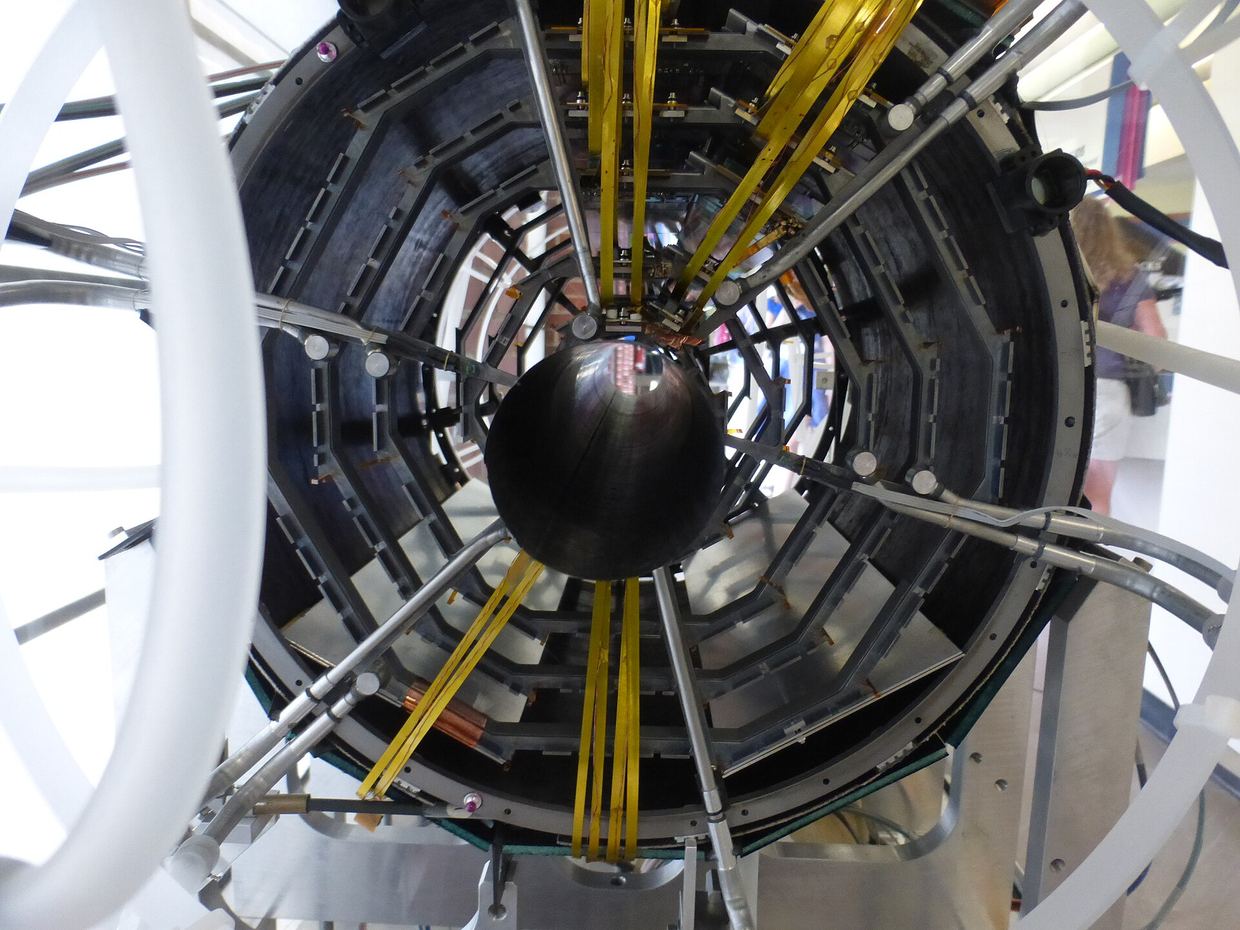
The international STAR Collaboration at the Relativistic Heavy Ion Collider (RHIC) at Brookhaven National Laboratory has reported measurements of baryon number transport in nuclear collisions, according to a paper published in Science. The researchers investigated whether the baryon quantum number is carried by valence quarks or by a nonperturbative Y-shaped gluonic configuration known as a baryon junction doi.org
Sciencedoi.orgOpen source ↗.
Conventionally, each fractionally charged valence quark carries one-third of a baryon number. The alternative hypothesis attributes the whole baryon number to an electrically neutral gluon junction. To test these models, the team analyzed isobar nuclear collisions involving ruthenium-96 (44 protons) and zirconium-96 (40 protons), evaluating roughly two billion collisions of each type. Because both species have 96 nucleons but different charges, tracking the ratio of baryon number to the electric charge number difference at mid-rapidity revealed how charge and baryon number propagate.
Isobar and photonuclear collisions
The measurements showed a larger ratio of baryon number over electric charge number difference at mid-rapidity than standard valence quark models predict doi.org
Sciencedoi.orgOpen source ↗. The baryon number reached the central collision zone significantly more effectively than electric charge, indicating that the two quantities can separate during high-energy impacts.
In addition, the collaboration measured the net-proton yield along rapidity in photonuclear collisions of photons with gold nuclei. Because the incoming photon has no baryon number, any excess of protons observed in the collision zone must originate from the gold nucleus. The team detected a less asymmetric net-proton yield along rapidity than predicted by models assigning baryon number to valence quarks doi.org
Sciencedoi.orgOpen source ↗.
Gluon junction consistency
These findings, corroborated by previous measurements in gold-gold collisions, disfavor the traditional valence quark picture. The electrically neutral baryon junction hypothesis remains qualitatively consistent with the observed data doi.org
Sciencedoi.orgOpen source ↗.
Future measurements at the Large Hadron Collider at CERN, the CEBAF electron accelerator, and the planned Electron-Ion Collider at Brookhaven are expected to provide further details on baryon number transport inside hadrons.